Bollywood filmmakers flock to Vietnam in tourism windfall

Indian experts noted that Bollywood's output of about 1,500 films annually reaches vast audiences in South Asia, the Middle East, Africa, and parts of Europe, making each Vietnam-shot movie equivalent to a high-impact marketing campaign far cheaper than conventional ads.

Indian actresses in a shoot in Vietnam (Photo: nhandan.vn)

Hanoi (VNA) – Recently, major Indian film projects have opened up exciting opportunities to showcase Vietnam's stunning landscapes and rich culture to global audiences, choosing locations across Quang Tri, Ninh Binh, Da Nang, Cao Bang, and other areas.

Building on the success of "Love in Vietnam", the first official India – Vietnam co-production released in 2025, the upcoming "Silaa" and related projects are filming extensively in Quang Tri, Ninh Binh, Cao Bang, and Quang Ninh provinces. These productions go beyond scenic backdrops by weaving in local culture, presenting Vietnam as a vibrant and lived-in destination.

In contrast to past international shoots that relied solely on vistas while sidelining local talent, these Indian films feature Vietnamese actors, thus enhancing authenticity and narrative depth. Crews have also agreed to create promotional tourism clips for screening at 1,000 Indian cinemas.

Quang Tri has gained spotlight attention, with "Silaa" choosing Son Doong Cave, En Cave, the Tu Lan cave system, and Phong Nha Cave as key sites. To optimise this opportunity, the central province is working closely with the Ministry of Culture, Sports and Tourism, the Phong Nha - Ke Bang National Park management board, and private companies to support the film crew.

At a recent international conference in Ninh Binh, Bollywood directors and producers praised many Vietnamese localities for their potential as major regional filming hubs.
e.jpg
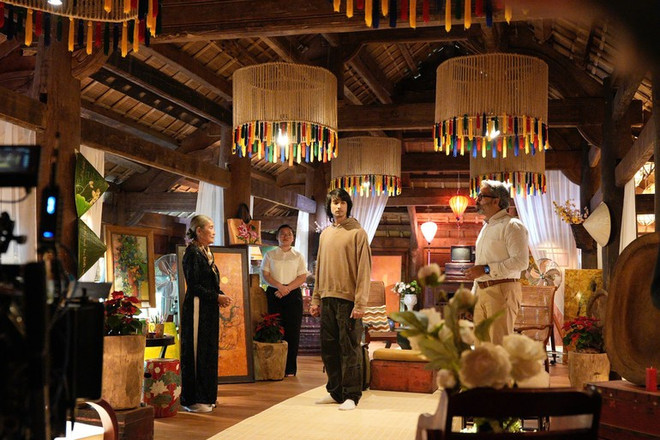
Vietnamese and Indian actors in a scene (Photo: nhandan.vn)

Deputy Minister of Culture, Sports and Tourism Ho An Phong highlighted Vietnam's strong advantages, affirming that selections by leading film nations will drive inbound tourism, particularly from India.

Many cities and provinces are ramping up infrastructure, tourism facilities, and support services to accommodate incoming productions, aligning with broader goals to tie cinema to sustainable tourism development.

Indian experts noted that Bollywood's output of about 1,500 films annually reaches vast audiences in South Asia, the Middle East, Africa, and parts of Europe, making each Vietnam-shot movie equivalent to a high-impact marketing campaign far cheaper than conventional ads.

Nguyen Trung Khanh, Director of the Vietnam National Authority of Tourism, called for coordinated incentives like tax rebates or cost subsidies, modelled on Thailand and the Republic of Korea (RoK), to attract more crews. He added that filming permits, equipment rules, and access to heritage or protected sites must be simplified, transparent, and uniform nationwide to reduce delays and build producer confidence.

Vietnam should also invest in film infrastructure, including modern studios, post-production facilities, internationally compliant gear storage, and skilled local crews focused on safety, he said.

Experts recommended that filming destinations proactively develop "film tourism" products such as themed trails, guided tours, photo spots, exhibitions and performances tied to the films to prolong promotional effects. Coordinated campaigns should enlist stars, directors, and crews as ambassadors while amplifying digital outreach in key markets like India, the US, and the Republic of Korea.

Another priority is safeguarding sensitive environments and heritage, particularly caves, forests, and world heritage sites, through rigorous crew management, site monitoring, waste management, and safety protocols to maintain pristine conditions.

Ultimately, they advocated an intersectoral coordination mechanism involving the Ministry of Culture, Sports and Tourism, local authorities, tourism and film companies, and international partners to shape a long-term vision. Once cinema and tourism are strategically connected can Vietnam emerge as an appealing destination for global filmmakers and strongly popularise its image, substantively contributing to economic growth and cultural value promotion./.
VNA

See more

Illustrative photo (Photo: VNA)

Tet gifts, chung cake made for disadvantaged people

Beyond its charitable significance, the programme also aims to introduce domestic and international visitors to the unique cultural values of Vietnam’s traditional Tet, while raising public awareness, particularly among younger generations, of the responsibility to preserve and promote the cultural identities of Vietnam’s ethnic groups.

The Hoa Lai stele, a national treasure, is currently on display at the Khanh Hoa provincial Museum's Branch 2 in Phan Rang ward. (Photo: VNA)

Breathing new life into Cham cultural heritage in Khanh Hoa

With its ancient temple towers, lively festivals, craft villages, and rich cultural heritage, both tangible and intangible, Cham culture in the south central province of Khanh Hoa is not only a long-standing historical treasure but is also being actively promoted alongside tourism and community livelihoods, bringing fresh energy to Cham heritage in modern life.

Visitors take part in a night tour at the Temple of Literature (Van Mieu – Quoc Tu Giam) in Hanoi. (Photo: nhandan.vn)

Heritage seen as economic driver through tourist attractions

Technology has opened up new approaches to heritage preservation and promotion. At sites such as the Temple of Literature, Hanoi’s Old Quarter and the Thang Long Imperial Citadel, night tours featuring creative lighting, immersive storytelling and extended reality (XR) applications have expanded visitors’ experiences and reimagined how heritage can be explored.

The joy of U23 Vietnam players after the victory. (Photo: Asian Football Confederation)

U23 Vietnam fuel Asian dream with dramatic semi-final run

Vietnam U23's hard-fought victory over UAE in the 2026 AFC U23 Asian Cup quarterfinals sent the Southeast Asian representative into the semi-finals and drew praise from the official fanpages of FIFA and the Asian Football Confederation (AFC).

Le Y Linh, a music researcher living and working in France (Photo: VNA)

14th National Party Congress expected to continue affirming culture as pillar of Vietnam’s soft power

Talking to a Vietnam News Agency correspondent in Paris, Le Y Linh, a music researcher living and working in France, said culture should be placed on an equal footing with other sectors in the country’s development strategy. According to her, investment in culture should go beyond preservation and be closely linked with creativity, so that cultural values are not only safeguarded but also continue to evolve in contemporary life.

A view of the international conference in Ninh Binh province, which sets course for UNESCO nomination of the Tam Chuc Pagoda Complex and the Van Long Wetland Nature Reserve. (Photo courtesy of Ninh Bình Provincial People’s Committee)

Vietnam advances UNESCO nomination of Tam Chuc – Van Long Complex

During the conference, delegates examined a wide range of themes, including geology, geomorphology and biodiversity; cultural values such as history, archaeology and intangible heritage; human adaptation; site integrity, boundaries and management challenges; and a roadmap for nominating the Van Long – Tam Chuc wetland karst area as a World Heritage Site.

The feature film “Red Rain”* directed by Meritorious Artist Dang Thai Huyen and produced by the People’s Army Cinema (Vietnam Cinema Association). (Photo: VNA)

“Red Rain” wins Golden Kite Award 2025

"Mua Do" (Red Rain), directed by Meritorious Artist Dang Thai Huyen and produced by the People’s Army Cinema also earned its director the Best Director Award in the feature film category, marking a double win and making Red Rain the most honoured work of the night in the cinema section.