The image of horse in the lives of Vietnamese people

Horses have long been embedded in Vietnamese culture, carrying layered symbolism in language and belief while remaining part of daily life in many ethnic minority communities.

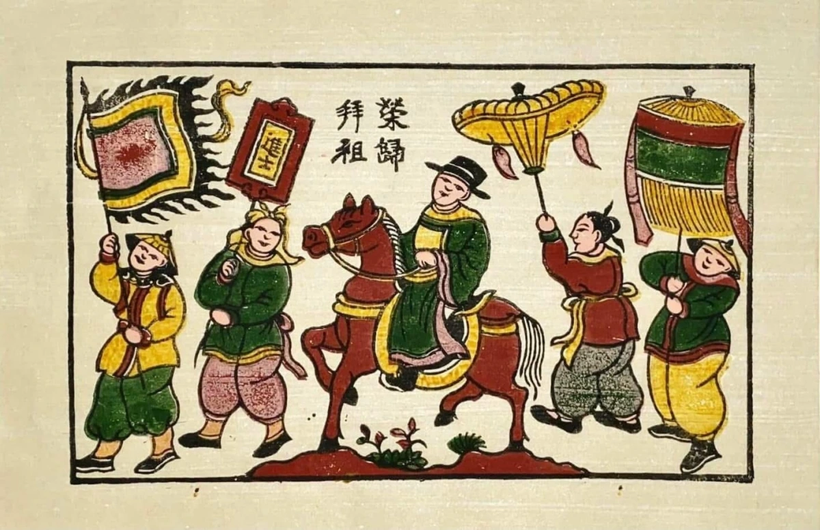
Horse in Dong Ho folk painting.

Hanoi (VNA) - Horses have long been a familiar part of Vietnamese culture, accompanying people from daily life and farming to the battlefield, and often appearing alongside images of generals, deities, honour, and scholarly achievement.

As such, horses embody both intimacy and a sense of the sacred, symbolising nobility as much as closeness.

Hourses are known for their endurance, intelligence, and loyalty, yet they are associated with impatience, arrogance, and unruliness. It is precisely this complexity that has allowed the image of horses to permeate Vietnamese life in a natural and deeply rooted way, enriching the nation’s spiritual and cultural landscape.

The horse in everyday language

Vietnamese idioms and proverbs frequently draw on the image of horses to describe human character. Notably, the Vietnamese language uses two different words – ‘ngua’ and ‘ma’ - to refer to the same animal, each carrying distinct cultural connotations.

According to Dr Tran Van Sang of the Faculty of Literature and Communication at the University of Education under the University of Da Nang, ‘ngua’ is a purely Vietnamese word, closely associated with southern origins and indigenous Vietnamese culture. Expressions using ‘ngua’ tend to depict character traits in a direct, earthy manner, such as ‘ngua quen duong cu’ (a horse returns to familiar paths), ‘thang nhu ruot ngua’ (as straightforward as a horse’s gut), ‘ngua non hau da’ (an inexperienced horse eager to kick), or the proverb ‘duong dai moi biet ngua hay’ (only a long road reveals a good horse).

By contrast, ‘ma’ is a Sino-Vietnamese term with northern origins. Sang explains that in northern nomadic and dry-farming civilisations, horses were vital for long-distance travel and transport, and thus highly revered. This gave rise to refined and auspicious expressions such as ‘tuan ma’ (a fine, strong horse), ‘long ma’ (a mythical creature with a dragon’s head and horse’s body symbolising peace and prosperity), or ‘ma dao thanh cong’ (a wish for success and a smooth beginning).

Many expressions using ‘ma’ entered Vietnamese through cultural exchange with the North, including ‘thien ly ma’ (a steed that can travel a thousand miles), ‘phi ma’ (runaway, as in “runaway inflation”), or ‘don thuong doc ma’ (facing challenges alone).

Another Sino-Vietnamese term referring to the horse is “ngo.” In traditional East Asian folk beliefs, one interpretation holds that the position of Ngo in the 12 zodiac animals - at the midpoint - corresponds to the middle of the day, from 11:00 to 13:00, known as the Ngo hour.

These linguistic layers reflect how core cultural archetypes are selectively adapted and reinterpreted, creating distinctive symbolic meanings within the Vietnamese language and culture.

A companion in ethnic minority life

While for the Kinh majority today the horse largely survives in language and symbolism, in many ethnic minority regions it remains an essential part of daily labour and production. In mountainous terrain, horses still replace vehicles and machinery, carrying people and goods across rugged paths in the northern mountainous region, the Central Highlands, and parts of southern Vietnam.
horse-3.jpg
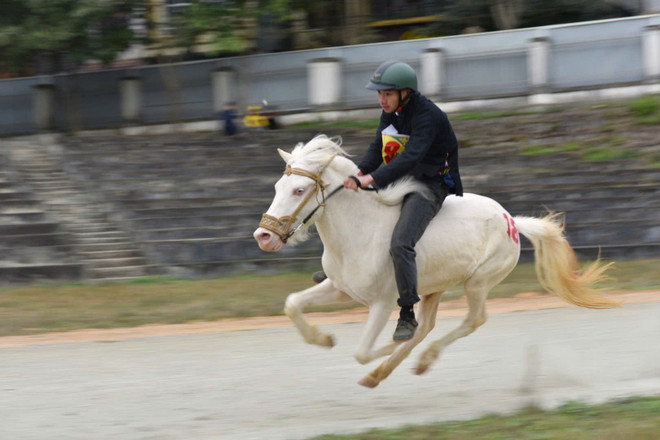
Bac Ha horse racing (Photo: VNA)

In the Central Highlands, horses are prized for their remarkable memory and endurance. Researcher Dang Minh Tam notes that local horses can remember routes after only a few trips and navigate villages independently. Though small in stature, they excel in mountainous terrain, helping young men build physical resilience by walking alongside them.

Among the Nung Din people in Muong Khuong (Lao Cai), the ritual dance of paper horses is performed during important ceremonies, including funerals, symbolising gratitude toward the deceased and belief in the horse as a guide to the afterlife. For the Mong and other groups, horses have historically been companions not only in transport but also in communal defence and warfare.

Today, horse racing festivals in places such as Bac Ha (Lao Cai) and Tam Duong (Lai Chau) have become vibrant cultural events, attracting large crowds and international visitors, especially during the Lunar New Year season./.
VNA

See more

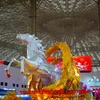
The horse image symbolises resilience, endurance, and spirit of “success upon arrival.” (Photo: VNA)

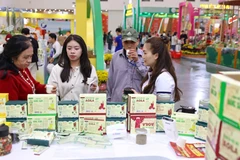
Horse mascot leaves strong impression at spring fair

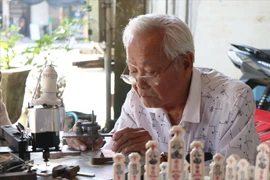
A major attraction is a unique “Eight galloping horses” (Bat Ma) sculpture displayed at the To Trinh gemstone booth. Carved from a rare monolithic jade block, the artwork features eight spirited horses racing across golden rice fields. The harmonious blend of pure jade veins and natural golden tones enhances both its aesthetic depth and symbolic meaning, evoking prosperity and abundance associated with Vietnam’s rice civilisation.

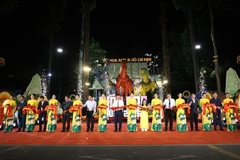
Delegates cut the ribbon to launch the 46th Spring Flower Festival at Tao Dan Park. (Photo: VNA)

Festive activities herald Lunar New Year of the Horse

A vibrant array of cultural and media events has been launched across Vietnam to welcome the Lunar New Year of the Horse 2026, highlighting both the country’s enduring traditions and its dynamic socio-economic progress.

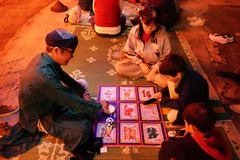
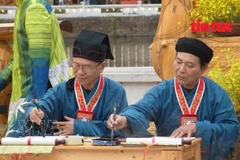
A calligraphy booth at the festival (Photo: VNA)

Spring Calligraphy Festival 2026 opens in Hanoi

A central attraction remains the traditional New Year calligraphy request activity, featuring 35 booths staffed by calligraphers selected through a rigorous, transparent evaluation process.

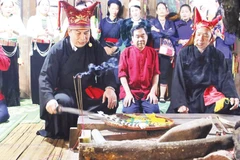
A ritual to welcome new year of Muong people in Phu Tho (Photo: nhandan.vn)

Unique Lunar New Year traditions on display

Each ethnic group brings its own unique Tet customs to the Vietnam National Village for Ethnic Culture and Tourism on the outskirts of Hanoi, creating a rich and colourful cultural mosaic.

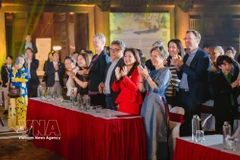
Polish Ambassador to Vietnam Joanna Skoczek (R) attends a cultural event in Vietnam (Photo: VNA)

Cultural, people-to-people interactions anchor Vietnam–Poland relations: diplomat

Skoczek also pointed to striking similarities between Vietnam’s Tet and Poland’s Christmas Eve traditions, particularly the emphasis on family reunions, symbolic meals and shared rituals passed down through generations. Despite differences in customs and cuisine, she said the essence of the celebrations remains universal: bringing loved ones together to welcome a new start.

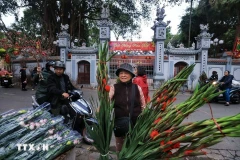
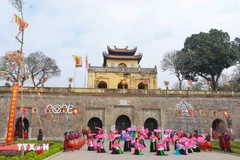
A Tet flower street is held for the first time at the Thang Long Imperial Citadel during the Lunar New Year 2026. (Photo: VNA)

Tet flower street held for first time at Thang Long Imperial Citadel

More than a seasonal attraction, the flower street also functions as a formal cultural venue for receiving ambassadors, their spouses and representatives of diplomatic missions attending the Vietnam Discovery Day 2026 programme. Its linkage with an external event further reinforces the Thang Long Imperial Citadel’s position as a key platform for introducing Vietnam’s cultural identity to international friends.

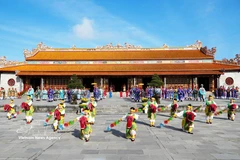
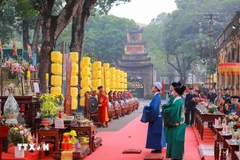
The recreation of Tien lich (calendar presentation ceremony), an important year-end ritual in which the royal court presented the new calendar for the coming year to the king, within a programme at the Thang Long Imperial Citadel in Hanoi on February 10. (Photo: VNA)

Hanoi recreates Lunar New Year court ritual at Thang Long Imperial Citadel

Organised by the municipal People’s Committee in coordination with the Vietnam National Commission for UNESCO, the programme recreated a range of ceremonial practices once performed in the royal court. These included the Tien lich ritual, in which calendars were formally distributed to the court and the public; the Thuong tieu ceremony featuring the ceremonial New Year pole erected to ward off evil spirits and welcome spring; the ritual release of carp to send the Kitchen Gods to heaven; and the solemn changing-of-the-guard ceremony inside the imperial citadel. Together, the activities helped audiences better understand the cultural, spiritual and ceremonial order of Vietnam’s feudal past.

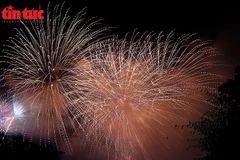
Illustrative image (Photo: VNA)

Fireworks, festive events usher in Year of the Horse across Vietnam

Local residents and visitors can enjoy spectacular fireworks displays at locations like the Hanoi Post Office in Hoan Kiem ward; Coconut island in Thong Nhat park, Hai Ba Trung ward; the F1 racetrack area in Tu Liem ward; Lac Long Quan flower garden in Tay Ho ward; Van Quan lake in Ha Dong ward; and the Son Tay Ancient Citadel in Son Tay ward.

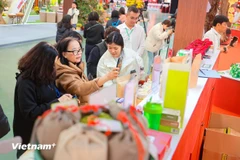
People visit the Spring Fair 2026. (Photo: VNA)

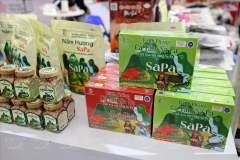
Spring Fair 2026: Celebration of Vietnamese Tet flavours, cultural memory

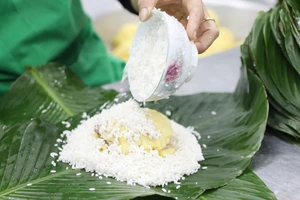
Food has long occupied a central place in Vietnamese Tet culture, symbolising abundance, harmony and gratitude. At the Spring Fair 2026, traditional Tet delicacies are presented in a modern setting while retaining their familiar essence, allowing visitors to experience both nostalgia and renewal.

(Photo: baoquocte.vn)

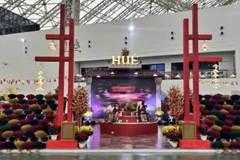
Spring Fair 2026 features imperial spring colours, heritage imprints

Beyond cultural impressions, the fair created tangible opportunities for Hue enterprises and artisans to promote brands, connect partners and expand markets, laying foundations for deeper participation in value chains and long-term sustainable development aligned with Hue’s green growth and international integration strategy toward 2030, with a vision to 2045.