Imperial rituals revived in Hue with reenactment of Nguyen Dynasty New Year royal audience

The royal audience ceremony, one of the most significant court rituals under the Nguyen Dynasty, was traditionally held on the first day of Tet. Favourable weather conditions this year helped draw large crowds of both domestic and international visitors.

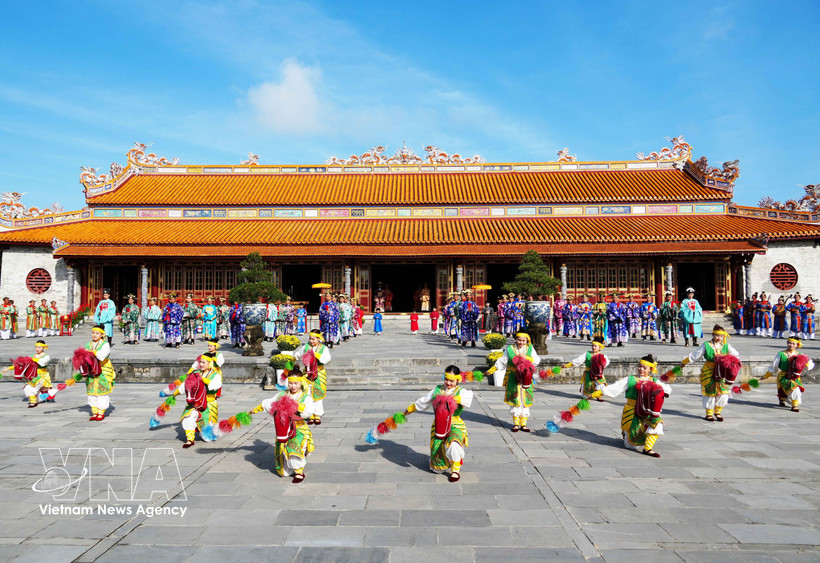
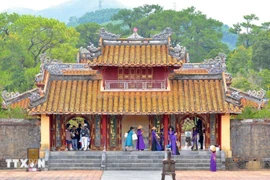
A reenactment of the Nguyen Dynasty’s Lunar New Year Grand Royal Audience ceremony at Thai Hoa Palace in the Hue Imperial Citadel. (Photo: VNA)

Hue (VNA) – The Hue Monuments Conservation Centre on February 11 staged a reenactment of the Nguyen Dynasty’s Thiet Trieu (Royal Audience) ceremony at the Imperial Citadel of Hue to celebrate the Lunar New Year (Tet) Festival.

The royal audience ceremony, one of the most significant court rituals under the Nguyen Dynasty, was traditionally held on the first day of Tet. Favourable weather conditions this year helped draw large crowds of both domestic and international visitors.

Under traditional protocol, the Nguyen court conducted the Grand Royal Audience at the Thai Hoa Palace and the Regular Royal Audience at the Can Chanh Palace. For the Grand Royal Audience, the King would depart from the Can Chanh Palace, pass through the Dai Cung Gate and ascend the Thai Hoa Palace to personally preside over the ritual. Civil and military mandarins lined up in strict order according to rank, with mandarins and senior officials positioned at the front.
vnanet-potal-tai-hien-le-thiet-trieu-nguyen-dan-trieu-nguyen-tai-dai-noi-hue-8586394.jpg
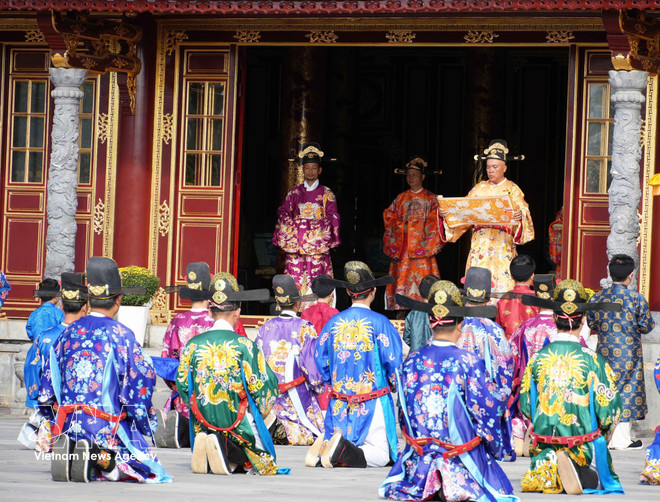
The Nguyen Dynasty’s Lunar New Year Grand Royal Audience ceremony is reenacted at the Thai Hoa Palace in the Hue Imperial Citadel. (Photo: VNA)

During the ceremony, mandarins presented New Year congratulatory memorials to the monarch. Royal edicts granting imperial favours were then proclaimed in a solemn atmosphere, accompanied by court music, including both grand and chamber ensembles. The King subsequently returned to the Can Chanh Palace to continue the New Year observances.

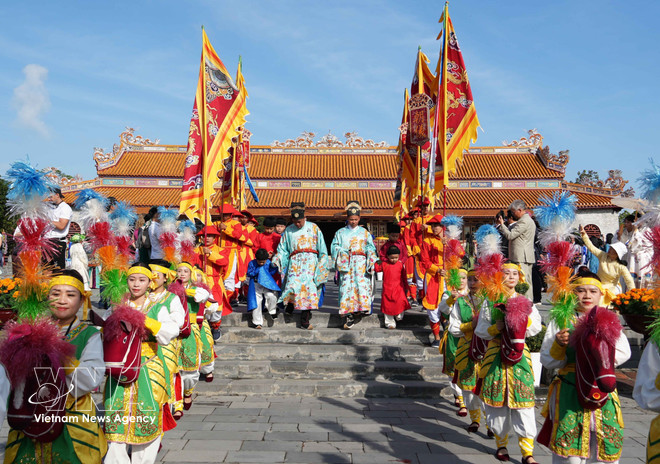
At the Can Chanh Palace, imperial princes and members of the royal clan performed obeisance rituals before the King, followed by a banquet and spring festivities.
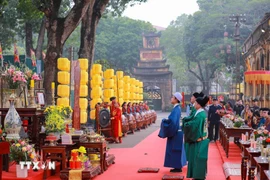
vnanet-potal-tai-hien-le-thiet-trieu-nguyen-dan-trieu-nguyen-tai-dai-noi-hue-8586420.jpg
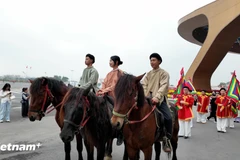
Following the Grand Audience ritual, the king departs Thai Hoa Palace to preside over the Regular Audience at Can Chanh Palace within the Hue Imperial Citadel. (Photo: VNA)

Nguyen Nhu Phuong, a 55-year-old visitor from Quang Tri province, said she had previously only seen depictions of royal audiences and Nguyen Kings in films and photographs. Experiencing the ceremony firsthand, with its dignified rituals, carefully restored costumes and authentic court music, left a strong impression on her. She noted that the programme offered deeper insight into Nguyen Dynasty court rites associated with Tet.

Francois, a visitor from France, said he was particularly struck by the overall presentation, from the musical instruments and costumes to the precise arrangement of participants. He added that reenactments of the Nguyen Dynasty’s New Year royal audience and other royal rituals have made Hue’s heritage more vivid and engaging for visitors.

The Lunar New Year Royal Audience ceremony of the Nguyen Dynasty was first recreated in a theatrical format in 2021. Prior to its staging, the rituals were meticulously researched based on historical records, with the costumes of civil and military officials faithfully restored to imperial court standards.

Through the reenactment of this solemn ritual, the public and visitors gain a clearer understanding of Nguyen Dynasty court protocols while experiencing the atmosphere of traditional Tet within the heritage space of the former imperial capital of Hue./.
VNA

See more

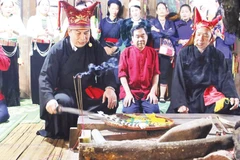
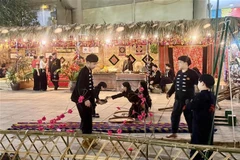
A ritual to welcome new year of Muong people in Phu Tho (Photo: nhandan.vn)

Unique Lunar New Year traditions on display

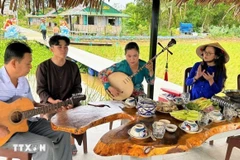
Each ethnic group brings its own unique Tet customs to the Vietnam National Village for Ethnic Culture and Tourism on the outskirts of Hanoi, creating a rich and colourful cultural mosaic.

Polish Ambassador to Vietnam Joanna Skoczek (R) attends a cultural event in Vietnam (Photo: VNA)

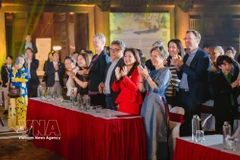
Cultural, people-to-people interactions anchor Vietnam–Poland relations: diplomat

Skoczek also pointed to striking similarities between Vietnam’s Tet and Poland’s Christmas Eve traditions, particularly the emphasis on family reunions, symbolic meals and shared rituals passed down through generations. Despite differences in customs and cuisine, she said the essence of the celebrations remains universal: bringing loved ones together to welcome a new start.

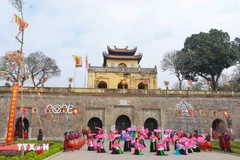
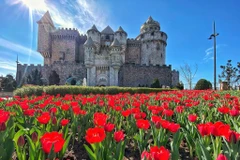
A Tet flower street is held for the first time at the Thang Long Imperial Citadel during the Lunar New Year 2026. (Photo: VNA)

Tet flower street held for first time at Thang Long Imperial Citadel

More than a seasonal attraction, the flower street also functions as a formal cultural venue for receiving ambassadors, their spouses and representatives of diplomatic missions attending the Vietnam Discovery Day 2026 programme. Its linkage with an external event further reinforces the Thang Long Imperial Citadel’s position as a key platform for introducing Vietnam’s cultural identity to international friends.

Illustrative image (Photo: VNA)

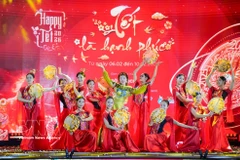
Fireworks, festive events usher in Year of the Horse across Vietnam

Local residents and visitors can enjoy spectacular fireworks displays at locations like the Hanoi Post Office in Hoan Kiem ward; Coconut island in Thong Nhat park, Hai Ba Trung ward; the F1 racetrack area in Tu Liem ward; Lac Long Quan flower garden in Tay Ho ward; Van Quan lake in Ha Dong ward; and the Son Tay Ancient Citadel in Son Tay ward.

People visit the Spring Fair 2026. (Photo: VNA)

Spring Fair 2026: Celebration of Vietnamese Tet flavours, cultural memory

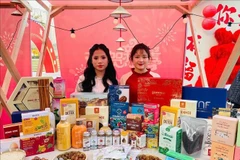
Food has long occupied a central place in Vietnamese Tet culture, symbolising abundance, harmony and gratitude. At the Spring Fair 2026, traditional Tet delicacies are presented in a modern setting while retaining their familiar essence, allowing visitors to experience both nostalgia and renewal.

(Photo: baoquocte.vn)

Spring Fair 2026 features imperial spring colours, heritage imprints

Beyond cultural impressions, the fair created tangible opportunities for Hue enterprises and artisans to promote brands, connect partners and expand markets, laying foundations for deeper participation in value chains and long-term sustainable development aligned with Hue’s green growth and international integration strategy toward 2030, with a vision to 2045.

The horse-themed stamp set and commemorative coin. (Photo: VNA)

Stamp set, coin issued to mark Year of the Horse

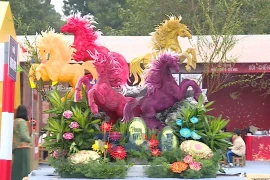
In traditional beliefs, the horse is a sacred animal symbolising loyalty, vigour, patience and perseverance, and is also believed to bring good fortune and prosperity. Drawing on this symbolism, the stamp set is presented in a contemporary folk-art style and, for the first time, features the image of the “Nine Red-Maned Horse” on Vietnam’s Tet stamps.

Vietnamese Ambassador to Japan Pham Quang Hieu commends collectives that have made significant contributions to community work in 2025 (Photo: VNA)

Vietnamese in Australia preserve traditional Tet celebrations

The “Homeland Spring” programme in Australia left lasting impressions, bringing the warmth of Tet to overseas Vietnamese and reaffirming that wherever they may be, Vietnamese people share common roots and an aspiration for a prosperous future.

At the Vietnamese booth at the first International Spring Festival hosted by the administration of Chongqing city, China from February 6 to 8. (Photo: VNA)

Vietnam attends international spring festival in China’s Chongqing

The event brought together more than 20 foreign consulates general in Chongqing and Chengdu, along with many companies and well-known brands from the participating countries, creating a vibrant and multicultural exchange space on the occasion of the Year of the Horse.

Nguyen Thi Lien, Head of the Vietnamese Language Club in Malaysia and Vice Chairwoman of the Vietnamese Women’s Association in Malaysia. (Photo: VNA)

Overseas Vietnamese join hands in spreading Vietnamese culture

They affirmed that culture is the spiritual foundation and a vital endogenous strength of the nation, while underscoring the important role of overseas Vietnamese in preserving and spreading national cultural identity and promoting the image of Vietnam and its people to the world.

Foreign diplomats wear ao dai (Photo: VNA)

Foreign diplomats in Ho Chi Minh City join Tet celebrations

With the desire to share the beauty of Tet with international friends, HUFO organised the programme to create opportunities for diplomats working in the city and their families to engage in warm exchanges and build closer ties through Vietnamese traditional cultural activities, leaving them with lasting and memorable impressions of a traditional Vietnamese Tet in a civilised, modern and compassionate city, according to HUFO President Ha Thanh.

A performance at the Spring Concert 2026 (Photo: VNA)

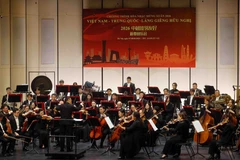
Spring Concert 2026 celebrates Vietnam–China friendship

Featuring renowned artists from both countries, the programme comprised two parts with a well-structured and engaging artistic arrangement, guiding the audience from traditional Chinese music to melodies praising Vietnam–China friendship, as well as excerpts from classic world operas.