Stone steles exhibition highlights Vietnam’s learning tradition

Integrated with existing exhibition spaces, it presents in a cohesive and in-depth manner the exceptional historical, ideological, and artistic value of the doctoral laureates’ steles.

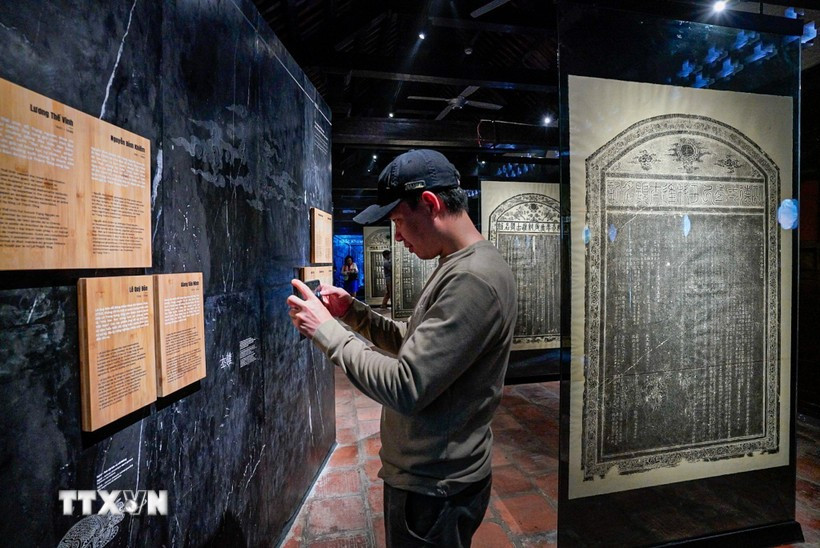
A visitor at the exhibition (Photo: VNA)

Hanoi (VNA) - An exhibition titled “Su da luu danh” (Stone steles: names and legacies) has been held at the Van Mieu (Temple of Literature) – Quoc Tu Giam (Vietnam's first national unversity) relic site by the Hanoi Department of Culture and Sports, in coordination with the Van Mieu – Quoc Tu Giam centre for cultural and scientific activities, organised

This is a meaningful activity celebrating the success of the 14th National Party Congress, welcoming the Lunar New Year - the Year of the Horse, and looking ahead to the 950th founding anniversary of the country's first national university.

In his opening remarks, Le Xuan Kieu, Director of the centre for cultural and scientific activities, said the exhibition blends traditional and modern display approaches, using paper and stone as key materials.

Integrated with existing exhibition spaces, it presents in a cohesive and in-depth manner the exceptional historical, ideological, and artistic value of the doctoral laureates’ steles.

The exhibition is organised around four main themes, portraying the Confucian examination-based education system, the policies of feudal dynasties on selecting, rewarding and valuing talent, and the lives of outstanding figures who made significant contributions to education and other fields. Through this approach, visitors not only gain access to the documentary value of the stone inscriptions but also recognise each doctoral stele as a finely crafted work of stone art.

The exhibition space is designed as an artistic dialogue between two key materials – paper and stone – symbolising the journey from learning and self-cultivation to honour and lasting recognition. The transition between these materials reflects the desire of the feudal dynasties to “eternalise” the tribute paid to the intellectual elite.

A highlight of the exhibition is the fusion of tradition and modernity, as ancient rubbings are “brought to life” through projection technology, transforming historical materials into vivid digital images. Digital solutions are employed to recreate both tangible and intangible heritage spaces, offering a fresh narrative of Vietnam’s examination history and spreading the spirit of “touching history, discovering heritage.”

It is closely linked with existing displays, forming a unified whole within the relic site, enabling the public to gain a more systematic and in-depth understanding of the relic site’s formation and development, as well as the outstanding achievements of Vietnam’s examination-based education under the monarchical era.

According to Kieu, the exhibition was developed with the participation of Vietnamese and French experts, recounting the stories behind the 82 doctoral steles – from royal examinations and scholarly lineages to prominent figures associated with education, the examination system and state governance under the monarchical era.

Through this narrative, the exhibition conveys a consistent message on Vietnam’s enduring tradition of learning and respect for talent, a vital source nurturing the nation’s culture and future./.
VNA

See more

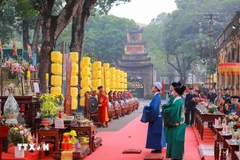
The recreation of Tien lich (calendar presentation ceremony), an important year-end ritual in which the royal court presented the new calendar for the coming year to the king, within a programme at the Thang Long Imperial Citadel in Hanoi on February 10. (Photo: VNA)

Hanoi recreates Lunar New Year court ritual at Thang Long Imperial Citadel

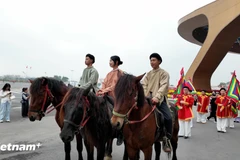
Organised by the municipal People’s Committee in coordination with the Vietnam National Commission for UNESCO, the programme recreated a range of ceremonial practices once performed in the royal court. These included the Tien lich ritual, in which calendars were formally distributed to the court and the public; the Thuong tieu ceremony featuring the ceremonial New Year pole erected to ward off evil spirits and welcome spring; the ritual release of carp to send the Kitchen Gods to heaven; and the solemn changing-of-the-guard ceremony inside the imperial citadel. Together, the activities helped audiences better understand the cultural, spiritual and ceremonial order of Vietnam’s feudal past.

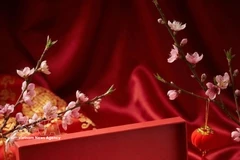
Illustrative image (Photo: VNA)

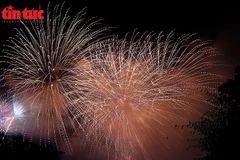
Fireworks, festive events usher in Year of the Horse across Vietnam

Local residents and visitors can enjoy spectacular fireworks displays at locations like the Hanoi Post Office in Hoan Kiem ward; Coconut island in Thong Nhat park, Hai Ba Trung ward; the F1 racetrack area in Tu Liem ward; Lac Long Quan flower garden in Tay Ho ward; Van Quan lake in Ha Dong ward; and the Son Tay Ancient Citadel in Son Tay ward.

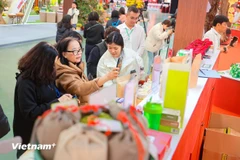
People visit the Spring Fair 2026. (Photo: VNA)

Spring Fair 2026: Celebration of Vietnamese Tet flavours, cultural memory

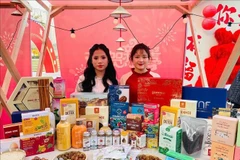
Food has long occupied a central place in Vietnamese Tet culture, symbolising abundance, harmony and gratitude. At the Spring Fair 2026, traditional Tet delicacies are presented in a modern setting while retaining their familiar essence, allowing visitors to experience both nostalgia and renewal.

(Photo: baoquocte.vn)

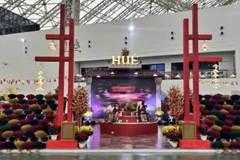
Spring Fair 2026 features imperial spring colours, heritage imprints

Beyond cultural impressions, the fair created tangible opportunities for Hue enterprises and artisans to promote brands, connect partners and expand markets, laying foundations for deeper participation in value chains and long-term sustainable development aligned with Hue’s green growth and international integration strategy toward 2030, with a vision to 2045.

The horse-themed stamp set and commemorative coin. (Photo: VNA)

Stamp set, coin issued to mark Year of the Horse

In traditional beliefs, the horse is a sacred animal symbolising loyalty, vigour, patience and perseverance, and is also believed to bring good fortune and prosperity. Drawing on this symbolism, the stamp set is presented in a contemporary folk-art style and, for the first time, features the image of the “Nine Red-Maned Horse” on Vietnam’s Tet stamps.

Vietnamese Ambassador to Japan Pham Quang Hieu commends collectives that have made significant contributions to community work in 2025 (Photo: VNA)

Vietnamese in Australia preserve traditional Tet celebrations

The “Homeland Spring” programme in Australia left lasting impressions, bringing the warmth of Tet to overseas Vietnamese and reaffirming that wherever they may be, Vietnamese people share common roots and an aspiration for a prosperous future.

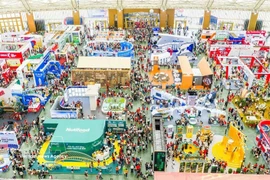
At the Vietnamese booth at the first International Spring Festival hosted by the administration of Chongqing city, China from February 6 to 8. (Photo: VNA)

Vietnam attends international spring festival in China’s Chongqing

The event brought together more than 20 foreign consulates general in Chongqing and Chengdu, along with many companies and well-known brands from the participating countries, creating a vibrant and multicultural exchange space on the occasion of the Year of the Horse.

Nguyen Thi Lien, Head of the Vietnamese Language Club in Malaysia and Vice Chairwoman of the Vietnamese Women’s Association in Malaysia. (Photo: VNA)

Overseas Vietnamese join hands in spreading Vietnamese culture

They affirmed that culture is the spiritual foundation and a vital endogenous strength of the nation, while underscoring the important role of overseas Vietnamese in preserving and spreading national cultural identity and promoting the image of Vietnam and its people to the world.

Foreign diplomats wear ao dai (Photo: VNA)

Foreign diplomats in Ho Chi Minh City join Tet celebrations

With the desire to share the beauty of Tet with international friends, HUFO organised the programme to create opportunities for diplomats working in the city and their families to engage in warm exchanges and build closer ties through Vietnamese traditional cultural activities, leaving them with lasting and memorable impressions of a traditional Vietnamese Tet in a civilised, modern and compassionate city, according to HUFO President Ha Thanh.

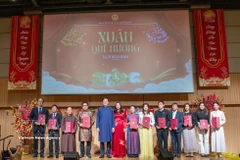
A performance at the Spring Concert 2026 (Photo: VNA)

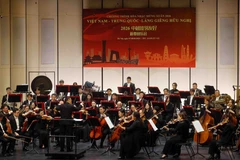
Spring Concert 2026 celebrates Vietnam–China friendship

Featuring renowned artists from both countries, the programme comprised two parts with a well-structured and engaging artistic arrangement, guiding the audience from traditional Chinese music to melodies praising Vietnam–China friendship, as well as excerpts from classic world operas.

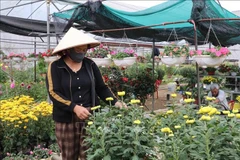
Farmers in Ninh Phuc flower village, Dong Hoa Lu ward, Ninh Binh province, are completing the final steps to bring beautiful and high-quality potted plants to market (Photo: VNA)

Spring colours fill Ninh Binh as farmers gear up for Tet market

As Tet approaches, traditional craft villages in the province are entering their busiest period. In kumquat and flower-growing villages, farmers are completing the final stages of care to ensure their products meet market demand in both quality and appearance.