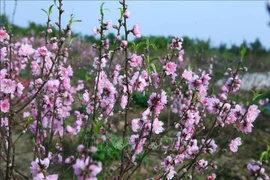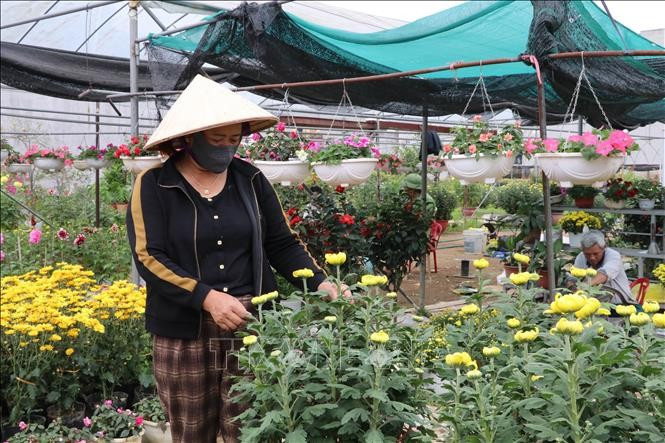
Ninh Binh (VNA) - In the days leading up to the Lunar New Year (Tet) – the Year of the Horse, gardens across the northern province of Ninh Binh burst into vibrant spring colours as flowers and ornamental plants reach peak bloom.
Beyond adding seasonal colour to homes, flower and ornamental plant cultivation has become an important source of income for farmers, while helping preserve traditional varieties and opening up opportunities for tourism linked to local agricultural products.
As Tet approaches, traditional craft villages in the province are entering their busiest period. In kumquat and flower-growing villages, farmers are completing the final stages of care to ensure their products meet market demand in both quality and appearance.
Nam Phong kumquat village in Vi Khe ward is among the well-known centres for ornamental kumquat cultivation. With around 1,200 households engaged in the trade, kumquat growing has become the main livelihood for many families, generating significantly higher returns than traditional crops. Farmers are now focused on pruning leaves, shaping fruit, monitoring soil moisture and applying fertiliser to achieve the desired balance of green foliage, golden fruit and elegant form. Each sao, or 360 sq.m of kumquat, can generate income of 60 million VND (2,310 USD) or more, far exceeding that from rice or other cash crops.
Hoang Van Hong, a resident of Vi Khe ward, said local growers were working intensively to supply the Tet market. While the work is demanding, he noted, it is rewarding to see their products well received and household incomes improve.
A similar atmosphere can be found in flower villages such as Hong Ha, Phu Van and Thien Truong, where hundreds of households planted chrysanthemums, roses, lilies and gladioli from the tenth lunar month. These colourful gardens, attractively arranged for browsing and purchase, have become seasonal highlights, drawing visitors from within and beyond the province.
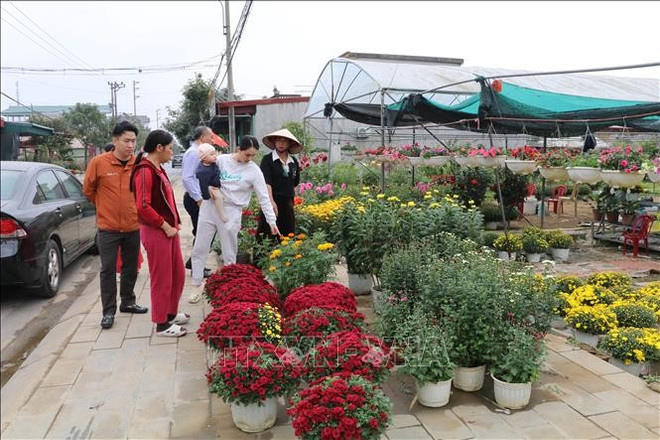
According to Truong Thi Hien, owner of a garden in Hong Ha flower village, erratic weather this year has posed challenges for growers, elaborating that dry spells alternating with sudden rain forced farmers to closely monitor forecasts and adjust care techniques to ensure flowers bloom at the right time for Tet. Despite the difficulties, she said, seeing buyers fill the village as the festival approaches brings great satisfaction.
Vitality of traditional craft villages
Beyond serving the market, the lively pace of activity in these villages has also helped create a festive atmosphere, attracting visitors to village roads and garden courtyards. Many households display their finest kumquat trees and flower pots for visitors to admire, photograph and purchase, generating additional income while contributing to the preservation of traditional crafts and plant varieties.
Ninh Phuc flower village, in Dong Hoa Lu ward, currently has about 15ha under cultivation, with main products including chrysanthemums, petunias, lilies, roses and gerberas. In recent years, farmers have increasingly applied modern techniques such as plastic mulching, water-saving irrigation systems, greenhouses and shading nets, enabling better control of flowering times and improving both productivity and quality. The village’s “golden chrysanthemum” product has been recognised as a three-star One Commune One Product (OCOP) item.
Director of the Ninh Phuc Flower Cooperative Dien Van Nhan said that flower cultivation provides stable incomes for local farmers. He added that the cooperative has focused on transferring technical knowledge, supporting seedlings and access to capital, and promoting digital transformation through automation and online sales to expand markets.
The bustling scenes in Ninh Binh’s gardens at year’s end reflect not only preparations for a prosperous Tet, but also the enduring vitality of traditional crafts and the strong desire for economic development and community cohesion across the province./.