Spring Fair 2026 highlights Vietnamese cultural essence in vibrant spring hues

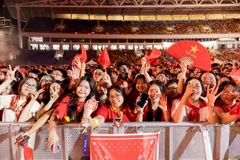
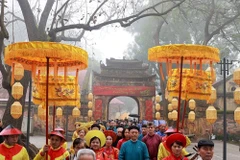
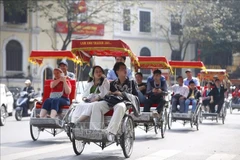
The zone “Essence of Vietnamese culture – Vietnamese Spring Colours” serves as the cultural heart of the fair, with its layout skillfully blending traditional elements with modern exhibition techniques, creating a space that feels both approachable and culturally resonant.

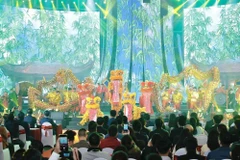
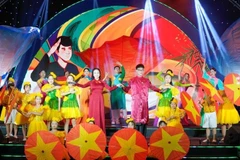
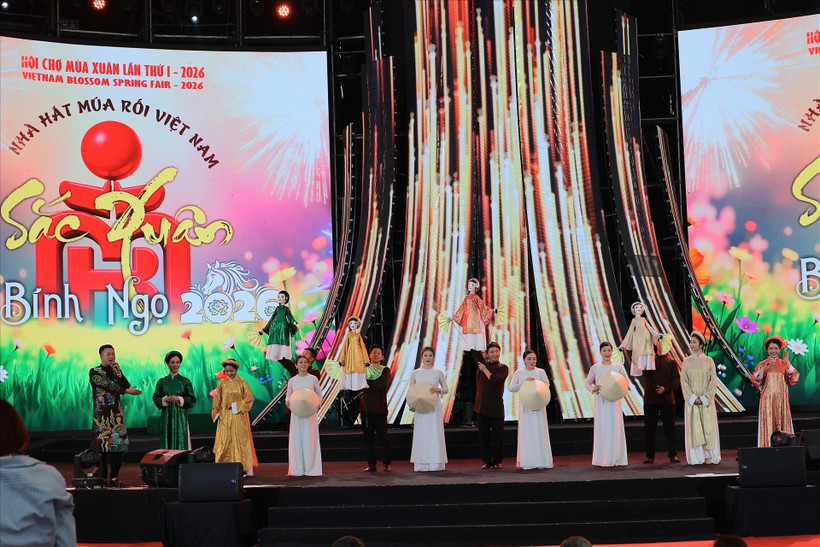
A performance by the Vietnam Puppet Theatre at the first Glorious Spring Fair 2026 (Photo: VNA)

Hanoi (VNA) – Among the eight carefully curated thematic zones of the first Glorious Spring Fair 2026, the “Essence of Vietnamese culture” zone, chaired by the Ministry of Culture, Sports and Tourism, has emerged as a standout attraction, offering a reflective cultural space that celebrates, connects and brings to life the core values of Vietnamese culture in a contemporary setting.

The zone, themed “Essence of Vietnamese culture – Vietnamese Spring Colours”, is located at the heart of the Vietnam Exposition Centre and serves as the cultural heart of the fair. Its layout skillfully blends traditional elements with modern exhibition techniques, creating a space that feels both approachable and culturally resonant.

It is organised into six key areas: a central stage; decorative and scenic installations; cultural tourism booths; handicraft stalls; creative design spaces; and booths representing cultural industries. While each area serves a distinct function, all are united by the shared objective of reintroducing and spreading the essence of Vietnamese culture to visitors.

More than a display area, the zone acts as a bridge linking heritage with contemporary creativity, gradually positioning culture as a resource that contributes meaningfully to socio-economic development.

At the centre of the zone, the main stage hosts the opening and closing ceremonies as well as a continuous line-up of artistic performances, cultural exchanges, product showcases and trade promotion activities throughout the fair. Programmes are flexibly designed and diverse in form, closely aligned with the theme “Vietnamese spring colours” and seamlessly combining traditional art forms with modern expressions.

A major highlight of the zone is the handicrafts area, where bamboo and rattan products, silk items, handwoven textiles, lacquerware and mother-of-pearl inlay products are showcased alongside stories of the artisans who create them, rather than merely presented as commercial goods.

Nguyen Thi Tuyet, an artisan from the Thiet Ung fine woodcarving village in Hanoi’s Thuy Lam commune, said the Spring Fair provides craft villages with a valuable opportunity to engage more directly and authentically with consumers. Through such events, artisans can demonstrate techniques, introduce their products and bring traditional crafts closer to the public.

Similarly, artisan Hong Vu from the centuries-old bamboo and rattan weaving village of Ninh So in Thuong Tin commune noted that traditional crafts are increasingly under pressure from industrial products. In this context, the Spring Fair serves as a vital platform for artisans to showcase skills and interact with visitors, reaffirming the lasting vitality and cultural significance of traditional crafts in modern society.

Complementing the handicrafts are fashion items, ao dai, decorative products and Tet gifts, all designed with traditional materials and inspirations but refreshed with a youthful aesthetic suited to contemporary lifestyles.
93-19-45-13.jpg
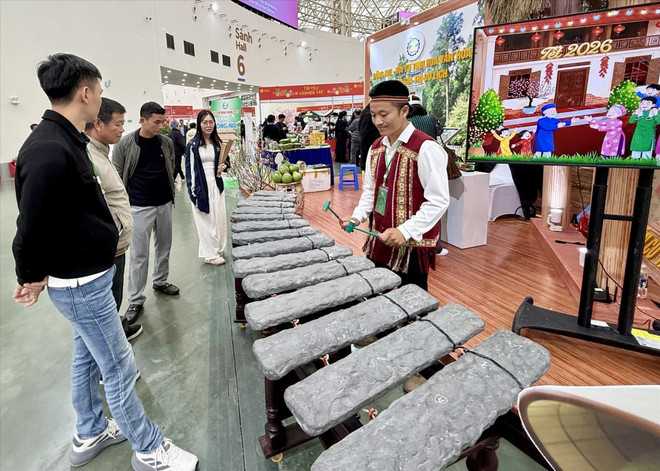
Visitors enjoy a stone lithophone performance at the Dong Nai tourism booth. (Photo: VNA)

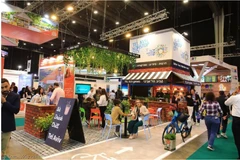
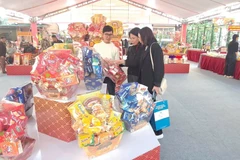
At cultural tourism booths, localities and businesses present products and services associated with heritage sites, festivals, traditional craft villages and local cultural values. Beyond promotion, these spaces facilitate supply – demand linkages, foster regional connectivity and help stimulate cultural tourism.

The Son La tourism booth has attracted large crowds, especially on the opening day, with performances of khen (panpipe) music of Mong ethnic people, folk songs and dances, and traditional banh day (glutinous rice cake) pounding, creating a vibrant and engaging atmosphere. Its representative said incorporating Mong ethnic cultural activities into the fair has drawn strong public interest, contributing to deeper promotion of local cultural identity and supporting community-based tourism.

Meanwhile, Bac Ninh’s booth has impressed visitors with Quan ho singing from the Kinh Bac region, while Dong Nai’s booth has captivated audiences with the distinctive sounds of the stone lithophone, a symbol of Vietnamese ingenuity and cultural spirit.

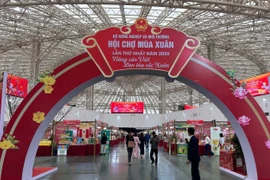
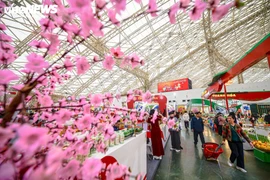
The first Glorious Spring Fair 2026 is being held at the Vietnam Exposition Centre in Dong Anh commune, Hanoi, from February 2 to 13./.
VNA

See more

Vietnamese Ambassador to Japan Pham Quang Hieu commends collectives that have made significant contributions to community work in 2025 (Photo: VNA)

Vietnamese in Australia preserve traditional Tet celebrations

The “Homeland Spring” programme in Australia left lasting impressions, bringing the warmth of Tet to overseas Vietnamese and reaffirming that wherever they may be, Vietnamese people share common roots and an aspiration for a prosperous future.

At the Vietnamese booth at the first International Spring Festival hosted by the administration of Chongqing city, China from February 6 to 8. (Photo: VNA)

Vietnam attends international spring festival in China’s Chongqing

The event brought together more than 20 foreign consulates general in Chongqing and Chengdu, along with many companies and well-known brands from the participating countries, creating a vibrant and multicultural exchange space on the occasion of the Year of the Horse.

Nguyen Thi Lien, Head of the Vietnamese Language Club in Malaysia and Vice Chairwoman of the Vietnamese Women’s Association in Malaysia. (Photo: VNA)

Overseas Vietnamese join hands in spreading Vietnamese culture

They affirmed that culture is the spiritual foundation and a vital endogenous strength of the nation, while underscoring the important role of overseas Vietnamese in preserving and spreading national cultural identity and promoting the image of Vietnam and its people to the world.

Foreign diplomats wear ao dai (Photo: VNA)

Foreign diplomats in Ho Chi Minh City join Tet celebrations

With the desire to share the beauty of Tet with international friends, HUFO organised the programme to create opportunities for diplomats working in the city and their families to engage in warm exchanges and build closer ties through Vietnamese traditional cultural activities, leaving them with lasting and memorable impressions of a traditional Vietnamese Tet in a civilised, modern and compassionate city, according to HUFO President Ha Thanh.

A performance at the Spring Concert 2026 (Photo: VNA)

Spring Concert 2026 celebrates Vietnam–China friendship

Featuring renowned artists from both countries, the programme comprised two parts with a well-structured and engaging artistic arrangement, guiding the audience from traditional Chinese music to melodies praising Vietnam–China friendship, as well as excerpts from classic world operas.

Farmers in Ninh Phuc flower village, Dong Hoa Lu ward, Ninh Binh province, are completing the final steps to bring beautiful and high-quality potted plants to market (Photo: VNA)

Spring colours fill Ninh Binh as farmers gear up for Tet market

As Tet approaches, traditional craft villages in the province are entering their busiest period. In kumquat and flower-growing villages, farmers are completing the final stages of care to ensure their products meet market demand in both quality and appearance.

International friends experience how a bowl of pho is prepared. (Photo: VNA)

Vietnamese Pho Day showcases culture, connectivity in Beijing

Vietnamese Ambassador to China Pham Thanh Binh described pho as a “national dish” and a cultural symbol of Vietnam. He said the event aimed to build bridges bringing international friends closer to Vietnam's culinary culture, thereby enhancing mutual understanding and people-to-people exchanges.

A performance staged at the political-artistic programme entitled “Duong len phia truoc” (The road ahead) held in Hanoi on February 4. (Photo: VNA)

Art programme marks Party’s 96th anniversary

The programme aimed to revisit the nation’s revolutionary traditions and reaffirm the Party’s comprehensive leadership throughout the revolutionary process, from the struggle for national independence to national construction and development during the renewal period and international integration.