Spring Fair 2026: “Bach Hoa Bo Hanh” parade honours beauty of Vietnamese traditional attire

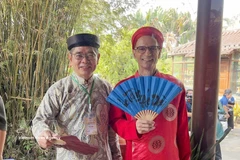
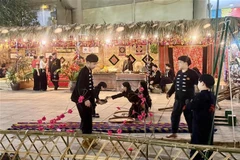
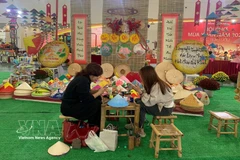
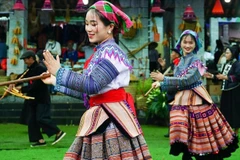
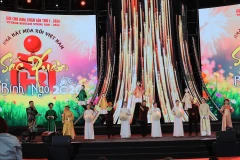
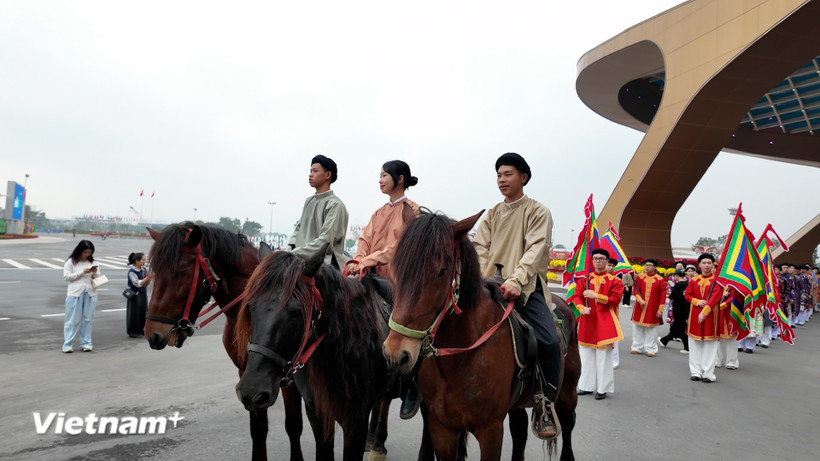
The image of young people wearing traditional Vietnamese costumes in the modern fair setting conveys the project’s key message: traditional culture does not only exist in museums or solemn ceremonial spaces, but can be loved, preserved and integrated into contemporary life by young people through community-based activities such as parades or everyday wear.

“Bach Hoa Bo Hanh” parade at the Glorious Spring Fair 2026 (Photo: VNA)

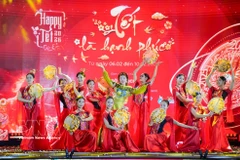
Hanoi (VNA) – Within the framework of the ongoing Glorious Spring Fair 2026, more than 50 models and artists have taken part in a parade titled “Bach Hoa Bo Hanh” (Parade of Flowers), recreating the “golden splendor” of Vietnamese traditional attire at the fair.

The carefully reconstructed performance on February 7 showcased the beauty of Vietnam’s traditional attire across different historical periods, drawing strong interest from local residents and visitors alike.

As the Lunar New Year of the Horse approaches, springtime Vietnamese costumes were elegantly presented in a special parade accompanied by horses, offering the public a glimpse of the refined, dignified yet free-spirited charm of Vietnamese culture through the centuries.

Speaking at the event, Nguyen Thanh Nam, a representative of the “Bach Hoa Bo Hanh” project, said that participating in activities within the Spring Fair was a very special experience. The image of young people wearing traditional Vietnamese costumes in the modern fair setting conveys the project’s key message: traditional culture does not only exist in museums or solemn ceremonial spaces, but can be loved, preserved and integrated into contemporary life by young people through community-based activities such as parades or everyday wear.

According to Nam, all participants share a common aspiration to help spread Vietnamese cultural values and the spirit of today’s youth in an era of global integration. It is a journey of reaching out to the world with confidence while carrying the essence of the past, allowing those enduring values to shape identity and national pride.

Attending the fair, Naya Eleven, a visitor from Russia, said she was impressed to witness a Vietnamese traditional costume performance for the first time in the Spring Fair setting. She noted that the appearance of traditional attire among streams of visitors created a sense of closeness and vibrancy.

Introducing Vietnamese costumes through a parade format makes them more accessible and helps audiences better understand Vietnamese culture, she said, adding that the open, friendly and cheerful atmosphere made her experience especially memorable and a beautiful highlight of her journey exploring Vietnam’s culture./.

VNA
See more

At the Vietnamese booth at the first International Spring Festival hosted by the administration of Chongqing city, China from February 6 to 8. (Photo: VNA)

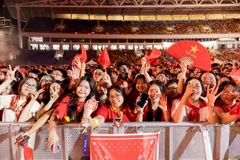
Vietnam attends international spring festival in China’s Chongqing

The event brought together more than 20 foreign consulates general in Chongqing and Chengdu, along with many companies and well-known brands from the participating countries, creating a vibrant and multicultural exchange space on the occasion of the Year of the Horse.

Nguyen Thi Lien, Head of the Vietnamese Language Club in Malaysia and Vice Chairwoman of the Vietnamese Women’s Association in Malaysia. (Photo: VNA)

Overseas Vietnamese join hands in spreading Vietnamese culture

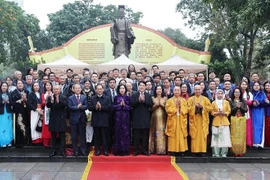
They affirmed that culture is the spiritual foundation and a vital endogenous strength of the nation, while underscoring the important role of overseas Vietnamese in preserving and spreading national cultural identity and promoting the image of Vietnam and its people to the world.

Foreign diplomats wear ao dai (Photo: VNA)

Foreign diplomats in Ho Chi Minh City join Tet celebrations

With the desire to share the beauty of Tet with international friends, HUFO organised the programme to create opportunities for diplomats working in the city and their families to engage in warm exchanges and build closer ties through Vietnamese traditional cultural activities, leaving them with lasting and memorable impressions of a traditional Vietnamese Tet in a civilised, modern and compassionate city, according to HUFO President Ha Thanh.

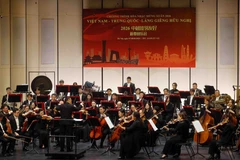
A performance at the Spring Concert 2026 (Photo: VNA)

Spring Concert 2026 celebrates Vietnam–China friendship

Featuring renowned artists from both countries, the programme comprised two parts with a well-structured and engaging artistic arrangement, guiding the audience from traditional Chinese music to melodies praising Vietnam–China friendship, as well as excerpts from classic world operas.

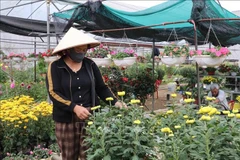
Farmers in Ninh Phuc flower village, Dong Hoa Lu ward, Ninh Binh province, are completing the final steps to bring beautiful and high-quality potted plants to market (Photo: VNA)

Spring colours fill Ninh Binh as farmers gear up for Tet market

As Tet approaches, traditional craft villages in the province are entering their busiest period. In kumquat and flower-growing villages, farmers are completing the final stages of care to ensure their products meet market demand in both quality and appearance.

International friends experience how a bowl of pho is prepared. (Photo: VNA)

Vietnamese Pho Day showcases culture, connectivity in Beijing

Vietnamese Ambassador to China Pham Thanh Binh described pho as a “national dish” and a cultural symbol of Vietnam. He said the event aimed to build bridges bringing international friends closer to Vietnam's culinary culture, thereby enhancing mutual understanding and people-to-people exchanges.

A performance staged at the political-artistic programme entitled “Duong len phia truoc” (The road ahead) held in Hanoi on February 4. (Photo: VNA)

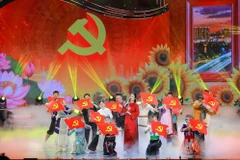
Art programme marks Party’s 96th anniversary

The programme aimed to revisit the nation’s revolutionary traditions and reaffirm the Party’s comprehensive leadership throughout the revolutionary process, from the struggle for national independence to national construction and development during the renewal period and international integration.