Attire adds colour to Vietnam’s tourism tapestry

From festivals and parades to craft-village tours and museum experiences, wearing ao dai is enriching tourism products, instilling pride and contributing to the sustainable development of cultural industries.

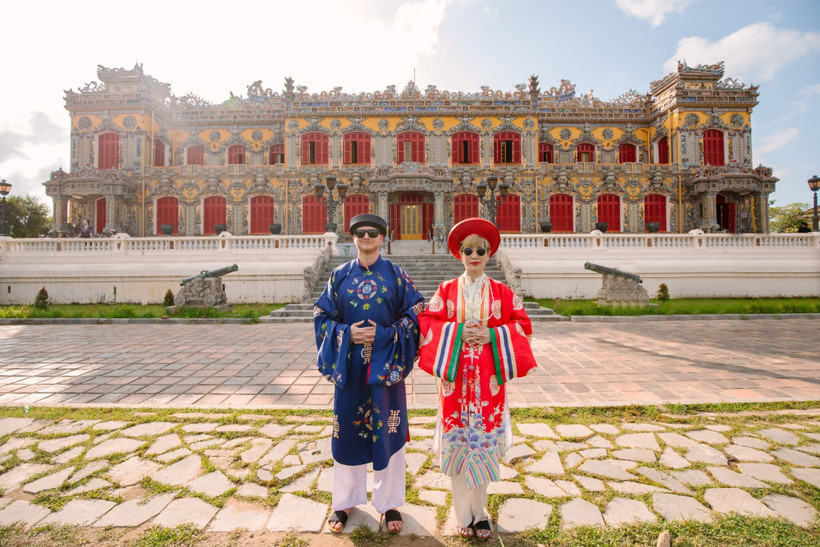
International tourists dressed in Vietnamese traditional attire (Photo: traveleverywhere.vn)

Hanoi (VNA) – The ao dai and other forms of traditional Vietnamese dress are enjoying a strong revival in contemporary life, gradually becoming a new cultural asset for the tourism sector.

From festivals and parades to craft-village tours and museum experiences, this trend is enriching tourism products, instilling pride and contributing to the sustainable development of cultural industries.

In recent years, Hanoi has been among the pioneering localities in turning the ao dai (traditional long dress) into a signature tourism product.

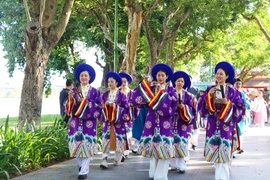
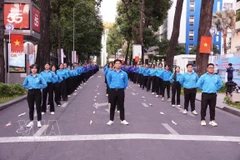
Most recently, the Hanoi Tourism Ao Dai Festival 2025, held in November, featured a highlight parade involving some 1,400 participants along major streets of the capital. Another activity attracting wide public interest was the re-enactment of the procession honouring the patron saint of the thousand-year-old Trach Xa tailoring craft village, recognised as part of the national intangible cultural heritage.

The festival drew tens of thousands of visitors who came to explore, take photographs and engage in interactive experiences at various locations across the city.

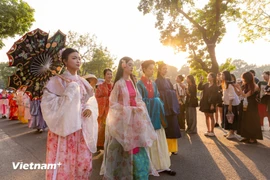
Also gaining traction is a local open-top bus tour, which allows visitors dressed in ao dai to explore heritage sites, pose for photographs and learn about the stories behind the capital’s architecture and customs. Steadily rising visitor numbers highlight the potential of offerings centred on traditional attire.

In Ho Chi Minh City, the 11th Ao Dai Festival this year proved highly popular, attracting 3.6 million visitors, including nearly 600,000 international tourists over its month-long run.

According to Nguyen Thi Kim Oanh, head of communications at the Southern Women’s Museum, ao dai is not only a cultural symbol but also holds significant potential as a commercial and iconic tourism product.

The southern metropolis has recently introduced a range of “cultural dressing experiences,” including ao dai photography sessions at French-style architectural landmarks, design-and-tailoring workshops, and ao dai fashion shows paired with musical performances.

Designer and artist Si Hoang, head of the Institute of Vietnamese Costumes, noted that although Vietnam has yet to officially designate a national costume, generations of Vietnamese have treated ao dai as a cherished tradition. International friends, he added, widely recognise it as a distinctive symbol of the country.

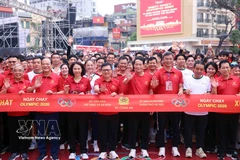
Beyond ao dai, a strong movement to revive historical garments has also emerged. Since 2022, the Vietnamese costume festival “Bach Hoa Bo Hanh” has gained nationwide popularity among young people, drawing thousands of participants each time. It has helped preserve and promote a rich array of traditional garments reflecting different periods of Vietnamese history – from the nhat binh (square-collared court robe) and ao tac (ceremonial robe) to giao linh (cross-collar robe) and vien linh (round-collar robe).

Notably, the establishment of the Vietnam Ao Dai Culture Association on August 9 in Hanoi is seen as an important step forward. It aims to guide the development of a cultural-tourism ecosystem around the piece and traditional attire, ensuring research, promotion and commercialisation are carried out in a structured and coherent manner./.
VNA

See more

Cover page of Viet Nam hanh phuc (Happy Vietnam) book (Photo: VNA)

VNA publishing house launches books to mark 14th National Party Congress

The three books published by the VNA Publishing House contribute to promoting Vietnam’s image at home and abroad. They also serve as valuable external information products, helping nurture confidence, aspiration and determination to build and safeguard a socialist Vietnam as it advances firmly into a new era of prosperity, strength, civilisation and happiness.

A ceremony to see off the Vietnamese sport delegation to compete at the 13th ASEAN Para Games in Thailand is held at Noi Bai International Airport on January 15, 2025. (Photo: VNA)

Vietnamese delegation sets off for 13th ASEAN Para Games

Vietnam sends 185 members, including 140 athletes, competing in 11 sports including athletics, swimming, weightlifting, badminton, table tennis, chess, judo, boccia, archery, tennis, and fencing. The country aims to win 40–50 gold medals and strives to rank among the top 4–5 countries.

Nguyen Van Than, Chairman of the Vietnam Classical Music Association (VCMA), speaks at a press briefing in Hanoi on January 13. (Photo: The organisers of the concert)

Concert to be held to celebrate 14th National Party Congress

The programme, jointly organised by the VCMA and the Vietnam Association of Small and Medium Enterprises, will feature nearly 150 artists, performers and musicians, representing the finest of Vietnam’s and the international classical music scene.

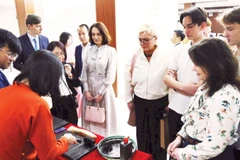
Visitors to Vietnam's booth at International Cultural Festival 2026 (Photo: VNA)

Vietnamese image introduced at International Cultural Festival 2026 in Greece

The Vietnamese Embassy in Greece took part in the International Cultural Festival 2026, organised by the UNESCO Club of Piraeus and Islands in Greece, marking the embassy’s first activity of the new year and highlighting its efforts to bring the image of Vietnam closer to the Greek public and international friends through traditional Vietnamese cuisine.

A dish of Vietnamese fried spring rolls (Photo: VNA)

Vietnamese rice paper makes way into European kitchens

Vietnamese rice paper is increasingly winning the hearts of European diners thanks to its versatility, easy preparation and ability to pair well with a wide range of Western ingredients. This culinary exchange not only broadens the reach of Vietnamese cuisine but also enriches the multicultural culinary landscape of Belgium and many other countries.

A visitor to the exhibition (Photo: VNA)

Colours of Friendship: Hanoi welcomes Vietnam-RoK artistic encounter

The harmonious mingling of works by artists from both nations conjures a multi-layered, dynamic space where distinct visual languages intersect with shared emotional depth, aesthetic thinking and creative spirit. The result is a rich and refreshing visual experience.

Artists take part in a parade at the Hanoi Creative Design Festival 2024. (Photo the HFCD organiser)

'Creative Meetup' programme takes place in Hanoi

The 'Creative Meetup' programme in Hanoi showcases initiatives from the creative community across eight cultural industry sectors, celebrating creativity and innovative solutions within the creative community.

A student from Nguyen Du Lao-Vietnamese bilingual school participates in a story-telling competition in Vietnamese with the theme "Vinh Moc Tunnel - Quang Tri, where life is immortal" (Photo: VNA)

Culture expected to remain pillar of Vietnam’s sustainable development: ethnologist

Ha noted that the upcoming congress is also expected to improve institutions and infrastructure for cultural industries, intellectual property and the creative economy sector. These fields are not only drivers of identity-based economic growth but also key tools for strengthening soft power and projecting the national image in an increasingly interconnected world.