Hanoi (VNA) – Resolution No. 80-NQ/TW of the Politburo highlights Vietnamese culture as a vital internal resource that shapes national identity and mettle, with corporate culture emerging as a key driver of competitiveness and sustainable development of businesses and, more broadly, for the national economy.
The resolution affirms that the nation’s culture embodies the finest values forged over thousands of years of national construction and defence, forming a foundational source of strength, nurturing the mindset, soul, spirit, and character of the Vietnamese people.
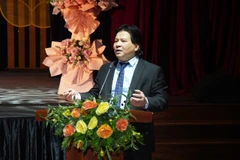
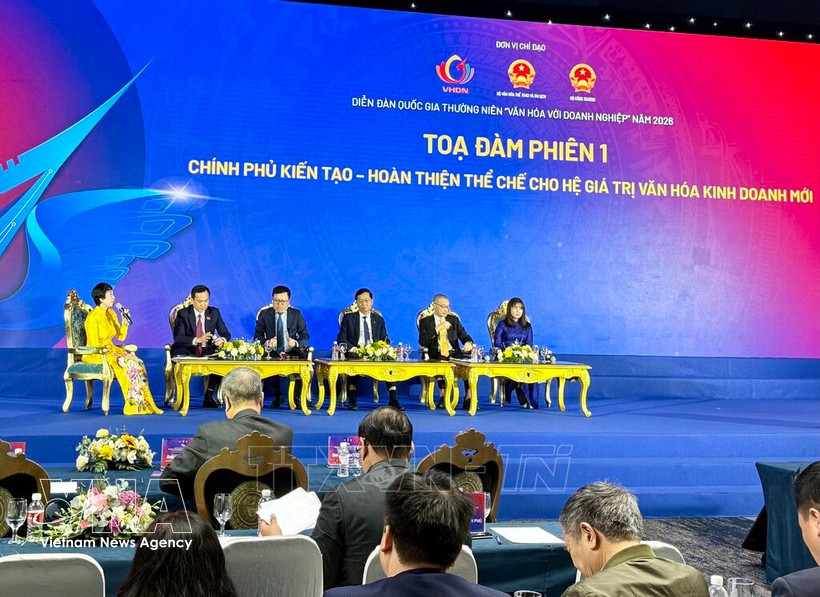
At the “Culture and Business” National Forum 2026, economic expert Dr Can Van Luc said companies with strong corporate culture achieve profitability levels 1.3 to 1.8 times higher—averaging 1.5 times—than those lacking a clear cultural foundation.
This underscores that culture is not a cost but a value-generating asset. Amid intensifying global competition, intangible values such as trust, credibility, and standards are increasingly emerging as distinctive competitive advantages.
Experts agree that corporate culture plays a crucial role in brand positioning and promoting Vietnamese cultural values globally. It helps shape employee behaviour and attitudes in customer service, define how enterprises operate, and influence how they are perceived.
Corporate culture reflects how businesses treat customers, partners, employees and society, as well as in governance practices, decision-making and professional ethics, they added.
Today, corporate culture is increasingly seen as a core competitive capability—a “soft key” enabling enterprises to integrate more deeply into global value chains.
After nearly four decades of Doi moi (renewal), Vietnam’s business community has undergone a remarkable transformation, steadily expanding in scale and achieving significant milestones while shaping distinct business cultures and philosophies. Enterprises have also made notable strides in improving quality, strengthening brand credibility, and enhancing their contributions to national development.
The country is now home to more than one million active enterprises. The private sector accounts for approximately 60–65% of GDP and provides jobs for over 30 million workers. In 2025, total import – export turnover surpassed 920 billion USD, positioning Vietnam among the world’s top 20 trading economies.
Experts noted that amid current global business trends, consumers are placing growing emphasis on corporate culture. Sustainable success is no longer driven solely by capital, technology or market access, but increasingly rests on strong cultural foundations.
Corporate culture has thus emerged as a valuable “intangible asset” shaping identity, reinforcing credibility, and ensuring long-term vitality. It goes beyond ethical standards to become a prerequisite—a “passport” enabling enterprises to integrate more deeply into international markets, they added.
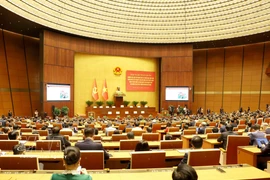
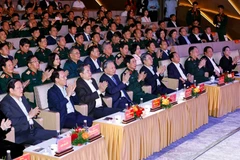
Speaking at the forum, Deputy Prime Minister Mai Van Chinh stressed that a strong economy is measured not only by its GDP size, technological capacity or market share, but also by business culture, social responsibility, transparency, innovation and the aspiration to contribute.
In a knowledge-based, digital and globalised economy, culture permeates governance, business conduct, competition, cooperation and contribution to society, becoming an internal resource and a form of soft power of the national economy in the new era, he said.
Corporate culture is the most valuable and enduring asset of any enterprise, serving as the foundation for building its brand, he said, noting that culture and brand credibility remain lasting values that help enterprises to survive, secure long-term development, and affirm their position.
He urged Vietnamese businesses and entrepreneurs to think big, act boldly and align development with cultural values, noting that strong brands must be built on ethical standards and social responsibility.
Experts said that Resolution 80 marks a significant shift in mindset by placing culture on par with economic, political and social pillars while highlighting its role in regulating all development activities, including production and business. It positions business culture at the heart of sustainable development, not merely as an ethical standard but as a critical internal driver of the economy.
Deputy Minister of Culture, Sports and Tourism Trinh Thi Thuy noted that in the era of global integration, corporate culture has become a core competitive advantage. She observed that the resolution therefore prioritises building a generation of Vietnamese entrepreneurs with strong ethical standards and a corporate culture rooted in national identity while selectively adopting best international practices.
Enterprises should align their operations with national values such as patriotism, solidarity, self-reliance, compassion, honesty, responsibility, discipline and innovation, she said.
The cultural sector will prioritise building a healthy cultural environment, Thuy stated, expressing confidence that Vietnam’s corporate culture will become a powerful internal driver, with each entrepreneur acting as a cultural ambassador bringing the Vietnamese identity and wisdom to the global stage./.
VNA