More than 50 outstanding books honoured at 8th National Book Awards

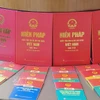
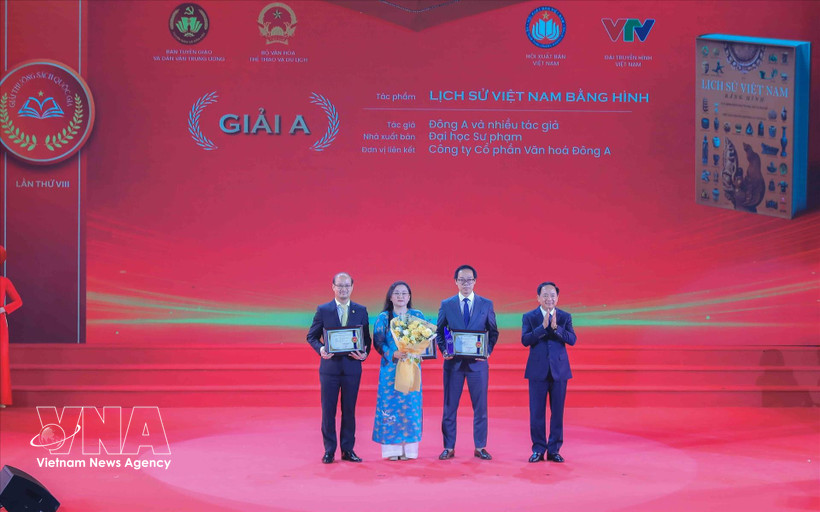
Two A prizes, the highest distinction of the awards, were granted to Lich su Vietnam bang hinh (Vietnamese History in Pictures) by Dong A and multiple authors, jointly published by the Publishing House of Hanoi National University of Education and Dong A Culture Joint Stock Company.

Head of the Party Central Commitee's Commission for Information, Education and Mass Mobilisation Trinh Van Quyet (first, right) presents A prize to the winning authors and groups of authors. (Photo: VNA)

Hanoi (VNA) – More than 50 outstanding books and book series across five different categories were honoured at the 8th National Book Awards ceremony held in Hanoi on March 8.

The event, which was jointly organised by the Ministry of Culture, Sports and Tourism, the Party Central Committee’s Commission for Information, Education and Mass Mobilisation, the Vietnam Publishing Association, and Vietnam Television, attracted the participation of 46 out of 52 publishing houses nationwide, with 397 book titles and series submitted.

Two A prizes, the highest distinction of the awards, were granted to Lich su Vietnam bang hinh (Vietnamese History in Pictures) by Dong A and multiple authors, jointly published by the Publishing House of Hanoi National University of Education and Dong A Culture Joint Stock Company.

The second A prize was awarded to Lich su Van minh the gioi (The Story of Civilisation) by authors Will & Ariel Durant. The Vietnamese edition was translated by a group of translators including Huynh Ngoc Chien, Phan Thanh Luu, Pham Viem Phuong, Bui Thanh Chau, Bui Xuan Linh, and Do Lan, and published by the Social Sciences Publishing House in collaboration with the IRED Institute of Education.

In addition, the organising board presented 17 B prizes, 23 C prizes, five consolation prizes, and five Reader’s Favourite Book awards to outstanding works and groups of works by authors and author groups.
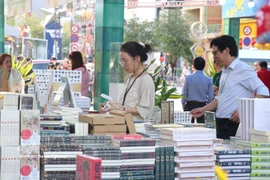
vnanet-sach-2.jpg
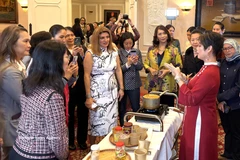
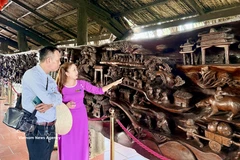
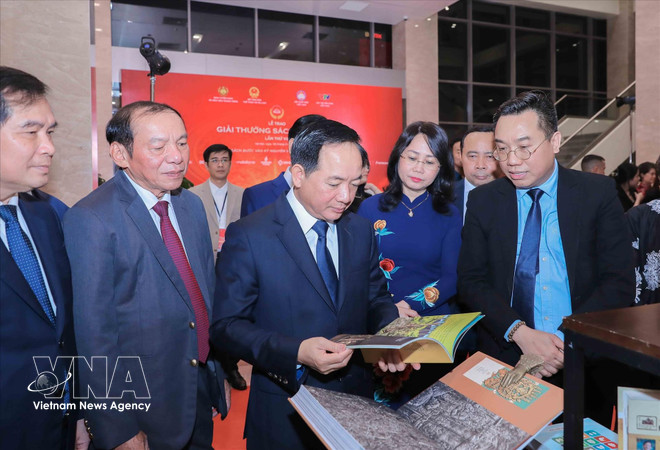
Head of the Party Central Commitee's Commission for Information, Education and Mass Mobilisation Trinh Van Quyet (third, left) and delegates visit the exhibition area of ​​award-winning books. (Photo: VNA)

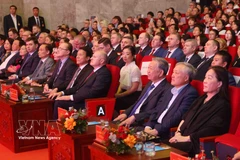
Addressing the ceremony, Secretary of the Party Central Committee and head of the committee's Commission for Information, Education and Mass Mobilisation Trinh Van Quyet emphasised that throughout the nation’s history, culture, knowledge, and books have played a particularly important role in the country’s development.

Culture serves as the spiritual foundation of society, knowledge as a key development resource, while books crystallise human intellect and preserve, disseminate, and nurture the noble values of both the nation and humanity across generations, he said.

Quyet noted that the National Book Awards have increasingly affirmed their position as a prestigious State-level prize in the publishing sector, with practical significance in honouring works of high ideological, academic, cultural, scientific, and artistic value. The awards also serve to encourage authors, translators, researchers, publishers, and those working in the book industry to continue their creative efforts and contributions to national development.

Based on the practical development of the publishing sector in the new context, he urged relevant agencies, publishers, authors, translators, and book professionals to focus on several key tasks. These include improving the ideological and academic quality as well as the cultural value of each publication; promoting innovation and digital transformation in publishing activities; fostering a stronger reading culture across society; enhancing international cooperation in publishing and translation; and further elevating the National Book Awards so that they truly become a reputable cultural institution with broad influence and value orientation.

Quyet expressed confidence that with Vietnam’s long-standing tradition of valuing learning and knowledge, along with the nation’s aspiration for progress, the country’s publishing sector will continue to develop strongly and reading culture will be further promoted across society.

The awards will increasingly affirm their prestige, quality, and value, becoming a meaningful symbol of intellect, creativity, and dedication to the development of Vietnam’s culture, people, and nation, he added./.

VNA

See more

At the event “Vietnamese Language in the heart of Kyushu, Japan” (Photo: VNA)

Vietnamese in Japan revive mother tongue among young generations

While the number of Vietnamese-origin children in Japan is surging, opportunities to actually speak Vietnamese in daily life are vanishing fast. Many children can understand the language but default to Japanese in response, gradually relegating their mother tongue to a secondary role, sometimes even treating it as a “second foreign language” inside their own houses.

A tribute to Hung Kings in Ho Chi Minh City (Photo: VNA)

Hung Kings’ Commemoration Day 2026 to spread sacred values, foster national unity

Following the merger of Phu Tho, Vinh Phuc, and Hoa Binh provinces into the new Phu Tho province last year, the Hung Kings Temple Festival has taken on heightened significance. It now serves not only as a tribute to the ancestral homeland but also a unified cultural platform that extends sacred ancestral values to Vietnamese communities at home and abroad.

A traditional art performance at Bach Ma temple in Hanoi (Photo: VNA)

Traditional arts hold untapped economic power

Traditional arts embody deep aesthetic values, worldviews, and national identity, shaping the country’s distinctive “aesthetic identity” and foundational cultural tastes

A performance at the opening ceremony of the Hung Kings Temple Festival and the 2026 Ancestral Land Culture and Tourism Week on late April 17 (Photo: VNA)

Hung Kings Temple Festival, associated tourism week kick off

The annual festival serves as a major national cultural event, offering an opportunity for people across Vietnam and overseas Vietnamese communities to pay tribute to their ancestors, express gratitude, and strengthen the great national solidarity.

A ritual at Hue Nam Temple Festival (Photo: VNA)

Hue Nam Temple Festival: From imperial relic to distinctive cultural celebration in Hue

Historically known as Ngoc Tran Son Tu, the temple was renamed Hue Nam during the reign of King Dong Khanh in the late 19th century, symbolising royal gratitude to the Mother Goddess. It is also the only temple in Hue that harmoniously combines royal ceremonial elements with folk religious practices, creating a distinctive blend of court ritual and popular belief.

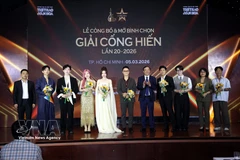
Participants in the 20th Cong hien (Devotion) Awards presentation ceremony in Hanoi on April 15 (Photo: VNA)

Devotion Awards mark two decades of honouring excellence in music, sports

Nguyen Thien Thuat, Editor-in-Chief of the The Thao & Van Hoa newspaper and Head of the organising board of the awards, said, noting that their achievements reflect the spirit of the Politburo’s Resolution No. 80, which emphasises preserving national cultural values while selectively absorbing the essence of world culture.

Artisans and students take part in cultural activities and exchanges in the Xoan singing performance space at Hung Lo ancient communal house in Phu Tho province (Photo: VNA)

Ancestral legends revived through contemporary performance

Beyond cultural value, well-organised festival programmes linked with tourism and media can contribute to the development of cultural industries and enhance Vietnam’s cultural soft power, positioning heritage-based events as distinctive national cultural brands in the international arena.

Khue Van Cac (Khue Van Pavilion) stands as a defining cultural symbol of Hanoi, closely associated with Vietnam’s long-standing tradition of valuing education and honouring knowledge. (Photo: VNA)

Greater efforts needed for heritage to shape Hanoi’s identity

As suggested by UNESCO experts, heritage should be approached as an integrated system encompassing space, people and everyday life. This perspective can inform urban planning, cultural tourism development and the creation of clear economic drivers.