Dossier finalised to seek UNESCO recognition of Oc Eo – Ba The archaeological site

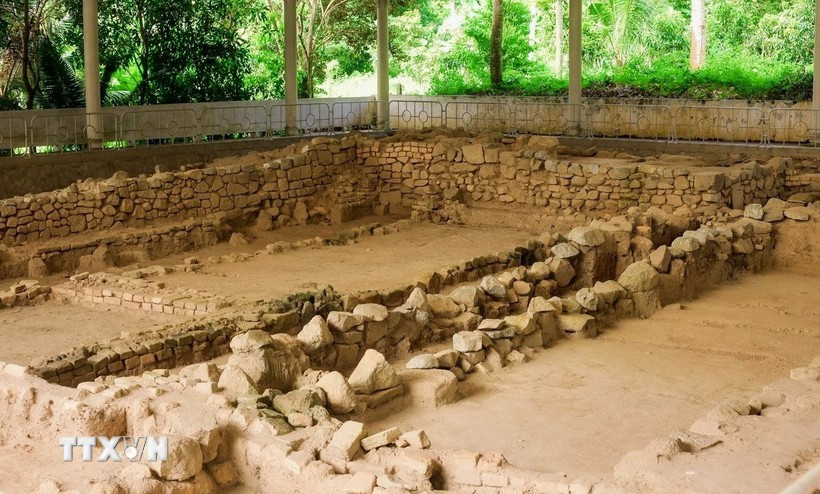
The Oc Eo Civilisation, which flourished in southern Vietnam from the 1st to the 7th centuries, was first discovered in 1942 by French archaeologist Louis Malleret through artefacts unearthed in Ba The Mountain area, now part of Oc Eo commune.

Oc Eo – Ba The is a typical site of the Oc Eo Civilisation, which flourished in southern Vietnam from the 1st to the 7th centuries. (Photo: VNA)

Hanoi (VNA) – Deputy Prime Minister Mai Van Chinh has approved the submission of the scientific dossier on the Oc Eo – Ba The archaeological site in southern An Giang province to the United Nations Educational, Scientific and Cultural Organisation (UNESCO) for consideration and inclusion on the world heritage list.

The Minister of Culture, Sports and Tourism was authorised to thoroughly review, finalise, and sign the dossier before submitting it to the UNESCO World Heritage Centre, ensuring compliance with quality standards and deadlines.

The Ministry of Foreign Affairs and the Vietnam National Commission for UNESCO will collaborate with relevant agencies to carry out necessary procedures for submitting the dossier to the UNESCO World Heritage Centre before January 30, 2026, in accordance with the 1972 World Heritage Convention and Vietnam’s cultural heritage law.

They will bring into play Vietnam’s role within UNESCO governance mechanisms and actively support the Ministry of Culture, Sports and Tourism, the People’s Committee of An Giang province, and related agencies in implementing measures to garner international consensus in favour of the Oc Eo – Ba The recognition.

The An Giang People’s Committee will review and take full responsibility for the content, data, and accuracy of the scientific dossier. It is also tasked with coordinating with relevant ministries and agencies to support UNESCO’s evaluation and recognition of the site and promptly report any matters beyond its authority.

The special national relic, representing the ancient Oc Eo Civilisation, spans 433.1 hectares in Oc Eo commune. The civilisation, which flourished in southern Vietnam from the 1st to the 7th centuries, was first discovered in 1942 by French archaeologist Louis Malleret through artefacts unearthed in Ba The Mountain area, now part of Oc Eo commune.

Currently, An Giang is home to more than 80 Oc Eo relic sites. Among them, Oc Eo – Ba The stands out as a key location as it is believed to once serve as a bustling urban centre, port city, and major economic and cultural hub of the ancient Kingdom of Phu Nam. It was recognised as a special national relic site in 2012.

In October 2021, the Prime Minister approved the submission of a brief report to UNESCO, proposing the site for inclusion in the tentative list of world heritage sites.

On January 4, 2022, the UNESCO World Heritage Centre officially added the Oc Eo – Ba The site to its tentative list for world heritage nominations./.
VNA

See more

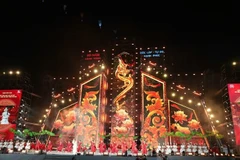
A performance at the opening ceremony of the Hung Kings Temple Festival and the 2026 Ancestral Land Culture and Tourism Week on late April 17 (Photo: VNA)

Hung Kings Temple Festival, associated tourism week kick off

The annual festival serves as a major national cultural event, offering an opportunity for people across Vietnam and overseas Vietnamese communities to pay tribute to their ancestors, express gratitude, and strengthen the great national solidarity.

A ritual at Hue Nam Temple Festival (Photo: VNA)

Hue Nam Temple Festival: From imperial relic to distinctive cultural celebration in Hue

Historically known as Ngoc Tran Son Tu, the temple was renamed Hue Nam during the reign of King Dong Khanh in the late 19th century, symbolising royal gratitude to the Mother Goddess. It is also the only temple in Hue that harmoniously combines royal ceremonial elements with folk religious practices, creating a distinctive blend of court ritual and popular belief.

Participants in the 20th Cong hien (Devotion) Awards presentation ceremony in Hanoi on April 15 (Photo: VNA)

Devotion Awards mark two decades of honouring excellence in music, sports

Nguyen Thien Thuat, Editor-in-Chief of the The Thao & Van Hoa newspaper and Head of the organising board of the awards, said, noting that their achievements reflect the spirit of the Politburo’s Resolution No. 80, which emphasises preserving national cultural values while selectively absorbing the essence of world culture.

Artisans and students take part in cultural activities and exchanges in the Xoan singing performance space at Hung Lo ancient communal house in Phu Tho province (Photo: VNA)

Ancestral legends revived through contemporary performance

Beyond cultural value, well-organised festival programmes linked with tourism and media can contribute to the development of cultural industries and enhance Vietnam’s cultural soft power, positioning heritage-based events as distinctive national cultural brands in the international arena.

Khue Van Cac (Khue Van Pavilion) stands as a defining cultural symbol of Hanoi, closely associated with Vietnam’s long-standing tradition of valuing education and honouring knowledge. (Photo: VNA)

Greater efforts needed for heritage to shape Hanoi’s identity

As suggested by UNESCO experts, heritage should be approached as an integrated system encompassing space, people and everyday life. This perspective can inform urban planning, cultural tourism development and the creation of clear economic drivers.

Participants at the gathering (Photo: VNA)

Lao, Cambodian students welcome traditional New Year in Ho Chi Minh City

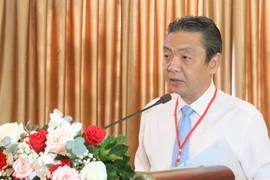
In his speech, Vice Chairman of the municipal People’s Committee Nguyen Manh Cuong said the municipal Party organisation, authorities and people always value the close ties and solidarity among Vietnam, Laos and Cambodia. He described the three nations’ longstanding ties, forged through shared hardships, as an invaluable spiritual asset and a bedrock for sustainable development.

Vietnamese kickboxers win 32 gold medals at the Kickboxing World Cup 2026. (Photo: Vietnam Kickboxing Federation)

Vietnam finish third at Kickboxing World Cup 2026

According to Vu Duc Thinh, President of the Vietnam Kickboxing Federation, the strong results reflected careful preparation by local training centres and the determination of Vietnamese fighters. The team’s participation, funded largely through socialised and local resources, also demonstrated growing support for the development of kickboxing in Vietnam.