Central bank moves to tighten AI use in banking, requires prior customer notification

The State Bank of Vietnam (SBV) has moved to tighten oversight of artificial intelligence (AI) in the banking sector, requiring lenders and e-wallet providers to notify customers in advance when AI systems are used to interact directly with them.

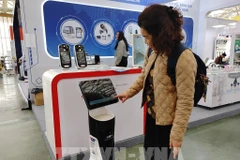
A banking chatbot addresses urgent operational needs in digital transformation. (Photo: VNA)

Ho Chi Minh City (VNS/VNA) - The State Bank of Vietnam (SBV) has moved to tighten oversight of artificial intelligence (AI) in the banking sector, requiring lenders and e-wallet providers to notify customers in advance when AI systems are used to interact directly with them.

The proposal is included in a draft circular on safety, risk management and conditions for AI deployment in banking activities, released as financial transactions surge, especially during Tet (Lunar New Year) holiday.

Under the draft, banks and intermediary payment service providers must inform customers before deploying AI-powered tools such as virtual assistants, automated hotlines and chatbots in customer communications.

Institutions must also notify users if AI is applied for emotion recognition or biometric classification. Any content generated by AI, including images, audio or video, must be clearly disclosed to prevent misunderstanding.

Notably, the draft prohibits banks from using AI to exploit customer vulnerabilities linked to age, disability or financial hardship in order to market high-risk or unsuitable financial products.

Customers will have the right to file complaints against decisions made on the basis of AI systems. In such cases, banks are required to assign human personnel to review and handle the matter.

The new regulations are expected to take effect from March. AI systems already in operation before the effective date will have until September 2027 to comply.

The central bank said the tighter framework is aimed at controlling risks arising from the rapid expansion of AI across banking operations, ensuring fair treatment of customers and protecting vulnerable groups.

In recent years, many Vietnamese banks have stepped up the use of AI in areas such as eKYC, credit scoring, loan appraisal and fraud detection.

The growing use of generative AI in customer service, including answering queries on transactions, card services, interest rates and exchange rates, has raised fresh regulatory concerns over data security, output accuracy and privacy protection./.

VNA

See more

Viettel Digital Talent and Viettel Future Changemakers are open for registration until March 15, 2026. (Photo: Viettel)

Viettel launches talent search to develop young workforce for core technologies

Unlike conventional internship or management trainee schemes, both programmes are designed and implemented directly by Viettel, integrating training with real-world work in a global technology group. Participants are entrusted with solving major challenges that directly impact Viettel’s research, production and business operations.

A close-up view of the UAVs used in the Can Gio - Vung Tau delivery route on Fenruary 12, 2026 in Ho Chi Minh City (Photo: CT UAV)

Vietnam’s first cross-sea UAV delivery route inaugurated

The event marked the debut of the country’s first cross-sea unmanned postal route, representing a pioneering step in smart mobility solutions aimed at boosting the digital economy and easing pressure on road transport infrastructure in Ho Chi Minh City.

According to the Vietnam National Authority of Tourism (VNAT), which cited the Google–Temasek–Bain & Company e-Conomy SEA 2025 report, tourism remains one of the key drivers of Vietnam’s economy. (Photo: VNA)

Digital transformation in tourism for comprehensive, sustainable growth

Vietnam is well positioned to become a leading digital tourism destination in the region. By capitalising on current growth momentum and implementing targeted support measures for small and medium-sized enterprises, the country can build a smart and sustainable tourism ecosystem aligned with global digital transformation trends.

Party General Secretary To Lam ( second, from left) visits an exhibition showcasing the government's achievements in science, technology, innovation, and digital transformation. (Photo: VNA)

Fund mechanisms positioned to unlock greater resources for innovation

Resolution No. 57-NQ/TW of the Politburo defines fund-based mechanisms as the core financial tool for advancing science, technology and innovation. Under the resolution, State budget funding for research and development is prioritised for allocation through funds, alongside reforms in financial management, expanded autonomy, streamlined procedures, and acceptance of the risks and time lags inherent in research activities. It also calls for the establishment of venture capital funds and science and technology development funds to steer, mobilise and unlock social resources for innovation.

UAV Cup PV GAS 2025 looks for solutions to boost the low-altitude economy (Photo: qdnd.vn)

Digital economy helps power breakthrough growth

The application of digital technologies, big data, artificial intelligence, e-commerce and digital platforms is creating new opportunities for businesses and citizens across production, business activities and social governance. Sectors such as e-commerce, digital finance, smart logistics and digital platform-based services are generating significant added value, while online public services, cashless payments, digital education and digital healthcare are increasingly improving quality of life and the transparency and efficiency of state management.

Camera manufacturing at Sunny Opotech Vietnam Co., Ltd. in Yen Binh Industrial Park in Thai Nguyen province. (Photo: VNA)

Resolution No. 57: Vietnam moves to create favourable legal framework for technology transfer

The Ministry of Science and Technology has sought feedback on a draft decree amending the Government's Decree No. 76/2018/ND-CP, aiming to strengthen the legal framework for technology appraisal and transfer, improve support policies for participating entities, and enhance risk management to ensure sustainable development, environmental protection and public health.

A visitor experience the robot receptionist at the Spring Fair 2026. (Photo: VNA)

Glorious Spring Fair 2026: technology underpins product quality

With the Politburo's rollout of Resolution No. 57-NQ/TW on breakthroughs in science, technology, innovation, and national digital transformation, along with Resolution No. 68-NQ/TW on developing the private economic sector, a key focus is on applying scientific and technological advances to produce essential consumer goods.