Hanoi (VNA) – As the traditional Lunar New Year (Tet) comes each year, “li xi” (red lucky money envelope) remains a familiar symbol of good fortune and reunion. Yet, alongside rapid digital transformation, the tradition of giving Tet's lucky money is gradually evolving as many people opt to send it via e-wallets and banking applications.
While convenient and modern, the rise of “digital li xi” raises the question of whether it may dilute the meaning of this long-standing practice on the Lunar New Year’s first days.
When digital “li xi” reaches every home
In folk belief, giving lucky money at the beginning of a year is a ritual of blessing. Elders present children with money in red envelopes to wish them good health, good behaviours and academic success, while younger generations offer their parents and grandparents tokens of longevity and peace. The red envelope – the colour of good luck and joy – symbolises a smooth and auspicious start to a new year.
However, the fast pace of modern life, together with the widespread use of smartphones and cashless payments, has gradually changed this practice. The shift became particularly evident after the COVID-19 pandemic, when physical gatherings were restricted and online lucky money emerged as a practical alternative.
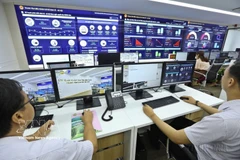
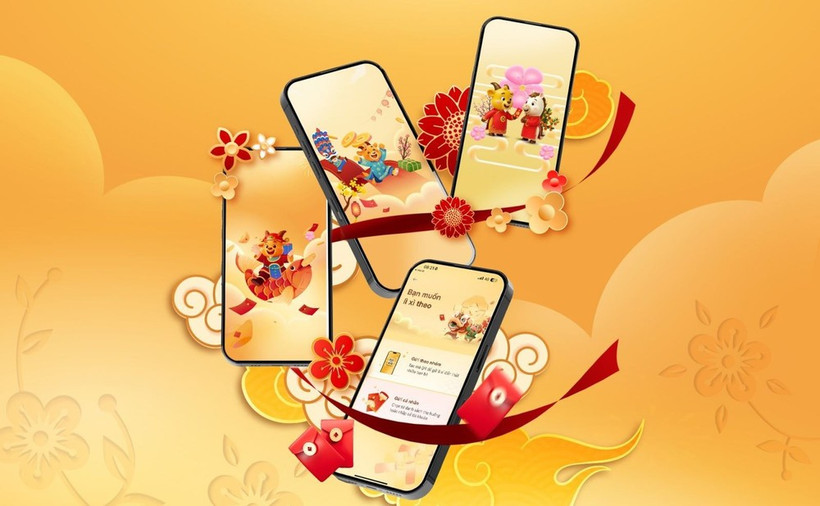
Today, platforms such as MoMo, ZaloPay, Viettel Money, ShopeePay and digital banking applications all integrate the e-li xi function. With just a few taps, users can send monetary gifts along with personalised greetings to relatives and friends anywhere.
For Lan Huong, a Hanoian now living in Ho Chi Minh City, the digital option has become the family’s preferred choice in recent years. It is quick and convenient, eliminating the need to exchange new banknotes or prepare multiple envelopes, while the cheerful notification sounds delight children.
According to statistics from a major e-wallet provider, Vietnamese users sent more than 150 million digital lucky money envelopes during Tet 2025, double the figure recorded a year earlier. Beyond simple transfers, the envelopes are customised with zodiac mascots, animated cards and festive messages, creating a distinct Tet atmosphere in the digital space.
For many young people, the format offers a modern and creative way to extend New Year greetings. Ha Anh, a Hanoi-based student, said online lucky money still conveys warmth when accompanied by sincere wishes and lively designs, as recipients often respond immediately, maintaining a sense of connection.
For those studying or working far from home, it also serves as a bridge across distances. Quang Anh, a doctoral researcher in the US, said sending lucky money online to his parents every year, together with New Year video calls, helps him feel closer to his family despite being thousands of kilometres away.
Preserving Tet’s spirit in digital age
Despite its advantages, the growing popularity of digital lucky money has prompted concerns, particularly among older generations, for whom Tet is not merely about receiving money but about face-to-face greetings, smiles and heartfelt wishes.
Minh Tam, 71, from Hanoi shared that in the past, lucky money was inseparable from family reunions and watching grandchildren grow year by year. Text messages alone, she said, feel incomplete, especially for elderly people unfamiliar with technology. Even so, she still prepares traditional envelopes for grandchildren to receive in person when they return home.
Indeed, the essence of the custom lies in the act of giving – in respectful bows, gentle smiles and the laughter of family gatherings. When reduced to a few seconds on a touchscreen, those emotions can sometimes fade, a sentiment even some young people acknowledge.
Cultural researchers note that when a tradition is digitised, the greatest risk is not the change in form but the gradual loss of its original meaning. If lucky money becomes merely a financial transaction, Tet’s spiritual value may be diminished.
Yet change is an inevitable part of social development. Just as handwritten letters gave way to text messages and traditional markets to online shopping, digital lucky money reflects the adaptability of Vietnamese culture.
Associate Professor Dr Nguyen Thi Minh, a folklorist, said that tradition is not static and only disappears when people no longer understand or cherish its significance.
Recognising this, many e-wallet providers are incorporating traditional Tet elements into digital envelopes through spring-themed designs, poetic greetings and even simulated opening sounds to evoke familiar festive emotions.
Tet may change in form, but the spirit of exchanging blessings endures. A digital envelope sent with sincerity can still carry the warmth of a New Year handshake. In the rhythm of an increasingly digital life, the soul of Tet remains intact – whether held in one’s hands or appearing on a smartphone screen./.
VNA