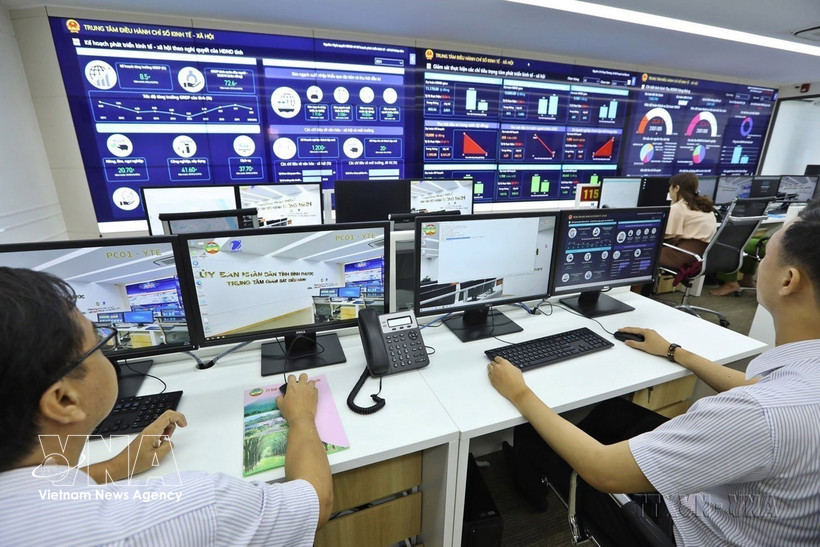
Hanoi (VNA) – Following the Politburo’s Resolution No. 57-NQ/TW on advancing science, technology, innovation and national digital transformation, many localities across Vietnam are translating strategic guidelines into concrete action, laying the foundation for a new development model based on knowledge, technology and modern governance.
Across the country, provinces and cities are moving beyond policy declarations to establish institutional mechanisms, innovation hubs and digital platforms tailored to their development conditions.
These efforts are designed to enhance public administration, strengthen competitiveness and promote sustainable socio-economic growth.
In northern Lai Chau province, a Centre for Innovation and Digital Transformation has been set up by merging related public service units, creating a single hub for science, technology, and digital transformation without adding extra staff or bureaucracy.
The centre helps coordinate resources, support businesses and individuals in innovation, and provide the technical infrastructure needed for applying and transferring technology.By focusing on efficient use of resources and connectivity, the model is seen as well-suited to mountainous provinces, where development depends on leveraging technology to overcome geographical and structural constraints.
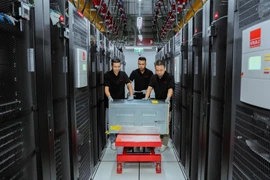
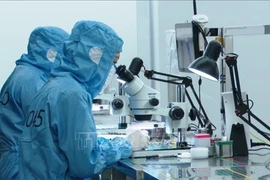
Meanwhile, in major urban centres, innovation and digital transformation are being positioned within broader strategies to develop strategic technologies that can drive long-term competitiveness. In Ho Chi Minh City, authorities are prioritising six strategic technology groups identified by the government, including artificial intelligence, blockchain, cloud computing, robotics, biotechnology-biomedicine and microchips–semiconductors.
City officials said the city’s competitive advantage lies not in low-cost labour but in human capital, engineering capacity, and innovation. Semiconductor technology has been identified as a pillar of the digital economy, with the city aiming to become a regional hub for the industry.
By 2030, it plans to train around 9,000 engineers and 1,500 specialised experts in semiconductor-related fields, including not only chip design but also materials science, chemicals and manufacturing processes.
Alongside semiconductors, biotechnology is another priority area, with Vietnam National University–Ho Chi Minh City positioned as a leading centre for training, research and application, particularly in healthcare, green agriculture and environmental protection.
However, limited investment and high commercialisation risks remain barriers, prompting efforts to promote “triple-helix” cooperation among research institutes, universities and enterprises.
A cooperation model involving the Advanced Materials Technology Institute, Vietnam National University–Ho Chi Minh City, and the Saigon Hi-Tech Park R&D Centre is helping bridge the gap between research and the market, contributing to stronger innovation capacity and international integration.
Experts noted that to ensure innovation and digital transformation become lasting drivers of growth, localities need a coherent, long-term approach. Priority areas include completing digital infrastructure, supporting enterprises with technology, developing digital skills, and building shared data standards.
Over time, innovation and digital transformation are expected to reshape development models and governance capacity, enabling provinces and cities to enhance competitiveness and achieve more sustainable and resilient growth in the new era./.