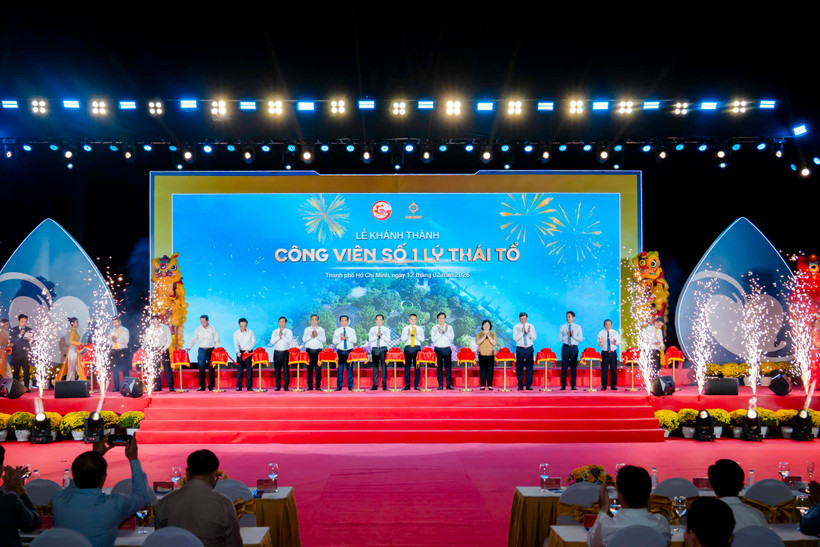
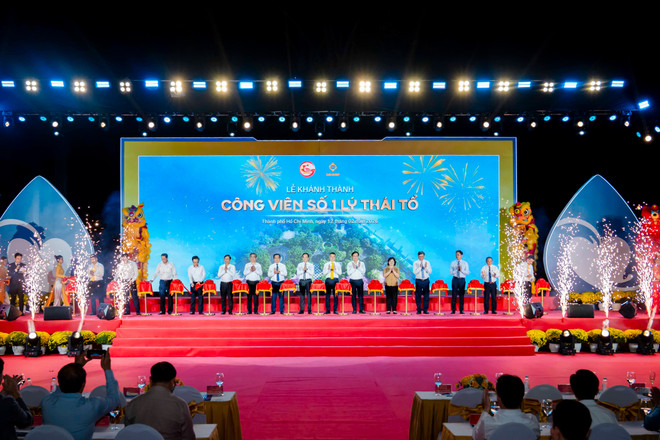
Ho Chi Minh City (VNA) - Ho Chi Minh City on February 12 officially inaugurated No.1 Ly Thai To Park, a 4.3-hectare public space developed with a total investment of more than 263 billion VND.
The project was implemented under the city’s policy of converting idle land into public parks and was completed ahead of the Tet holiday. More than a memorial dedicated to victims of the COVID-19 pandemic, the park introduces a humane and contemplative green space into the centre of the city.
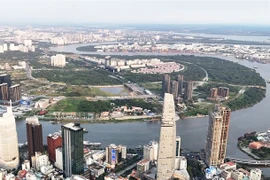
No.1 Ly Thai To Park is one of nine priority projects that concretise Ho Chi Minh City’s direction to make green areas and community spaces a central pillar of its next-stage metropolitan development strategy. The 4.3-hectare site, located in the urban core and once associated with significant natural, historical, and spiritual values, had remained unused for years. Its transformation reflects the city’s determination to return land to the public and to build a sustainable and compassionate living environment for residents
To deliver the project, the city mobilised social resources. Sun Group financed the entire 263 billion VND (10.11 million USD) investment and directly carried out construction. Consulting teams from both Vietnam and abroad were engaged to ensure architectural quality, technical precision, and depth of symbolic meaning. The park was built within just over 90 consecutive days, enabling completion before the Tet holiday period, a time when Vietnamese tradition emphasises remembrance, gratitude, and returning to one’s roots. Bringing the project into operation before Tet demonstrates the strong commitment of both the city and the contractor to provide residents with a dignified space of commemoration while entering a new year with renewed optimism.
A green interlude in megacity
No.1 Ly Thai To Park occupies a triangular land parcel. Designers softened the site’s edges and placed a 1,800-square-meter circular plaza at its center. The concept draws inspiration from the image of a water droplet falling onto the ground. Upon impact, the droplet creates a recessed void resembling a scar carved into the earth, symbolising collective pain. From that point, ripples extend outward, representing the transformation of sorrow into positive energy and hope for the future.
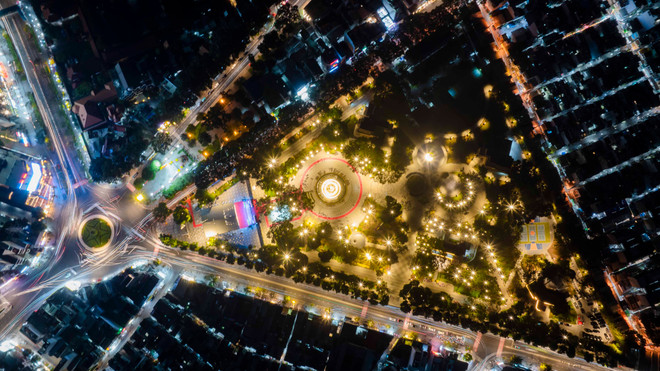
At the center of the plaza stands the Water Drop Monument. The ground here has been lowered by approximately four meters. The excavated soil was reused to form landscaped garden mounds adjacent to the plaza, expressing a philosophy of balance and harmony throughout the spatial composition. The monument itself rises six meters high with a circumference of 13 metres and is fabricated from mirror-finished stainless steel. Inside the droplet form is a heart, symbolising gratitude and love. The reflective surface captures the images of visitors standing around it, conveying the message that the pain of the pandemic belongs not to any individual alone but is a shared memory embraced by the community in solidarity and compassion.
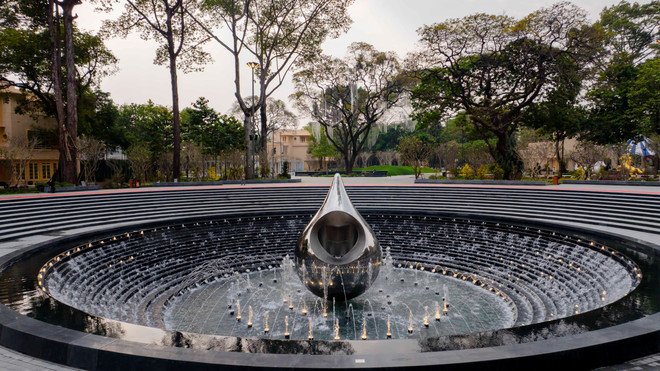
Encircling the monument are nine stepped levels and 360 water candles. At night, these 360 candles, together with nearly 1,000 integrated light points across the plaza, create a shimmering yet quiet atmosphere, like a field of candlelight, commemorating those who lost their lives during the COVID-19 pandemic.
The nine steps are divided into three tiers, symbolising an emotional journey through the human life cycle, inspired by the idea that human beings emerge from the earth. The lowest tier features engravings of the 12 zodiac animals, marking the passage of time and remembrance of individual destinies. The middle tier is inscribed with stone footprints, representing life journeys and lingering memories. The highest tier incorporates bronze inlays of lotus, plumeria, and chrysanthemum flowers, expressing transformation, continuity, and hope. Every detail within the commemorative plaza has been carefully crafted to preserve urban memory with respect and humanistic sensitivity.
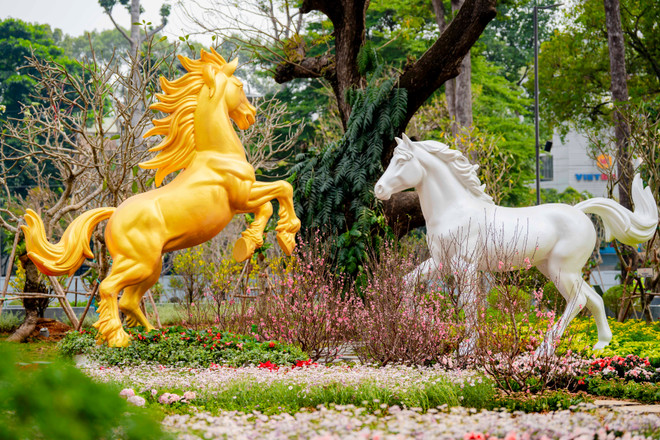
All existing mature trees within No.1 Ly Thai To Park have been preserved. Former villas on the site have been renovated and repurposed into exhibition spaces, libraries, and cultural venues. The park also includes open areas for sports and community activities, as well as sculpture gardens, shaping it into a place for relaxation, healing, and the organisation of meaningful cultural and artistic events, not only in the present but for future generations.
Long-term vision of Ho Chi Minh City
The project was carried out under an exceptionally tight timeline, reflecting the city’s strong resolve to bring the park into service as soon as possible. Over more than 90 continuous days and nights, the construction site operated on a three-shift, four-team model. At peak times, around 500 workers and nearly 20 engineers were deployed to ensure both quality and progress. Technically complex components, particularly the Water Drop Monument, required close coordination among specialized units from within Vietnam and abroad under the city’s overall supervision.
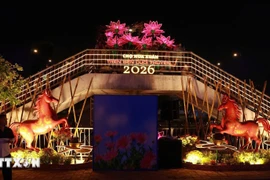
Beyond the permanent infrastructure of No.1 Ly Thai To Park, Sun Group also presented residents with a Spring Flower Festival across the entire 4.3-hectare site. Nearly 30,000 trees, flowering plants, and fruit arrangements were organized into 12 thematic landscapes reflecting Tet traditions from the North, Central, and South of Vietnam, creating an additional seasonal attraction for citizens during the Tet holiday.
Internationally, major metropolitan centres such as New York, London, Seoul, and Singapore treat public green spaces as core soft infrastructure shaping urban quality of life. Landmarks like Central Park, Cheonggyecheon, and Gardens by the Bay serve not only as scenic icons but also as spaces for connection, renewal, and collective memory. With No.1 Ly Thai To Park, Ho Chi Minh City demonstrates a clear alignment with this sustainable development approach: investing in green space not solely to beautify the city, but to deepen the spiritual and social fabric of urban life across generations.
The inauguration of No.1 Ly Thai To Park therefore goes beyond the scope of a conventional urban renewal project. It represents a concrete step within Ho Chi Minh City’s long-term strategy, where modernisation advances alongside expanded public space, economic growth accompanies memory preservation, and a dynamic metropolis continues to place people at the centre of development./.