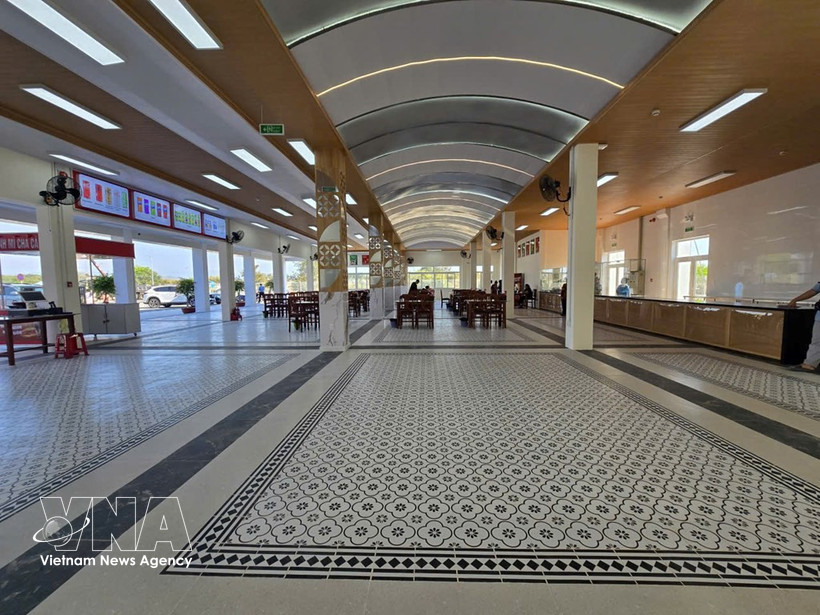
Hanoi (VNA) - Five rest stops along the Hanoi - Can Tho expressway corridor have begun operations, including Gie – Ninh Binh; Cao Bo – Mai Son, La Son – Hoa Lien, Ho Chi Minh City – Long Thanh – Dau Giay; and Trung Luong – My Thuan, according to the Vietnam Road Administration (VRA).
A rest stop on the Da Nang - Quang Ngai expressway has also recently opened. These rest stops and service points are designed to meet motorists' requirements for rest, refuelling, and basic essential services while travelling on expressways.
For rest stops currently under construction, the VRA has finalised investor selection and signed contracts for all 21 facilities outlined in the approved master plan. Investors are accelerating regulatory approvals and on-site construction to meet contractual deadlines, targeting substantial completion of the nationwide rest stop network in 2026.
To meet rising travel demand during the coming Lunar New Year (Tet) holiday, the VRA reported that several rest areas along segments of the North–South expressway’s eastern section have completed essential public service facilities and commenced operations. These include Mai Son – National Highway 45, Nghi Son – Dien Chau, Ham Nghi – Vung Ang, Vung Ang – Bung, Quy Nhon – Chi Thạnh, Van Phong – Nha Trang, Nha Trang – Cam Lam, Vinh Hao – Phan Thiet (Km205); and Phan Thiet – Dau Giay.
Several other rest stops are striving to complete essential public service facilities or have temporary operation plans to support holiday traffic flows, including Bung – Vạn Ninh, Cam Lo – La Son, Quang Ngai – Hoai Nhon, Hoai Nhon – Quy Nhon, Cam Lam – Vinh Hao, Can Tho – Hau Giang, and Hau Giang – Ca Mau.
Among the 17 out of 21 rest stops now in operation, five are equipped with fuel stations, namely Mai Son – National Highway 45 (awaiting licensing), Ham Nghi – Vung Ang, Vung Ang – Bung, Vinh Hao – Phan Thiet (Km205), and Quang Ngai – Hoai Nhin (pending licensing).
Alongside the rest stop system, the VRA has also released detailed information on interchange locations and connecting roads across the northern, central and southern regions. Most interchanges are supported by nearby fuel stations, food outlets, and essential services, providing sufficient options for refuelling, dining, and rest for vehicles entering or exiting expressways./.