Hanoi (VNA) – To achieve sustainable double-digit growth and fulfill its ambition of becoming a developed country by 2045, Vietnam must take a hard look at its current economic model, carefully identifying its strengths to leverage and weaknesses to address, and fundamentally rethinking its approach and building a new development model for the new era, said insiders.
New era requires new development model
Vietnam posted impressive economic results in 2025. However, at the recent national conference reviewing 2025 performance and rolling out tasks for 2026, Party General Secretary To Lam pointed to persistent shortcomings and mounting challenges, noting that economic growth still relies heavily on input expansion—particularly investment and land exploitation—while gains in labour productivity, total factor productivity (TFP) and technological intensity remain slow. As a result, economists view transforming the economic growth model in the new era as a matter of vital importance to the entire nation.
Assoc. Prof. Dr. Tran Dinh Thien, former Director of the Vietnam Institute of Economics, said Vietnam has posted relatively strong growth, but it remains unsustainable. Structural weaknesses persist, with growth largely dependent on the foreign-invested sector. These imbalances are even more evident when viewed through the three main growth drivers. In terms of investment, despite stronger public spending and rapid credit expansion, private-sector investment remains very low.
Since the COVID-19 pandemic, Vietnam’s economy, especially the domestic sector, has shown strong resilience, yet its recovery has been slow. Weak domestic demand and only modest growth in retail sales indicate that household economic health, the key driver of growth, remains under pressure.
Vietnam’s overall export performance has been positive, but structural imbalances persist, with a wide gap between the domestic and foreign direct investment (FDI) sector showing little sign of narrowing. A notable paradox is that while total exports surged, the FDI sector's exports grew sharply, whereas the domestic sector's shipments fell significantly. This trend persisted for several months, underscoring the limited contribution of the domestic sector to export growth.
For a long time, Vietnam has taken pride in cheap labour, using it as an advantage, while forgetting the global shift toward a knowledge-based economy. The entire policy framework, including FDI attraction, has been designed to rely on manual labour.
Thien warned that relying on cheap labour too long would be a “disaster,” noting that the new workforce must combine human creativity with artificial intelligence (AI), and labour needs to move toward innovation and become closely integrated with technology.
He said raising growth from 8% to 10% or higher is naturally challenging under current conditions, especially when the domestic sector remains weak, noting that in the long term, growth cannot depend so heavily on the foreign-invested sector.
He underlined the need to prioritise support for, and vigorously promote the domestic sector, especially the private sector, so it can truly fulfill its role as the “most important growth driver.”
"It is time for Vietnam to fundamentally rethink its approach and build a new development model for the new era," he stressed.
Economist Tran Hoang Ngan also noted that Vietnam began transforming its growth model about a decade ago through economic restructuring, including restructuring and equitising state-owned enterprises, and shifting growth from a quantity-driven approach to a quality-driven one. However, the growth model in recent years has still relied heavily on public investment and bank credit.
As Vietnam enters a new era, transforming its economic growth model is even more urgent to advance the country toward development and higher incomes for its citizens, he said.
Dr. Nguyen Si Dung, former deputy head of the National Assembly Office, stressed the urgent need to upgrade value chains, expand high-quality markets, and stimulate consumption through real incomes rather than uncontrolled easing.
Innovate or fall behind
Amid a world rapidly reshaped by technology, geopolitics, and global economic fluctuations, Vietnam faces a decisive crossroads - either transform its growth model to achieve a breakthrough, or risk falling behind.
In the new growth model, science and technology, innovation, and national digital transformation are the main drivers, while the private economy, including both the domestic and FDI sectors, serves as the most important engine of national economic growth, he said.
This is not just a policy direction, but a comprehensive strategic vision for national development in the new era - a fundamental shift from a quantity-driven growth model to one focused on quality, productivity, and competitiveness, Dung said.
Inovation will help the country “leapfrog” in its development; digital transformation can narrow the gap of underdevelopment; and data and AI will become national assets. This is not just a trend - it is a strategic pathway for a country like Vietnam seeking a breakthrough to escape the middle-income trap, he said.
He underlined the importance of education in forming a new growth model, noting that education is no longer merely a social sector, it has become the nation’s most important endogenous resource. He noted that a modern and practical education system will train high-quality human resources —the essential condition for operating a knowledge- and digital transformation-based economy.
Without breakthroughs in education, any hopes for growth driven by innovation will remain empty words, he stressed.
New growth drivers are gradually taking shape. Science and technology, innovation, the digital and greeen economies have begun making tangible contributions to growth. This offers significant potential for a productivity leap in the coming period.
Institutions are being reformed to empower the market, and strategic infrastructure, particularly transport and digital infrastructure, are receiving strong investment, while human capital continues to be a long-term competitive advantage if properly trained and utilised, Dung added.
Sharing Dung’s opinions, Dr. Ngan emphasised that transforming Vietnam’s economic growth model must be grounded in the strategic foundation of the key resolutions issued by the Politburo in recent years, especially Resolution 57, considering science and technology and innovation vital and consistent drivers.
At the same time, transformation is guided by the development of a knowledge-based economy, as emphasised in Resolution 71 on breakthroughs in education and training, he said, adding that high-quality human capital is the key to developing science and technology, creating new growth drivers, and positioning Vietnam as a developed country with high income.
Enhancing independence, self-reliance of domestic economy
Another key reform is strengthening the independence and self-reliance of the domestic economy, including developing the private sector and leveraging the leading role of state-owned enterprises, as outlined in Resolutions 68 and 79, Ngan said.
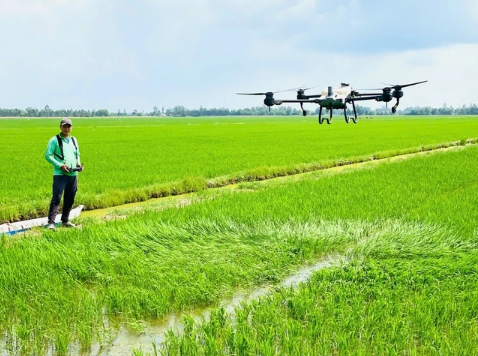
According to Ngan, building on this foundation, Vietnam plans to prioritise high-tech industries and develop the digital economy. Agriculture will shift toward high-tech and green production, while the tourism and service sectors will integrate cultural heritage with modern technology to create stronger breakthroughs.
Vietnam will not follow the old model of industrialisation; instead, it aims to shift from low-end assembly and processing toward high-tech industries, the digital economy, and the green economy, with AI and a creative and innovative workforce serving as the key drivers of this transformation.
Finally, it is essential to build a truly enabling and supportive state, he said, noting that the State should not only regulate but also work alongside the private sector to create synergy and mobilise social resources.
Institutional bottlenecks remain the key constraints that must be prioritised for removal, he said.
Dung said that for the new growth model to take root, decisive, coordinated, and bold actions are required, including reforming institutions to unlock creative flows; restructuring the budget to increase investment in education and science and technology; building a national-level innovation ecosystem, and strengthening the role of the private sector, especially innovative and hi-tech enterprises./.