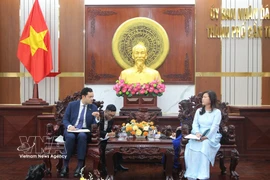
Can Tho (VNA) – Vice Chairman of the Can Tho People’s Committee Tran Chi Hung on March 10 hosted a delegation from Zambia’s Ministry of Agriculture and Ministry of Finance and National Planning, who came to study the Mekong Delta city’s experience in agricultural transformation and sustainable rice production.
This visit provided an opportunity for Can Tho to showcase its effective agricultural production models while exploring cooperation opportunities between the two sides in the future.
During the meeting, Hung said Can Tho, the centre of the Mekong Delta, plays an important role in regional socio-economic development, particularly in rice production, processing and supply for domestic consumption and export.
In recent years, the city has prioritised developing its agricultural sector toward modern and sustainable production, aiming to increase added value while protecting the environment.
According to Hung, rice production remains the city’s key industry. Alongside maintaining production, Can Tho has encouraged value chain linkages among farmers, cooperatives and businesses, while accelerating the application of science and technology, mechanisation and digital transformation in farming.
The city is also implementing the sustainable development project for 1 million hectares of high-quality, low-emission rice associated with green growth in the Mekong Delta by 2030, contributing to supporting Vietnam’s commitment to achieving net-zero emissions by 2050, he said.
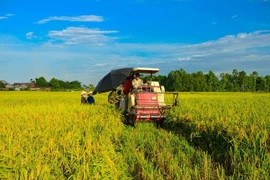
Under the initiative, farmers are encouraged to use high-quality rice varieties, reduce seeding density and limit the use of fertilisers and pesticides, while improving water management and mechanisation. These practices help reduce production costs and greenhouse gas emissions while maintaining productivity.
Can Tho is also promoting circular agriculture models that make better use of agricultural by-products. Rice straw, for example, is reused to grow mushrooms and produce organic fertiliser, creating additional income for farmers while reducing environmental pollution and greenhouse gas emissions.
However, Hung noted that the shift toward greener and more sustainable agriculture still faces challenges, including the need for greater investment in technology, stronger management capacity among cooperatives, and stable markets for high-quality agricultural products.
Can Tho hopes to expand cooperation with international organisations and development partners to exchange experience, promote technology transfer, and develop climate-resilient and sustainable farming models, Hung stressed.
For his part, Zambian Minister of Agriculture Reuben Mtolo Phiri said Zambia also grows rice, but its productivity remains low. Rice yields in cooperatives in Can Tho, he noted, are about 20 times higher than those in Zambia.
The delegation therefore wishes to learn about Vietnam’s rice cultivation techniques and practices, production levels, and the market outlets for rice produced by cooperatives.
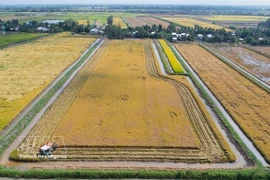
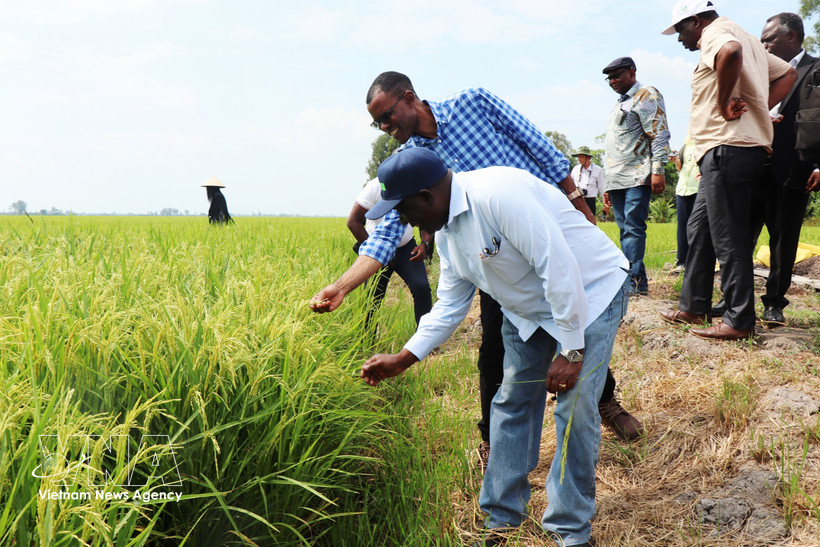
Later the same day, the delegation visited rice farming models at Thinh Phat and Tien Thuan cooperatives in Thanh Quoi commune, part of the Bac Cai San three-crop rice production area covering nearly 10,000 ha with well-developed irrigation, pumping and transport infrastructure.
At the cooperatives, the delegation learned about low-emission farming techniques and the use of digital technology for MRV (measurement, reporting and verification), sustainable value chain models linking farmers with agricultural enterprises through contract farming, farmer-managed irrigation systems, and the recycling of rice straw to produce mushrooms and organic fertiliser.
Tien Thuan cooperative, a pilot model under the Mekong Delta’s 1-million-hectare low-emission rice project, has achieved higher yields while reducing seeds, fertilisers, pesticides and irrigation water, thereby lowering costs, increasing farmers’ profits and cutting greenhouse gas emissions through rice straw recycling.
Through production linkages and circular farming practices, the cooperative is building a sustainable rice value chain that boosts farmer incomes and promotes high-quality, low-emission rice production. It also plans to work with the International Rice Research Institute (IRRI) to apply automatic organic fertiliser spreaders to cut labour costs and improve fertilisation efficiency./.