Ho Chi Minh City (VNA) – Ho Chi Minh City is intensifying measures to combat illegal, unreported and unregulated (IUU) fishing as Vietnam prepares for the European Commission’s (EC) fifth on-site inspection, part of the country’s ongoing effort to have the commission’s “yellow card” warning lifted.
The EC inspection delegation arrived in Vietnam on March 9 to assess the country’s implementation of recommendations to prevent IUU fishing. Ho Chi Minh City is among the localities selected for inspection, and the visit is expected to play an important role in the EC’s consideration of whether to remove the warning.
Recognising the importance of the task, the municipal authorities have strengthened fisheries management, tightened supervision of fishing fleets, and elevated compliance with legal regulations. These positive changes in combating IUU fishing not only help prepare for the EC’s inspection but also contribute to developing a more sustainable and responsible fisheries sector.
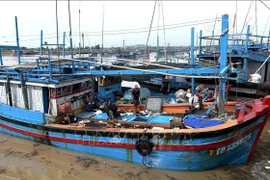
The city currently has more than 4,450 fishing vessels in operation. To improve management, authorities have reviewed the entire fleet and updated vessel information in the national fisheries database (VNFishbase), which allows management agencies to track legal status, operating history and fishing routes.
For vessels measuring 15 metres or longer, which are required to install voyage monitoring systems (VMS), the installation rate has reached over 99%. The system enables authorities to continuously monitor the positions of fishing vessels at sea, helping promptly detect signal losses, boundary crossings, or signs of encroachment into foreign waters.
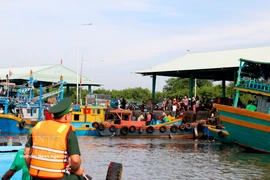
Coastal localities have also tightened control over about 400 fishing vessels that lack the required documents, such as licences, registrations, and inspection certificates. These boats are placed under strict supervision and moored at designated locations to prevent them from going to sea. In Long Hai commune, home to the largest number of ineligible vessels at 191, authorities have formed a special team to track vessel location using identification labels and positioning devices. Similar measures are in place in other coastal areas, with vessels only allowed back to work once all procedures are finished.
Alongside fleet management, the city has also strengthened oversight at fishing ports, which play a crucial role in seafood traceability.
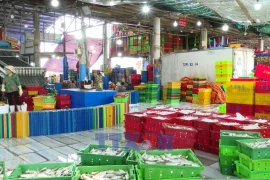
The city has nine fishing ports, including four authorised to certify seafood origin, with stricter control of vessel entering and leaving. All boats must declare information through the electronic catch documentation and traceability system (eCDT), ensuring transparency. Port authorities also coordinate with fisheries agencies and border guards to cross-check fishing logs with VMS data and promptly detect irregularities.
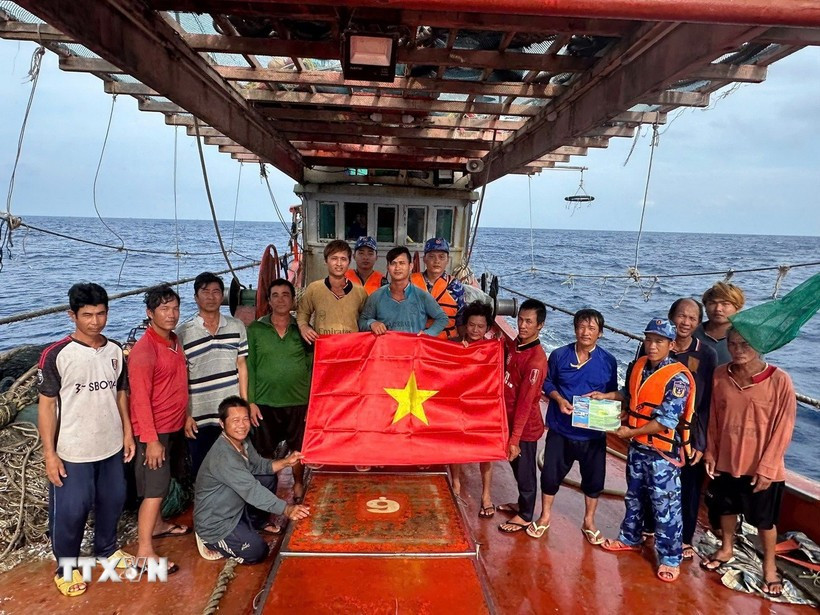
Municipal authorities have intensified outreach at fishing ports and coastal communities to raise fishermen’s awareness of legal fishing practices. As a result, all vessels now keep fishing logs as required, while violations such as prolonged VMS signal losses or incursions into foreign waters have dropped significantly, with no such cases recorded so far this year.
Du Trong Hoa, a fisherman in Vung Tau ward, said fishermen must comply with state regulations, operate within Vietnam’s waters, and avoid encroaching on foreign seas to help the country have the “yellow card” warning lifted.
With strong efforts from the municipal authorities and support from fishermen, Ho Chi Minh City is striving to eliminate IUU fishing, contributing to the EC inspection while promoting a more sustainable and responsible fisheries sector./.