Hanoi thoroughly prepares for NA, People’s Council election

According to the municipal Election Committee, the capital city has established election committees in 126 communes and wards. In addition, 11 electoral boards for National Assembly deputies, 31 electoral boards for the city-level People’s Council, 831 commune-level electoral boards and more than 4,000 polling teams have been set up to serve the election process.

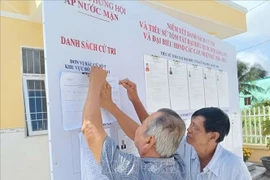
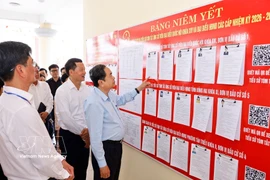
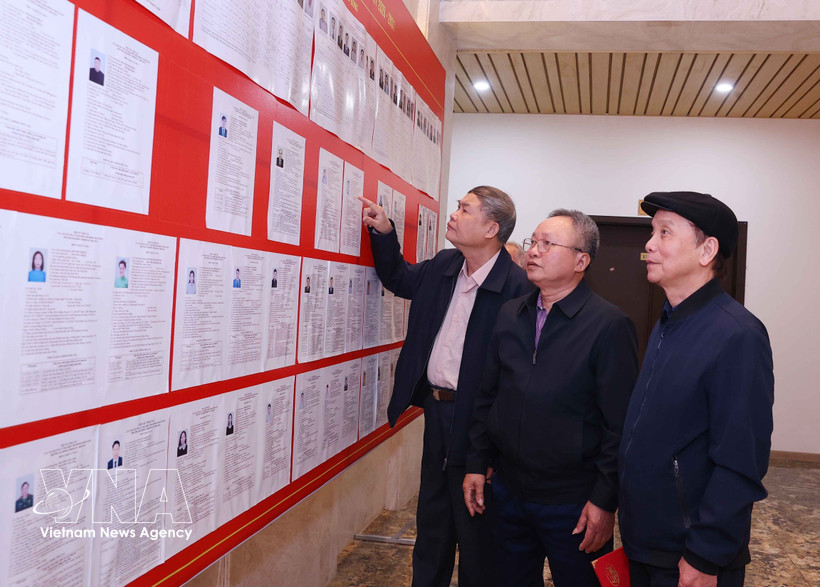
Hanoi voters learn about candidates’ biographies and action programmes. (Photo: VNA)

Hanoi (VNA) – As the Vietnamese people all are eager to the election of deputies to the 16th National Assembly and People’s Councils at all levels for the 2026–2031 term, scheduled for March 15, authorities across Hanoi are accelerating preparations to ensure the process is conducted democratically, lawfully and safely.

Since late 2025, the municipal Party Committee has issued directives calling for the engagement of the entire political system in the election process. Preparations have been carried out according to a clear roadmap, including the establishment of election bodies, the nomination and consultation process for candidates, the compilation of voter lists, and the organisation of communication campaigns on the significance of the election.

Vice Chairman of the Hanoi People’s Committee Nguyen Xuan Luu said election preparation is not merely an administrative task but also a key political responsibility. Local authorities have been instructed to strictly comply with legal regulations and ensure all organisational conditions are in place so that the elections are conducted in accordance with the law and with broad public consensus.

According to the municipal Election Committee, the capital city has established election committees in 126 communes and wards. In addition, 11 electoral boards for National Assembly deputies, 31 electoral boards for the city-level People’s Council, 831 commune-level electoral boards and more than 4,000 polling teams have been set up to serve the election process.

The candidate nomination process has been conducted through three consultation rounds in accordance with the law, ensuring democratic and transparent selection through multiple stages of appraisal and voter feedback at both places of residence and workplaces.

Following the three consultation rounds, the official candidate lists include 39 candidates for the National Assembly, 205 for the municipal People’s Council and more than 5,200 for commune-level People’s Councils. Candidates’ biographies and action programmes have been publicly posted at government offices, residential areas and polling stations for voters’ reference.

Public awareness campaigns have also been intensified through conferences, mass media and grassroots broadcasting systems to help citizens better understand the significance of the election and their rights and responsibilities as voters.

In line with digital transformation efforts, some localities have applied technological solutions such as QR codes for voters to access candidate information and online forms to collect feedback on election-related issues.

Security plans have also been strengthened, with local police forces closely monitoring the situation and implementing measures to ensure order and safety during the election period.

With thorough preparations from the municipal to grassroots levels, Hanoi is steadily completing all necessary conditions for the upcoming election. The event is expected to become a major civic occasion for voters in the capital, enabling them to exercise their democratic rights and contribute to strengthening the state apparatus./.

VNA
See more

A working session at the job fair (Photo: VNA)

Vietnamese students flock to Seoul Job Fair 2026

The second annual Job Fair 2026 was held for Vietnamese students in the Republic of Korea. Organisers pitched it as a straight-up bridge between eager students and bosses hungry for young talent who can actually handle multicultural workplaces.

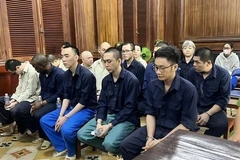
Defendants at the court (Photo: VNA)

Ho Chi Minh City court opens trial over Agribank lending scandal

The investigation revealed that multiple credit files were incomplete or riddled with inaccurate information, while some pledged assets lacked proper legal standing yet were accepted and grossly overvalued. As a result, the loans became high-risk and largely unrecoverable, leading to losses surpassing 1 trillion VND.

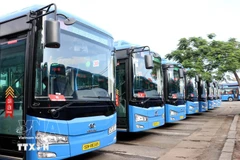
Hanoi introduces 53 electric buses from April 18 (Photo: VNA)

Hanoi to add 53 electric buses from April 18

According to the plan, all buses operating within Ring Road 1 will use green energy by July 1, 2026. The requirement will expand to Ring Road 2 by January 1, 2028, and to Ring Road 3 by 2030.

Illustrative image (Photo: VNA)

National, local traffic safety committees to be dissolved from June 1

Under the dicision, ministries and ministerial-level agencies will assume responsibility for tasks previously performed by the committee, in line with their mandates under the Law on Government Organisation, the Law on Road Traffic Order and Safety, the Law on Roads and other relevant legal frameworks, ensuring that traffic safety and order are maintained without disrupiton.

Visitors explore technology showcases at the exhibition held during the Da Nang Startup and Innovation Festival (SURF 2025). (Photo: VNA)

About 10,000 students expected at National Startup Day 2026

This year marks the rollout of the “Student Startup Support Programme for 2026 – 2035”, approved under Decision No. 336/QD-TTg, which places emphasis on practical outcomes, real products, real testing, real partnerships, and measurable impact.

Hong Quang High School pilots teaching mathematics in English starting from the 2025–2026 academic year. (Photo: VNA)

National foreign language proficiency framework issued

The circular establishes a unified benchmark for foreign language proficiency across the national education system, providing a foundation for curriculum design, teaching, testing, assessment, and certification. It is expected to help learners better map out their language development pathways while enabling educational institutions to improve training quality and strengthen articulation between different levels of education.