New rural development programme for ethnic minority, mountainous areas approved

The programme aims to build modern, sustainable and culturally rich new-style rural areas while promoting comprehensive development in ethnic minority and mountainous areas.

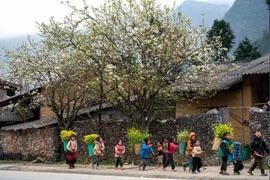
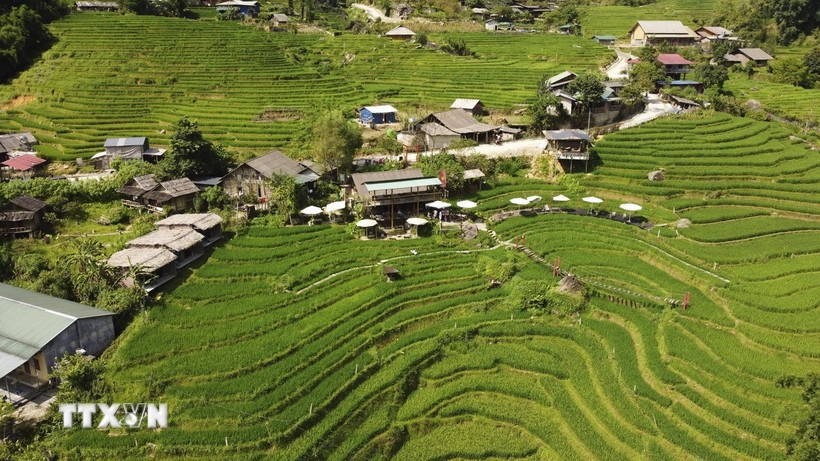
Total funding to be mobilised for the programme implementation in the 2026–2030 period is estimated at about 1.044 quadrillion VND. (Photo: VNA)

Hanoi (VNA) – The Ministry of Agriculture and Environment has approved the National Target Programme on New-style Rural Area Development, Sustainable Poverty Reduction and Socio-economic Development in Ethnic Minority and Mountainous Areas for 2026–2035, with Phase I to be implemented from now to 2030.

Under the programme, total funding to be mobilised for the 2026–2030 period is estimated at 1.044 quadrillion VND (40.2 billion USD). Of this amount, the central budget will provide 100 trillion VND (9.6%), local budgets around 300 trillion VND (28.7%), integrated funding from other programmes and projects about 360 trillion VND (34.5%), policy credit approximately 23 trillion VND (2.2%), and contributions from enterprises and communities an estimated 261 trillion VND (25%).

The programme aims to build modern, sustainable and culturally rich new-style rural areas while promoting comprehensive development in ethnic minority and mountainous areas. It also targets inclusive and multidimensional poverty reduction, gender equality and social security; and at the same time, advancing a green, circular and ecological rural economy linked with agricultural restructuring to raise incomes, improve living standards and narrow regional development gaps.

By 2030, the programme looks to increase average rural incomes by 2.5–3 times compared to 2020, with incomes of ethnic minority people reaching about half of the national average. Multidimensional poverty is expected to decline by 1–1.5% annually, reducing the household poverty rate in ethnic minority and mountainous areas to below 10%, and basically eliminating extremely disadvantaged communes and villages.

Nationwide, around 65% of communes are expected to meet new-style countryside standards, including 10% recognised as modern new-style rural areas. Meanwhile, five provinces and cities are hoped to complete rural development tasks.

Among the new-style rural area criteria, Criterion No. 1 on planning will be developed and managed on a geographic information system (GIS) platform, integrated into the national planning database and shared with relevant organisations and individuals.

To promote an ecological, modern and multi-value rural economy responsive to market demand, the programme will prioritise economic development, fast poverty reduction and sustainable income improvement. Concurrently, it will narrow living-standard gaps between the targeted areas and the national average while boosting gender equality and enhancing the role of women. It targets 80% of ethnic minority farming households participating in commodity-oriented agricultural and forestry production.

Key measures include restructuring agriculture and the rural economy towards an ecological and modern orientation, prioritising low-emission production models, organic and circular agriculture, good agricultural practices such as VietGAP and GlobalGAP, safe input use and traceability.

The programme also seeks to strengthen and develop the collective economy and cooperatives linked with value chains and sustainable livelihoods, support the development of concentrated raw material and large-scale commodity production zones, and enhance linkages between production, processing and consumption.

In addition, it will promote the development of OCOP (One Commune, One Product) items in a quality-oriented, distinctive, multi-value and environmentally friendly manner, while boosting technology application to processing, branding, market expansion and green OCOP development.

The programme will build and replicate diverse livelihood models aligned with local ecological and cultural conditions, particularly in extremely disadvantaged communes and villages, ethnic minority and mountainous areas, border regions and islands. It will also encourage the application of science and technology, the digital and green economy, innovative start-ups and market connectivity. Microcredit schemes and climate-resilient agricultural insurance will be piloted as well.

Notably, the programme will also provide support for residents in extremely disadvantaged communes and villages, or ethnic minority and mountainous areas to seek employment abroad./.

VNA

See more

PM orders stronger transport measures to ensure traffic safety during Tet. (Illustrative photo: VNA)

PM orders stronger transport measures to ensure traffic safety during Tet

To accommodate surging travel demand and keep transport operations running smoothly, the PM instructed relevant bodies to boost transport capacity, particularly public passenger services, to ensure seamless connections at railway stations, airports, bus terminals and ferry ports. Authorities were told to ensure that no travellers are left stranded or delayed in returning home for Tet due to a shortage of transport, while strictly preventing fare gouging and unlawful price hikes. Proactive measures to curb traffic accidents and congestion during the peak holiday period were also highlighted.

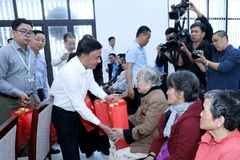
Politburo member and Permanent member of the Party Central Committee’s Secretariat Tran Cam Tu presents gifts to the elderly in Da Nang city on February 5. (Photo: VNA)

Permanent member of Party Central Committee's Secretariat pays Tet visit to Da Nang

Politburo member and Permanent member of the Party Central Committee’s Secretariat Tran Cam Tu reaffirmed that the Party and State consistently uphold the principle of placing the people at the centre, stressing that caring for their material and spiritual well-being is both the goal and the driving force of national development.

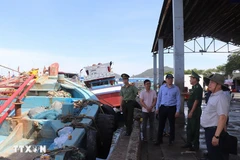
The delegation Inspects anti-IUU fishing efforts at Hung Thai Port, Long Hai commune. (Photo: VNA )

Ho Chi Minh City's efforts to combat IUU fishing examined

The inspection aimed to identify grassroots-level difficulties, promptly address technical bottlenecks, require telecommunications enterprises to upgrade their systems, and advise the Government and relevant ministries and sectors on refining mechanisms and policies.

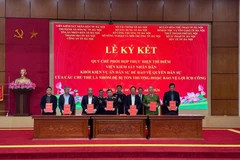
Representatives of Hanoi units sign a coordination mechanism for piloting public interest civil litigation (Photo: VNA)

Hanoi launches pilot mechanism for public interest civil litigation

The coordination framework is designed to ensure that the People’s Procuracy can promptly, fully and accurately access information related to public interest civil cases; facilitate the swift and effective verification and collection of documents and evidence; and strengthen the responsibilities of agencies, organisations and individuals in fulfilling their mandates to protect the civil rights of vulnerable groups and public interests.

Nguyen Thi Thu Huyen, Chief of the Office of the Association of Vietnamese People in Vientiane, in an interview with the Vietnam News Agency (Photo: VNA)

Vietnamese community in Laos eagerly await Party leader’s visit

The fact that General Secretary Lam gives special priority to Laos and the Vietnamese community here at the very beginning of his new term has made them feel deeply moved and reassured that they are always protected by the homeland and hold an important place in the heart of the nation, said a Vietnamese people in Laos.

Many Tet gifts are distributed to poor households in Dak Lak province on the occasion of the upcoming Lunar New Year of the Horse. (Photo: VNA)

Tet gifts provided for disaster-affected communities, vulnerable children

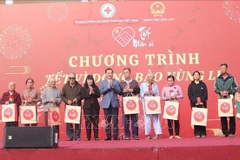
On February 4, the Vietnam Red Cross Society, in coordination with the Dak Lak provincial authorities, organised the programme “Tet for Flood-Affected Communities” in Tay Hoa commune. At the event, 1,000 Tet gift packages, worth 1 million VND (38 USD) each, were presented to poor households, policy beneficiary families facing hardship, victims of Agent Orange, elderly people living alone, persons with disabilities, those with serious illnesses, and families affected by storms and floods.

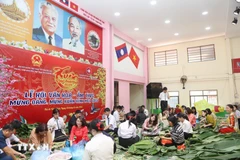
The banh chung making session at the Nguyen Du Lao-Vietnamese bilingual school (Photo: VNA)

A touch of Vietnamese Tet in Laos, Mozambique

In Maputo, members of the Vietnamese community in Mozambique have gathered for the “Spring of the Homeland”, a reunion that brought overseas Vietnamese into each other’s company to share laughter, stories, and heartfelt Tet wishes.