Lam Dong (VNA) - Joining the nationwide atmosphere ahead of the upcoming election, members of the K’Ho ethnic minority group in Lac Duong commune in the central province of Lam Dong are looking forward with excitement and confidence to the election of deputies to the 16th National Assembly and People’s Councils at all levels for the 2026–2031 term, scheduled for March 15.
In early spring days, Dong Gur Ha Chieng, Secretary of the Party Cell of Lieng Bong village in Lac Duong commune, has temporarily set aside work in his fields to focus on disseminating information and encouraging Party members and residents to prepare for the upcoming vote.
With just over a week left, he and the Party Cell Committee have persistently introduced election-related information at Party meetings and village gatherings, helping residents better understand the process and learn about candidates in their locality.
Ha Chieng said that, in his role as Secretary of the Party Cell, he has called on officials, Party members and residents to exercise their voting rights on the election day. This year’s vote falls on a Sunday, making it convenient for residents to participate. The village has nearly 1,000 voters who, through various communication channels, have learned about the candidates and their action programmes to choose suitable representatives.
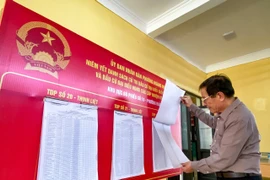
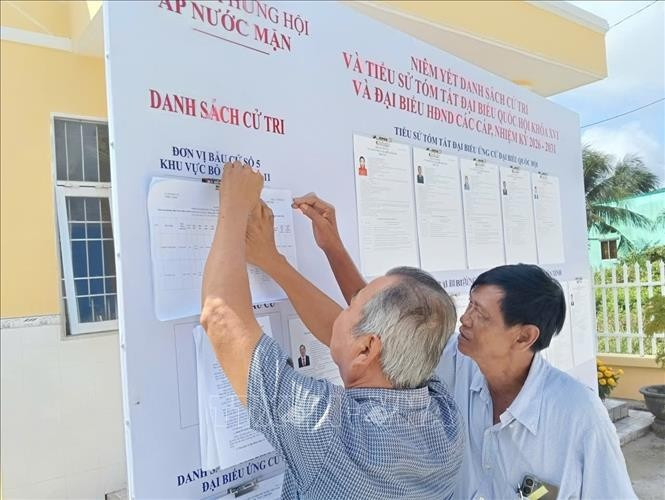
At the Public Service Centre of Lac Duong commune, Da Ju K’Kim from Long Lanh village took the opportunity to check the publicly posted voter list while handling administrative procedures. She shared that her family has three members, but her child is not yet old enough to vote. After learning about the election through local communication activities, she and her husband are ready to cast their ballots on March 15 to select worthy representatives.
Ko Sa K’Huyen, an official at Lac Duong Commune's Party Committee, has also spent time studying information and action plans of candidates in her polling area. She said that as the country has undergone many changes, particularly the implementation of the two-tier local administration model, voters hope to elect representatives who are truly capable, ethical and responsible to voice the people’s aspirations. She also expressed her hope that elected deputies will adopt innovative mindset and take practical action to help build a state of the people, by the people and for the people.
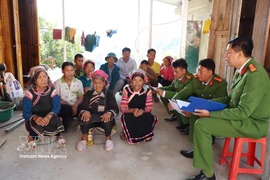
Lac Duong commune is a remote locality largely inhabited by the K’Ho ethnic minority in Lam Dong. The commune has 15 villages with more than 14,000 residents in 3,119 households and 8,799 registered voters. Given that residents live scattered along National Highway 27C and that the area’s mountainous terrain makes travel difficult, local authorities have prepared plans to organise the election smoothly.
According to Cil Duin, Vice Chairman of the People’s Council of Lac Duong commune, communication activities on the election have been implemented through both direct and online forms. Preparations related to security and order, voter lists, consultation procedures and facilities have also been completed. Eight polling stations have been established, each about three kilometres apart, to ensure convenient access for voters.
Taking into account local customs, as many residents typically go to work in their fields early in the morning and attend church on Sundays, local authorities have coordinated with religious establishments to hold services earlier than usual so that residents can cast their ballots promptly after attending mass./.
VNA