Multi-skilled civil servants key to effective governance in Ho Chi Minh City: insiders

The rollout of the two-tier local administration model in Ho Chi Minh City, a megacity of more than 14 million people, has placed new requirements on civil servants, demanding them to be multi-skilled, capable of handling multiple tasks and proficient in digital technologies to meet the needs of modern urban governance, said insiders.

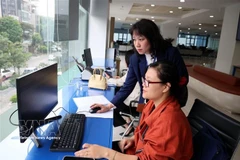
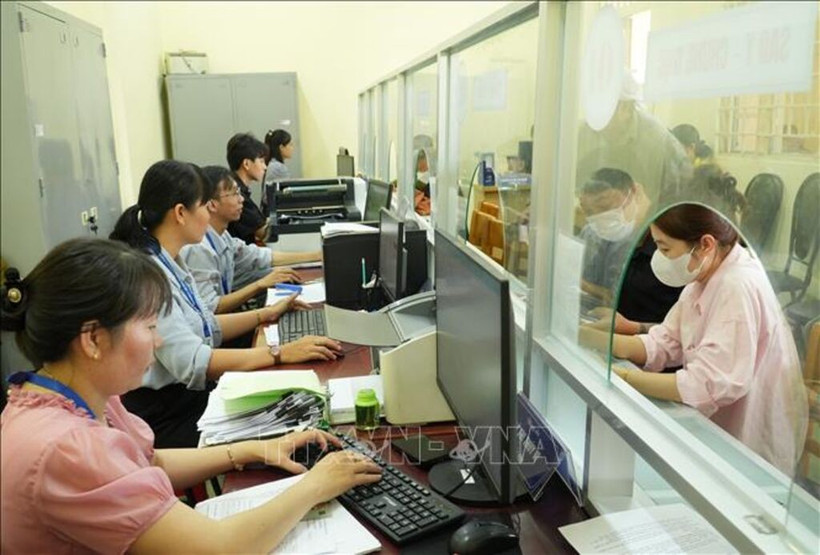
Officials and civil servants in Thai My commune, Ho Chi Minh City process administrative documents for the people. (Photo: VNA)

Ho Chi Minh City (VNA) – The rollout of the two-tier local administration model in Ho Chi Minh City, a megacity of more than 14 million people, has placed new requirements on civil servants, demanding them to be multi-skilled, capable of handling multiple tasks and proficient in digital technologies to meet the needs of modern urban governance, said insiders.

Since the model was introduced, the city has moved quickly to restructure and streamline its organisational system. However, after more than seven months of implementation, an imbalance has emerged at the commune level, with civil servants facing a situation described as being “both surplus and short-handed”.

According to Pham Thi Thanh Hien, Director of the municipal Department of Home Affairs, the city currently has a surplus of more than 1,000 civil servants while lacking nearly 1,000 personnel across 27 job positions. Some localities have dozens of surplus staff while others face significant shortages.

She noted that commune-level staffing already exceeds the assigned quota by 103 positions, meaning no additional recruitment is allowed. As a result, personnel must be rearranged and transferred from areas with surplus staff to those facing shortages.

Since recruitment beyond the quota is not permitted, in late 2025 the city carried out a large-scale reassignment and reorganisation of personnel among localities and across Party organisations, the Vietnam Fatherland Front (VFF) and administrative bodies. At the same time, training and capacity-building programmes have been intensified to help civil servants meet new requirements. Although the organisational structure has gradually stabilised, work pressure at the commune level remains high, especially in densely populated or special areas where officials often have to take on multiple roles.

In Thanh An island commune, for example, civil servants have taken on additional duties previously handled at the district level. Vo Thanh Nha, a justice–civil status officer, said many new procedures, including those involving foreign elements, have been transferred to the commune. Besides his main duties, he is also responsible for receiving and returning documents at the public administration unit, requiring careful prioritisation to avoid affecting residents’ rights.

Many civil servants are also required to handle tasks outside their original areas of expertise. Truong Thi Ngoc Thao, a public servant at the People’s Committee Office of Can Gio commune, said that self-learning, studying legal regulations and improving digital skills have become essential to cope with the increasing workload in the digital environment.

Administrative pressure remains high as the number of procedures continues to rise. In January 2026 alone, the city processed more than 400,000 dossiers. Despite a high on-time processing rate, civil servants still face difficulties due to uneven technical infrastructure and occasional system glitches, forcing some stages to be handled manually.

Le Thi Kim Hien, Director of the Public Administration Service Centre of Can Gio commune, said that besides professional competence, dedication to public service is vital. Civil servants guide residents in using online public services and support vulnerable groups to ensure equal access.

These efforts have contributed to the city’s strong administrative performance, with 97.9% of dossiers processed on time in the first month of 2026.

Nguyen Van Ngan, Deputy Director of the Public Administration Service Centre of Binh Khanh commune, said that while digital skills are important, public trust ultimately depends on the friendliness and approachability of civil servants. He emphasised that modern digital governance must go hand in hand with people-centred governance.

The versatility and multi-tasking capacity of civil servants have also helped unlock resources for socio-economic development. In 2025, many communes and wards recorded budget revenues far exceeding targets. Binh Khanh commune, for instance, surpassed its revenue target by more than 25 times, partly thanks to efforts to streamline procedures, support businesses, promote OCOP products on e-commerce platforms and advance infrastructure projects./.
VNA

See more

Staff members of the Hanoi Public Administrative Service Centre handle administrative procedures for local residents. (Photo: VNA)

Hanoi: 95% of administrative procedures to be handled from home

The plan targets that at least 80% of administrative procedures under the city’s authority will be provided as fully online public services, while more than 95% of applications will be received and processed entirely online. By June 30, 2026, about 80% of administrative procedures are expected to be restructured based on integrated data systems, with the figure rising to 95% by the end of the year.

Delegates at the SEAN Future Forum NextGen Workshop 2026 held in Jakarta, Indonesia on March 9 (Photo: VNA)

Vietnam contributes youth perspectives to AFF NextGen initiative

The ambassador expressed confidence that fresh perspectives, innovative thinking and lessons drawn from the workshop will be proposed to AFF 2026, representing the voice of the younger generation in shaping ASEAN’s future in line with their aspirations.

A young volunteer donates blood during the 2026 Red Sunday programme. (Photo: VNA)

Nearly 5,000 people join blood donation campaign in Ho Chi Minh City

According to health authorities, Vietnam collected nearly 1.75 million units of blood in 2025, with 98% from volunteer donors, equivalent to around 1.75% of the population participating in blood donation. Large-scale campaigns such as Red Sunday have played a key role in achieving these results.

More than 30 kilogrammes of various drugs trafficked from Cambodia to HCM City were seized in a police operation in March 2025. (Photo: VNA)

Ho Chi Minh City aims to become drug free by 2030

Every commune, ward or residential area in Ho Chi Minh City is expected to meet official drug-free standards by the end of 2029, while schools, hospitals, government offices, businesses and social organisations across the city are to remain free of drug activity.

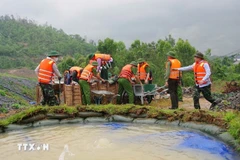
Military forces take a resident from a flooded area. Photo: VNA

Da Nang, Oxfam join hands to support flood victims

In the coming time, the Da Nang Red Cross Society will continue to coordinate with Oxfam to implement support activities in Nong Son commune, helping residents overcome difficulties and stabilise their livelihoods.

Training on response to reservoir incidents (Photo: VNA)

Central Civil Defence Fund established to bolster disaster response

The Central Civil Defence Fund is authorised to receive, manage and use voluntary contributions from domestic and foreign entities and individuals, plus transfers from provincial civil defence funds in line with the PM’s decisions and allocations from relevant state financial sources outside the state budget, all earmarked for incident and disaster response and recovery efforts.

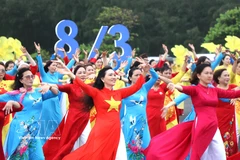
Vietnamese women shine in the traditional Ao dai (Photo: VNA)

March shines with elegance of “Ao dai”

In early March, scenes of women in flowing Ao dai taking spring photos by lakes, parks, offices, temples and historical sites have become a familiar sight on the streets of Hanoi. Social media is also filled with images and stories surrounding the elegant attire, which has become a symbolic signal of the season dedicated to honouring women.

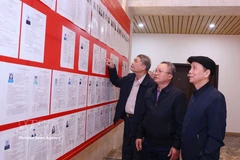
Hanoi voters learn about candidates’ biographies and action programmes. (Photo: VNA)

Hanoi thoroughly prepares for NA, People’s Council election

According to the municipal Election Committee, the capital city has established election committees in 126 communes and wards. In addition, 11 electoral boards for National Assembly deputies, 31 electoral boards for the city-level People’s Council, 831 commune-level electoral boards and more than 4,000 polling teams have been set up to serve the election process.

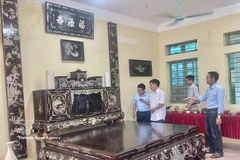
Artisan Vu Van Vinh from Chuyen My commune introduces to visitors a set of mother of pearl inlaid lacquer furniture including a platform bed, tea cabinet, and lacquered horizontal boards and parallel sentences made by his family, worth more than 3 billion VND. (Photo: VNA)

Four Hanoi craft villages join global creative crafts network

The recognition is not only a source of pride for the capital but also creates opportunities to promote these craft villages globally, strengthen international connections, and support their sustainable development in the process of global integration.