China's Guangxi eyes stronger AI cooperation with Vietnamese localities

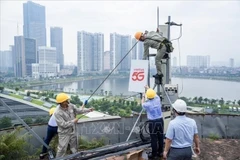
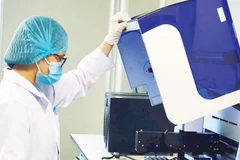
Cooperation among enterprises has continued to expand, while several AI application scenarios have already been implemented in Vietnam, contributing to industry development. Collaboration between universities has also deepened, alongside stronger exchanges in talent training.

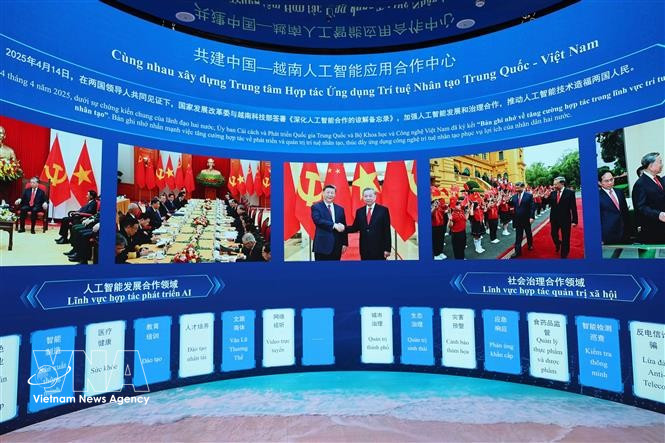
The China–ASEAN AI Application Cooperation Centre is located in Nanning, in the Guangxi Zhuang Autonomous Region. (Photo: VNA)

Beijing (VNA) – The close geographical proximity, cultural affinity and expanding economic ties between China's Guangxi Zhuang Autonomous Region and Vietnam, together with growing cooperation in science and technology, offer favourable conditions for strengthening collaboration in artificial intelligence (AI), according to Guangxi's Chairman Wei Tao.

In an interview with the Vietnam News Agency in China, Wei said AI has emerged as a major focus globally over the past two years and has become a strategic development priority for Guangxi. Since 2025, the region has mapped out a comprehensive roadmap for AI development, including approval to establish the China–ASEAN AI Application Cooperation Centre and the signing of 44 cooperation agreements on AI with ASEAN partners such as Vietnam, Laos, Malaysia and Myanmar.

Guangxi has also adopted a development model combining “research and development in Beijing, Shanghai and Guangzhou, integration in Guangxi, and application across ASEAN markets”. The roadmap has been endorsed by the Chinese government, welcomed by ASEAN partners and positively responded by the market.
vnanet-potal-hop-tac-ai-giua-quang-tay-trung-quoc-va-viet-nam-dat-duoc-nhieu-ket-qua-noi-bat-8628437.jpg
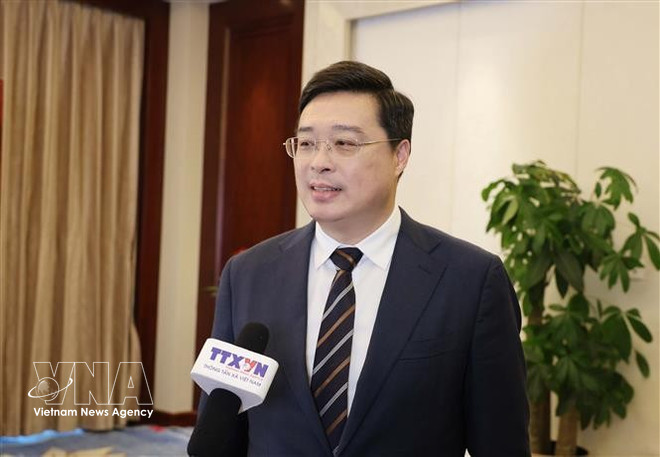
Wei Tao, Chairman of the Guangxi Zhuang Autonomous Region, speaks to the Vietnam News Agency about cooperation between Guangxi and Vietnam in the field of artificial intelligence (AI). (Photo: VNA)

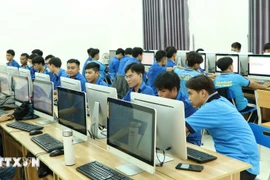
Reviewing progress in AI cooperation between Guangxi and Vietnamese localities, Wei said the partnership has recorded encouraging results since 2025. Cooperation among enterprises has continued to expand, while several AI application scenarios have already been implemented in Vietnam, contributing to industry development. Collaboration between universities has also deepened, alongside stronger exchanges in talent training. In 2025, Guangxi organised five AI training programmes for Vietnamese participants, attracting more than 200 trainees.

Wei noted that during his visit to Vietnam in November 2025, he introduced China’s AI Capacity-Building Action Plan for Good and for All and outlined details of the planned China–ASEAN AI Application Cooperation Centre in Guangxi. The trip also saw the signing of a memorandum of understanding on the China–Vietnam AI Application Cooperation Centre, paving the way for the establishment of a Hanoi exhibition centre under the initiative. Businesses from both sides also concluded 14 cooperation agreements in the fields of the digital economy and AI.

According to Wei, these developments highlight the strong potential for bilateral cooperation and provide a solid basis for expanding practical AI collaboration between Guangxi and Vietnamese partners.

Looking ahead, Guangxi is ready to deepen AI cooperation with Vietnam in four priority areas. These include strengthening mechanisms and platforms for dialogue and coordination in AI; jointly developing large-scale AI models based on the Vietnamese language and industry-specific applications; encouraging enterprises and research institutes to form joint research teams to implement pilot projects and accelerate industrial upgrading through AI; and expanding collaboration in talent training while establishing a long-term, systematic training mechanism for AI professionals./.


VNA

See more

Mang But commune area in Quang Ngai province. (Photo: VNA)

3.9-magnitude earthquake recorded in Mang But, Quang Ngai

According to the Vietnam Earthquake Information and Tsunami Warning Centre under the Institute of Earth Sciences, the tremor occurred at 11:35:06 (Hanoi time) with coordinates of 14.864 degrees North latitude and 108.210 degrees East longitude, at a depth of about 8.1 km. The event was assessed as having a level-0 disaster risk.

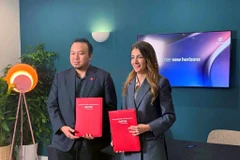
Viettel Networks and Ericsson sign their cooperation agreement on the sidelines of the Mobile World Congress 2026. (MWC 2026)

Viettel Networks, Ericsson partner to advance autonomous telecom networks

Under a newly signed cooperation agreement, Ericsson will provide network automation platforms and artificial intelligence (AI) technologies while working with Viettel to conduct real-world trials. The collaboration marks a new step forward, combining Viettel’s large-scale network operation expertise with Ericsson’s strengths in automation solutions and advanced technologies.

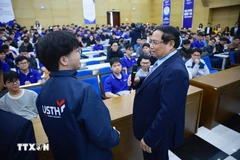
Prime Minister Pham Minh Chinh speaks with students at Hanoi University of Science and Technology (Photo: VNA)

Resolution 57: Developing high-quality sci-tech human resources key to master strategic technologies

After one year of implementing Resolution No. 57-NQ/TW of the Politburo, alongside notable achievements, the Central Steering Committee for science and technology development, innovation, and digital transformation has identified persistent shortcomings and bottlenecks requiring urgent attention - most notably a shortage of high-quality human resources in strategic technology fields.

The Saigon Hi-Tech Park (Photo: VNA)

Vietnam advances toward mastering UAV technology

Products are already making their way into the US market, but this is not merely a story of applying new technology in practice, but a gradual process of mastering core details and affirming international capabilities in the UAV industry, one of Vietnam’s strategic high-tech sectors.

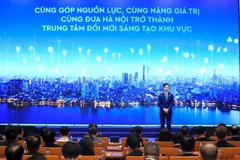
Tran Quang Hung, Chairman of the Board of Directors of HIC, presents the company’s operating model at the launch event. (Photo: hanoimoi.vn)

Hanoi’s innovation centre to drive digital transformation, creative industries

HIC is envisioned as a central “brain” connecting data, resources, policies, technology and culture to address urban development challenges, operate the national innovation ecosystem, promote a sustainable digital economy and digital society, improve the quality of life for local residents, and foster creative industries, particularly cultural industries linked to Hanoi’s identity.

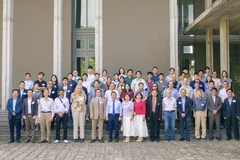
Participants pose for a group photo at the International Conference on Advanced Microscopy for Life Sciences and Materials held in Gia Lai on February 25. (Photo: ICISE)

International conference spotlights advanced microscopy in life sciences, materials

The microscopy user community in Vietnam remains fragmented, lacking a common platform for sharing technical expertise, research experience and collaboration opportunities. This limited connectivity has, to some extent, curtailed the full potential of microscopy technologies in advancing scientific progress and industrial applications at home and abroad.