Hanoi (VNA) - The Asian Development Bank (ADB) and the State Bank of Vietnam (SBV) on January 30 jointly launched a 2 million USD initiative on green banking capacity development, aiming to help Vietnam scale up green and climate finance.
The initiative is a component of the technical assistance project “Inclusive and Climate Finance” funded by the Japanese Government through the Japan Fund for Prosperous and Resilient Asia and the Pacific (JFPR).
The project seeks to strengthen green banking practices and enhance the capacity of Vietnam’s banking sector to scale up green and climate finance.
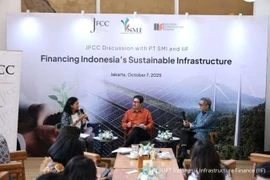
At the inception workshop marking the implementation of the 2 million USD component, more than 80 participants from SBV, relevant ministries and agencies, development partners, commercial banks, and business associations discussed key topics such as climate risk assessment, macro-economic impacts of carbon pricing, the role of credit institutions in carbon market development, and green bond issuance.
Participants also exchanged perspectives on Vietnam’s green taxonomy and identified next steps to help the banking sector advance sustainable and transition finance.
At the workshop, Shige Watanabe, Minister-Counselor, Chief of Economic Section, the Embassy of Japan, expressed his expectation that the project will use Japanese public resources effectively and contribute meaningfully to Vietnam’s green and inclusive growth.
Maria Joao M. Pateguana, Unit Head of Private Sector Development at ADB’s Vietnam Resident Mission, emphasised that the technical assistance aligns closely with ADB’s Country Partnership Strategy for Vietnam and support the Government’s broader financial sector reforms.
She underscored that continued dialogue and targeted support will help unlock the banking sector’s potential for sustainable growth while strengthening the sector’s ability to manage climate risks. /.
Vietnam’s Geneva Mission bridges localities with green finance
Increasing environmental standards, traceability requirements, and emissions assessments in major markets present both challenges and opportunities for Vietnamese localities to enhance production capacity and integrate more deeply into global value chains.