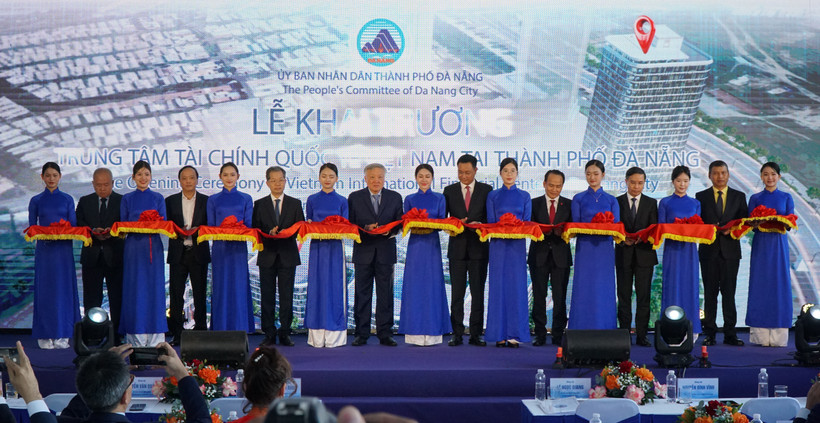
Da Nang (VNA) – The Vietnam International Financial Centre (IFC) in the central city of Da Nang was inaugurated on January 9, marking the official launch of Vietnam’s international financial centre model in accordance with Government Decree No. 323/ND-CP dated December 18, 2025.
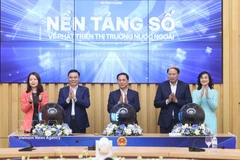
The ceremony formally announced the commencement of operations of the IFC in Da Nang and provided domestic and foreign organisations, businesses, and investors with information on its key features, development plans, and implementation roadmap. The event also marked the launch of the official website of the IFC in Da Nang.
This event is of great significance in concretising the major policy of the Party, the National Assembly, and the Government on developing an international financial centre in Vietnam. It contributes to enhancing Vietnam’s position in the region and globally, while creating new momentum for breakthrough and sustainable development in Da Nang in the coming period.
The Government has clearly defined the development orientation of the IFC in Da Nang as a modern international financial hub closely linked with the innovation ecosystem, digital technology, and sustainable finance. The centre will serve as a controlled testing ground for new financial models and pioneer the deployment and expansion of digital asset products, digital payments, specialised trading platforms and exchanges. It will also promote supply chain financing, third-party financial services, and non-deposit-taking lending institutions to complement the traditional financial market, thereby forming flexible, innovative, and specialised financial products.
Speaking at the ceremony, Standing Deputy Prime Minister Nguyen Hoa Binh called on Da Nang to strengthen coordination with Ho Chi Minh City to finalise a unified operating framework, ensuring the centre’s two branches complement each other. He urged the city to swiftly consolidate the local operating authority in a streamlined, professional and effective manner; and to build a contingent of officials with global mindsets, strong foreign language skills, deep professional expertise, and high public service ethics, capable of competing on equal footing with the global financial community.
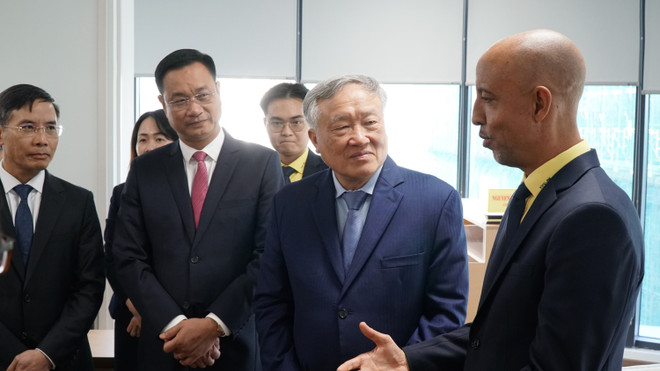
He also emphasised that the Vietnamese Government is committed to fully protecting the legitimate rights and interests of investors and businesses. He encouraged investors and the business community to engage more deeply and directly with the Central Steering Council in formulating a long-term development strategy for Vietnam’s international financial centre. Businesses were urged to candidly identify regulatory shortcomings and propose improvements, noting that their contributions are key to creating a more attractive and open investment environment.
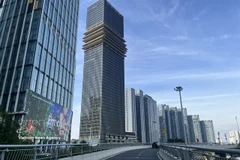
Ho Ky Minh, Standing Vice Chairman of the Da Nang People’s Committee and Chairman of the centre’s operating authority, said the IFC in Da Nang will be developed into multiple functional zones covering a total area of approximately 300 hectares. The site offers rapid connectivity to the international airport, seaports, and strategic transport corridors, with ready digital and IT infrastructure. It is located within a high-quality urban environment suitable for attracting domestic and international experts and financial institutions to live and work, in line with a modern financial centre model.
The headquarters of the centre’s operating authority, located at Software Park No. 2, provides more than 4,000 sq.m of working space for members and is fully equipped with internet connectivity, data systems, and servers, he said, adding the city has also completed 5G network coverage across areas planned for the international financial centre.
Da Nang is currently finalising construction of a 20-story building and smart monitoring, storage, and operations infrastructure at Software Park No. 2, with a total floor area exceeding 27,000 sq.m, designed to attract investment funds, technology firms, startups, and innovation activities, as well as to pilot new models such as digital assets, cryptocurrencies, and digital payments under sandbox mechanisms, Minh stated.
At the inauguration ceremony, the official portal of the Vietnam International Financial Centre in Da Nang was formally launched. The portal serves as the centre’s official information channel and integrates one-stop services, including member registration and licensing systems, work permit and visa registration, and support services.
It is designed based on best practices from international financial centres and is connected with national regulatory authorities to enable rapid business verification, ensure compliance with anti-money laundering and counter-terrorism financing regulations, fulfill tax obligations, and process labour registration and licensing, ensuring maximum compliance and transparency./.