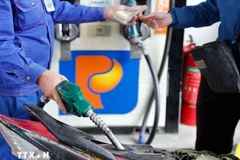
Hanoi (VNA) – Although inflationary pressures in 2026 are not expected to be particularly high, several risks remain due to the volatility in global energy, fuel and commodity prices, according to Nguyen Thi Huong, Director General of the National Statistics Office (NSO) under the Ministry of Finance.
Given Vietnam’s inflation control in 2025, economists expect inflation in 2026 to remain moderate, averaging about 3.5%. Still, higher international logistics and transport costs could keep driving up production expenses and commodity prices, she noted.
Logistics and international transport costs may remain elevated, putting pressure on production costs and product prices, Huong said.
Geopolitical conflicts, natural disasters and climate change could also disrupt supply chains, especially for food and essential goods. At the same time, faster growth in consumption, production and public investment is likely to generate stronger demand, potentially adding upward pressure on prices.
Against this backdrop, the Government will need to continue managing prices in a proactive and cautious manner, balancing supply and demand, and keeping inflation expectations under control to maintain macroeconomic stability, Huong suggesed.
Under the National Assembly’s Resolution No. 244/2025/QH15, Vietnam aims to keep the Consumer Price Index (CPI) at around 4.5% in 2026. This target is considered an important anchor for strengthening macroeconomic stability while leaving room for growth.
Nguyen Bich Lam, former General Director of the General Statistics Office (now the NSO), noted that inflation in 2026 will be heavily influenced by the lagging effects of major price adjustments during 2024–2025. Electricity prices rose twice over the past two years, driving up production and living costs, with impacts expected to continue feeding into CPI over the coming quarters.
Planned increases in healthcare and education fees, aligned with real cost recovery, are also placing pressure on the public services group, which carries a large weight in the CPI basket, he said.
Meanwhile, demand for tourism, leisure and dining out has rebounded strongly after years of suppression, potentially pushing up service prices during peak periods. On global markets, input materials such as metals, construction supplies and industrial goods remain high, while ongoing geopolitical tensions continue to add uncertainty.
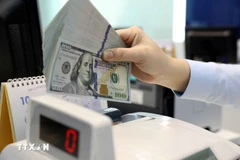
The USD/VND exchange rate, though facing less strain than in previous periods, still risks sharp fluctuations as the US dollar remains strong. This could raise the cost of imported materials, adding further cost-push pressure.
Many experts believe inflationary pressures in 2026 will be higher than in 2025 but still manageable, with inflation expectations remaining low despite dominant upward price drivers.
Nguyen Dao Tung, President of the Academy of Finance, said the Government’s GDP growth target of 10% in 2026 will require a sharp rise in aggregate demand across consumption, investment and exports, placing considerable strain on monetary and fiscal policy.
Balancing such an ambitious growth goal with macroeconomic stability will be challenging, particularly as the global economic environment in 2026 is forecast to remain unfavourable, with uncertainties over tariffs, risks of slower growth in major economies, and volatility in financial and currency markets.
Nguyen Duc Do, Deputy Director in charge of the Institute of Economics and Finance under the academy, added that inflation pressures could also stem from the delayed impacts of credit growth. However, since credit expansion in 2025 was not unusually high compared with the past decade, its effect on inflation may be limited.
Do projected monthly CPI growth of around 0.3%, with average inflation for 2026 expected to hover near 3.5%, within a ±0.5 percentage-point range./.
VNA