Vietnam’s tilapia exports to US accelerate

Compared to 2024, the strong growth reflected both increased import demand from the US market and the ability of Vietnamese businesses to capitalise on opportunities amid fierce international competition.

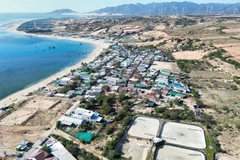
Tilapia exports to the US last year reached 53.15 million USD, accounting for approximately 54% of Vietnam's total tilapia exports. (Photo doanhnghiephoinhap.vn)

Hanoi (VNS/VNA) – Tilapia exports to the US surged by 173% in 2025, as two major suppliers of the food, including China and Brazil, faced high tariffs, altering the supply landscape in this market.

Exports to the US last year reached 53.15 million USD, accounting for approximately 54% of total tilapia exports, making the US the largest import market for this product, according to the Vietnam Association of Seafood Exporters and Producers (VASEP).

Compared to 2024, this strong growth reflected both increased import demand from the US market and the ability of Vietnamese businesses to capitalise on opportunities amid fierce international competition.

In terms of product structure, the growth in tilapia exports to the US was mainly concentrated in fillets with approximately 40 million USD, a 499% increase year-on-year, becoming the main driver of the overall export increase. This trend aligns with US consumer demand, where convenient, easy-to-prepare, and consistently high-quality products continue to be favoured.

Conversely, exports of other processed tilapia products and dried fish to the US market recorded sharp declines of 39% and 68% year-on-year, respectively, indicating that the US market has been increasingly focusing on frozen fillet products, rather than other deeply processed products.

According to VASEP, the increased presence of Vietnamese tilapia in the US market is linked to significant fluctuations in global supply.

China, the world's largest tilapia producer and exporter, has continued to face tariffs of up to 55% on exports to the US, significantly reducing its competitiveness. Meanwhile, Brazil has been also subject to a high 50% tariff from August 2025, forcing its businesses to adjust their export strategies, including shifting to other markets.

In this context, Vietnamese businesses have stepped up investment in tilapia farming and processing, especially frozen fillet products that meet the technical requirements and consumer preferences in the US.

Advantages in production costs, relatively stable supply, and the ability to flexibly meet import standards are helping Vietnamese tilapia expand its market share in the demanding market./.

VNA

See more

Vinh Truong hamlet in Phuoc Dinh commune, Khanh Hoa province is located within the planned area for the Ninh Thuan 1 nuclear power plant. (Photo: VNA)

Khanh Hoa eyes renewable energy hub status following Resolution 70

The Ministry of Industry and Trade’s Institute of Energy (IOE) ranks the province among the nation’s top locations for renewables, highlighting stable year-round solar radiation and the country’s longest annual sunshine duration, spanning 2,500 to 3,100 hours.

The Vietnam Exposition Centre (VEC), the venue of the Spring Fair 2026 (Photo: VNA)

Spring Fair 2026 to promote Vietnamese goods, Tet traditions

By eliminating intermediary stages and linking producers, distributors and consumers more directly, the fair is expected to deliver more competitive prices than those on the wider market, and also improve transparency and strengthen consumer confidence in domestic products, particularly as interest in quality and traceability continues to rise.

FPT semiconductor chip (Photo: VNA)

FPT announces semiconductor testing, packaging plant

The establishment of the advanced semiconductor chip testing and packaging factory demonstrates FPT’s commitment to implementing Resolution 57 on breakthroughs in science and technology development, innovation and national digital transformation, and the National Strategy for Semiconductor Industry Development.

The Mong Cai international border gate in Quang Ninh province (Photo: VNA)

Vietnam to pilot smart border gate at Mong Cai-Dongxing international crossing

The overall objective of the pilot scheme to develop a smart border gate at the Mong Cai (Vietnam) – Dongxing (China) international border gate pair is to transform the Mong Cai border-gate economic zone in particular and Quang Ninh province in general into a major hub for import-export activities, trade, services, tourism and border-gate economy within the northern key economic region.

Do Thi Quynh Phuong, owner of Viet–France Market (Photo: VNA)

Vietnamese goods ready for peak Tet shopping season in France

At markets and specialty stores selling Vietnamese goods in France, preparations for the festive season are already in full swing. Imported Vietnamese products this year are diverse, focusing on items closely associated with Tet meals and traditions.

People visit Autumn Fair 2025. (Photo: VNA)

Spring Fair 2026: New Year boost for consumer demand

More than a conventional trading venue, the Spring Fair 2026 is emerging as a convergence point for consumption, culture and tourism, offering enterprises an opportunity to engage directly with consumers, test products and shape market strategies as early as the first quarter.

Auto technology solutions are on display at an exhibition on the 80-year national achievements (Photo: VNA)

Digital economy expected to revamp growth model

Meeting the goals set in Resolution No. 57-NQ/TW, including a digital economy share of at least 30% of GDP by 2030 and 50% by 2045, will demand more substantive, high-value progress fueled by breakthrough innovations.

Vietnam has set a target of expanding exports by 8% in 2026 (Illustrative photo: VNA)

Vietnam targets new export growth milestone in 2026

According to MB Securities’ Vietnam Outlook 2026 report, Vietnam's exports may grow by 15–16% in 2026, driven by market expansion and a shift towards higher-value products, led by electronics and high-tech industries amid rising global demand for AI and digital transformation.