Hanoi (VNA) – Issued at a time when Vietnam is entering the new era of national rise, the Politburo’s Resolution No. 79-NQ/TW on the development of the state economic sector sends a strong political and economic message by repositioning the role of the sector with renewed determination and ambition.
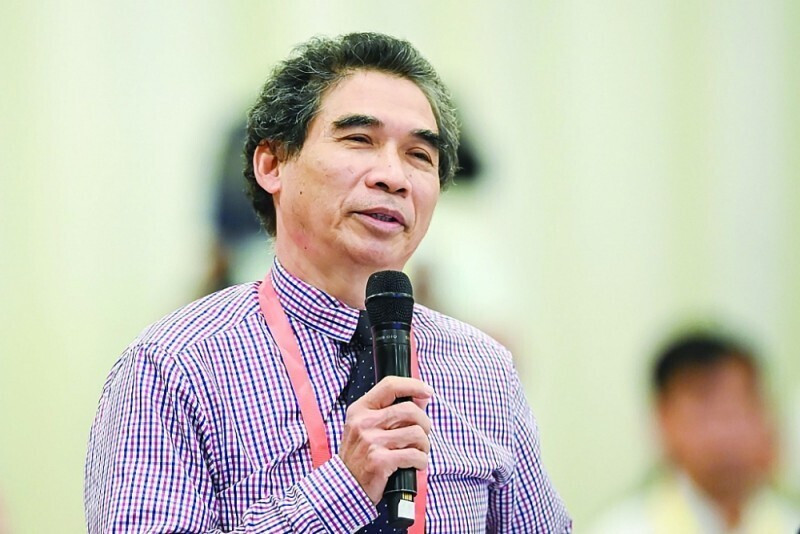
Rather than maintaining a rigid administrative mindset, Resolution No. 79 opens up a new development-oriented approach, granting leading state-owned enterprises (SOEs) greater autonomy to spearhead growth, while subjecting them to the most stringent international governance standards, according to Associate Professor, Doctor Nguyen Thuong Lang, an economist and a senior lecturer at the School of Trade and International Economics under the National Economics University.
According to Lang, the leading role of the state-owned economy has long been a constitutional principle and a consistent pillar throughout Vietnam’s development history, from the centrally planned, subsidy period to the present-day system of state economic groups. The state sector has remained the backbone for fulfilling political tasks, ensuring national defence and security, and safeguarding employment and social welfare.
What distinguishes Resolution No. 79, he noted, is its clear redefinition of the mission of the state economic sector under new conditions. Beyond reaffirming their leading role, the resolution assigns SOEs a pioneering and path-clearing function, requiring them to drive innovation, lead market development and serve as benchmarks for other economic sectors. SOEs are no longer expected merely to preserve capital or operate in low-risk areas, but to represent the credibility and competitiveness of Vietnam’s national economy on the international stage. This shift demands the integration of advanced technology, modern governance and corporate culture, as well as the formation of a contigent of capable, ethical and dedicated entrepreneurs.
Addressing the long-standing debate over balancing political tasks and profitablity, the economist acknowledged that complete alignment cannot be achieved overnight. However, Resolution No. 79 significantly narrows this gap by clarifying ownership principles and operational responsibilities. As SOEs manage assets owned by the entire population, they bear an inherent obligation to serve public and political objectives, particularly in emergencies, natural disasters or national security situations. At the same time, the resolution encourages SOEs to operate largely under market principles, allowing them to compete fairly and improve efficiency while fulfilling their public duties.
While it still takes time for the economy to develop to a higher level so that both political tasks and profitablity could be aligned, the direction identified by the resolution is completely right, he opined.
Regarding the ambitious targets set for 2030, including the formation of 50 SOEs among the top 500 in Southeast Asia, one to three among the global top 500, and three state-owned commercial banks in Asia’s top 100, Lang assessed these goals as challenging but achievable.
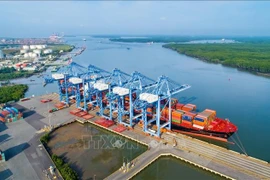
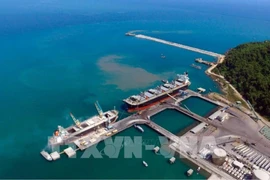
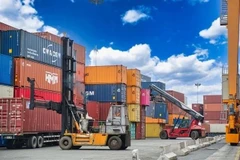
He cited the extensive restructuring process that has streamlined the number of SOEs, from about 12,000 to over 860 with state capital at present (including some 500 completely owned by the State), while significantly improving their quality, resilience and competitiveness. SOEs contribute about 12.5% of GDP and 27–30% of total budget revenue (excluding crude oil), and uphold their leading role in strategic sectors such as energy, infrastructure, telecommunications, logistics, and defence – security.
Resolution No. 79 also mandates that all SOEs adopt digital governance, with major groups meeting OECD standards. While recognising challenges related to transparency and differences in ownership models, he emphasised that flexible and adaptive implementation could enable Vietnam to achieve a high degree of compatibility with international norms.
From a broader economic perspective, he stressed that the resolution promotes synergy rather than competition between the state and private sectors. By shifting from a “capital-preserving” mindset to a “path-clearing” role, leading SOEs are expected to develop large-scale infrastructure, energy and technology projects, creating expansive ecosystems in which private enterprises can integrate into value chains. This complementary model, he concluded, offers a foundation for shared growth and the realisation of Vietnam’s aspiration for a prosperous and resilient economy./.
See more
PM urges swift, high-quality implementation of APEC 2027 projects in Phu Quoc
PM Pham Minh Chinh stressed that infrastructure development in Phu Quoc must not be limited to APEC 2027, but planned with a long-term vision of at least 100 years.
Glorious Spring Fair 2026 expected to boost trade, promote Vietnamese goods
The Glorious Spring Fair 2026 will take place at the Vietnam Exposition Centre in Dong Anh commune, Hanoi, from February 2 to 13. Around 3,000 standard booths will be arranged, alongside outdoor spaces dedicated to cultural, culinary and experiential activities.
Preparations accelerate for opening of first Spring Fair 2026
The multi-sector fair will officially take place at the Vietnam Exposition Centre in Dong Anh commune, Hanoi, from February 2 to 13, focusing on consumer goods to serve Tet shopping demand.
Resolution 68 seen as catalyst for private investment in key infrastructure projects: official
Following three waves of ground-breaking and inauguration of major projects, there are currently around 564 underway, with total mobilised capital of approximately 5.1 quadrillion VND (194 billion USD). Of this, the private economic sector has contributed more than 3.8 quadrillion VND, or 74.6% of the total.
Vietnam emerges as magnet for AI investment
Vietnam aims to become one of the top three AI R&D centres in Southeast Asia by 2030 and train at least 50,000 chip and AI engineers.
Digital economy expected to revamp growth model
Meeting the goals set in Resolution No. 57-NQ/TW, including a digital economy share of at least 30% of GDP by 2030 and 50% by 2045, will demand more substantive, high-value progress fueled by breakthrough innovations.
Reference exchange rate goes down further on January 28
Both Vietcombank and BIDV listed the buying rate at 25,940 VND/USD and the selling rate at 26,300 VND/USD, both down 52 VND from the January 27 morning session.
Vietnam targets new export growth milestone in 2026
According to MB Securities’ Vietnam Outlook 2026 report, Vietnam's exports may grow by 15–16% in 2026, driven by market expansion and a shift towards higher-value products, led by electronics and high-tech industries amid rising global demand for AI and digital transformation.
New legal framework for Mobile Money to take effect in Vietnam soon
The issuance of a implementation plan for Government Decree No. 368/2025/ND-CP on the provision of Mobile Money services is considered an important step toward promoting financial inclusion. Mobile Money services are not only a convenient payment tool but also an effective means of extending digital financial services to remote and disadvantaged areas.
OCOP products dominate Tet gift baskets
A visit to major supermarkets such as Go!, Co.opmart and WinMart, as well as spring markets across Quang Ngai province, shows that OCOP product stalls are attracting the most attention.
Hanoi creates new momentum for industrial growth
Manufacturing – processing remained the backbone of industrial growth last year, with value added in this sector increased by 7.18%, contributing 0.85 percentage points to Hanoi’s overall GRDP growth.
Can Tho woos Sumitomo with industrial park, green energy pledges
Can Tho spans more than 6,360 square kilometres with a population exceeding 4.2 million, and serves as the economic, cultural, and science-and-technology hub of the Mekong Delta, enjoying strategic advantages in transport, logistics and regional connectivity.
Kim Long Motor partners with BYD to build EV battery plant in Hue
The BYD battery manufacturing plant will be built at Kim Long Motor Hue’s automotive production and assembly industrial park with a total two-phase investment of 130 million USD.
Crypto exchange licensing poised to boost foreign capital attraction
Experts believe that licensing Vietnam’s first crypto asset exchange will serve as a crucial catalyst for attracting foreign capital in a more formal and effective way.
Vietnam finalises legal foundation for domestic carbon market
Under the new framework, companies and other regulated entities will trade both emission quotas and carbon credits through securities accounts at licensed brokerage firms.
Visa highlights Vietnamese payment trends for 2026
Vietnamese consumers are increasingly seeking premium experiences, from travel and shopping to wellness and dining, and are showing greater interest in payment cards with travel-related benefits.
Japanese firms in Vietnam hit 15-year profit high
JETRO’s 2025 Survey on the Business Conditions of Japanese Companies Investing Overseas shows that 67.5% of Japanese firms in Vietnam expect to be profitable this year, up 3.4 percentage points from 2024 and the highest level since 2009.
Reference exchange rate down on January 27
With the current trading band of +/- 5%, the ceiling rate applicable for commercial banks during the day is 26,353 VND/USD, and the floor rate 23,843 VND/USD.
Turning international trade into sustainable growth driver
With total import-export revenue reaching 920 billion USD in 2025, Vietnam has officially entered the world’s top 15 economies in terms of international trade, marking a significant milestone in national development after decades of global economic integration and 40 years of Doi moi (Renewal). International trade has become a key driver of Vietnam’s economic growth.
Vietnam becomes RoK’s key export market in ASEAN
The RoK’s exports to Vietnam rose 7.6% in 2025 from a year earlier to 62.8 billion USD, while imports from Vietnam climbed 11.7% to 31.8 billion USD, according to data released by the RoK’s Ministry of Trade, Industry and Energy and the Korea International Trade Association (KITA).