Unity in will, vision sustain Vietnam’s future growth: Researcher

The 14th National Party Congress was not only a milestone in personnel work but also a marker of strategic thinking. With firm political stability and a strong reform roadmap, Vietnam is moving closer to its goal of becoming a developed and prosperous nation, while assuming greater responsibility for peace and stability in the region and the world.

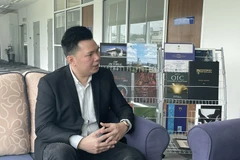
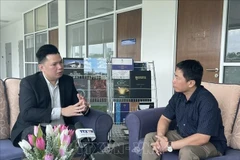
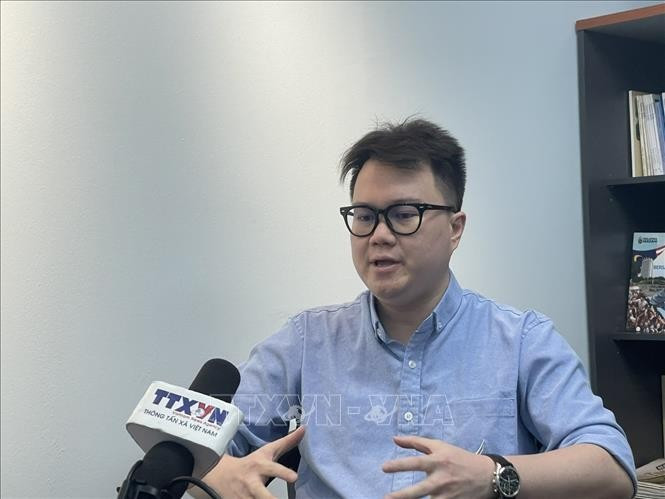
Enzo Sim Hong Jun, a Malaysia-based Southeast Asian history and defence researcher (Photo: VNA)

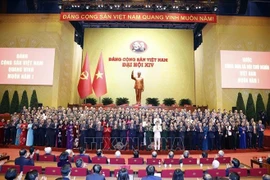
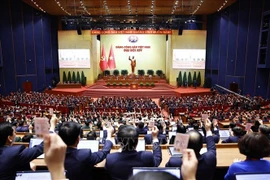
Hanoi (VNA) – Unity and a high level of consensus within the Party leadership as one of the most striking hallmarks of the 14th National Congress of the Communist Party of Vietnam (CPV), according to Enzo Sim Hong Jun, a Malaysia-based Southeast Asian history and defence researcher.

Speaking to Vietnam News Agency correspondents in Malaysia, the researcher noted that with the strong consensus of nearly 1,600 delegates, the Congress entrusted Party General Secretary To Lam with a “powerful mandate”, ushering in a new phase of administrative reform, digital economic development and a clearer affirmation of Vietnam’s role as an influential middle power on the international stage.

Enzo highlighted that unity and high-level consensus of Party was also reflected through the shorter duration of the 14th National Party Congress compared to previous terms. He stressed that this showed strong unity within the top leadership as well as broad support for the strategic agenda put forward.

He stressed that this foundation of political stability carries strategic significance for Vietnam’s long-term development, reinforcing investor trust and ensuring policy continuity. Consistency in policymaking, he said, provides reassurance to international financial institutions and foreign investors, particularly amid ongoing global uncertainties. The Congress also reaffirmed Vietnam’s foreign policy of independence, self-reliance, flexibility and steadfastness.

Assessing the development targets, Enzo said the 14th National Party Congress set out ambitious economic goals for the 2026–2030 period, with a vision extending to 2045. General Secretary Lam’s commitment to maintaining annual economic growth of around 10%, though challenging in the current global context, is viewed as achievable thanks to far-reaching administrative and economic reforms already underway.

The goal of attaining upper-middle-income status by 2030, he added, carries special significance as it coincides with the centenary of the Communist Party of Vietnam.

The researcher also praised Vietnam’s efforts to streamline its state governance apparatus, noting that the restructuring and consolidation of ministries and agencies are expected to enhance administrative efficiency. Vietnam is steadily moving away from a labour-intensive growth model towards higher value chains driven by a knowledge-based economy and innovation.

New growth models highlighted at the Congress – including the digital, green and circular economies – aim to ensure sustainable development and environmental protection. Greater investment in education, innovation and strategic infrastructure was identified as a key driver enabling Vietnam to integrate more deeply into regional and global value chains, he underlined.

On the external front, Enzo observed that the 14th National Party Congress reaffirmed Vietnam’s position as an influential middle power. Vietnam is actively expanding cooperation with partners in the Southern Hemisphere and BRICS, while strengthening relations with major powers and contributing to peace, security and stability in the East Sea through dialogue and constructive engagement, he stated.

According to Enzo, the 14th National Party Congress was not only a milestone in personnel work but also a marker of strategic thinking. With firm political stability and a strong reform roadmap, Vietnam is moving closer to its goal of becoming a developed and prosperous nation, while assuming greater responsibility for peace and stability in the region and the world./.

VNA
See more

President of the Republic of Korea (RoK) Lee Jae Myung and his spouse arrive in Hanoi on April 21 afternoon. (Photo: VNA)

Korean President arrives in Hanoi, beginning state visit to Vietnam

The visit is expected to become a special milestone in the 34-year history of diplomatic relations between the two countries, marking the starting point for a strategic leap forward in the bilateral ties amid evolving global dynamics, according to Korean Ambassador to Vietnam Choi Young Sam.

Vietnamese Ambassador to Thailand Pham Viet Hung (middle) at the discussion. (Photo: VNA)

Vietnam pushes people-centred priorities for Asia-Pacific at UNESCAP

Vietnam remains firmly committed to multilateralism and the United Nations’ central role in global governance. It appreciates UNESCAP’s role in translating global commitments into concrete regional action and cooperation, sharing best practices, supporting evidence-based policymaking and tackling emerging challenges.

Vietnamese Ambassador to New Zealand Phan Minh Giang (L), who is concurrently in charge of Samoa, presents his credentials to Head of the Independent State of Samoa Tuimalealiifano Va’aletoa Sualauvi II in Apia on April 21. (Photo: VNA)

Vietnam seeks to deepen ties with South Pacific partners

The diplomat voiced his confidence that with joint efforts, bilateral relations will continue to grow, particularly in areas of shared interest and strength. He also underscored the importance of enhancing coordination and mutual support at regional and international multilateral forums.

Party General Secretary and State President To Lam, and leaders of Ha Tinh province. (Photo: VNA)

Ha Tinh must leverage advantages, ignite growth aspiration: Top leader

During a local working session with the standing board of the provincial Party Committee on April 21, Party General Secretary and State President To Lam urged Ha Tinh to fully recognise both the responsibility and honour of a land rich in tradition, thereby fueling an even stronger development drive.

A high-ranking military delegation from the Vietnamese Ministry of National Defence visits an exhibition booth (Photo: Ministry of National Defence)

Vietnam attends defence services, security exhibitions in Malaysia

This year’s exhibitions feature 15 thematic categories, highlighting modern military products such as aircraft, warships, armoured vehicles, man-portable low-range missile systems, anti-aircraft gun systems, laser weapons, as well as various types of ammunition, military uniforms, and logistics equipment serving defence purposes.

A view of the 16th National Assembly's first session (Photo: VNA)

16th NA reviews amendments to four tax-related laws on April 21

Lawmakers are expected to discuss the supplementary assessment of the implementation of the 2025 socio-economic development plan and state budget, as well as performance in the early months of 2026. They will also review the five-year socio-economic development plan for 2026–2030, thrift practices and anti-wastefulness efforts in 2025, and progress in achieving national gender equality targets. The session is broadcast live on radio and television, enabling voters and the public to follow proceedings.

The delegation of National Assembly deputies from Ho Chi Minh City holds a group discussion. (Photo: VNA)

Draft law proposes flexible tax thresholds, extended incentives for EVs

Presenting the Government’s proposal, Minister of Finance Ngo Van Tuan said the draft law proposes not to stipulate specific revenue thresholds for exemption from personal income tax or value-added tax for household and individual businesses in the law, instead assigning the Government to set these thresholds.

Deputies in a group discussion (Photo: VNA)

Lawmakers suggest groundbreaking mechanisms to revive Vietnamese culture

The draft resolution seeks to lure more investment into cultural industries, aiming for the sector to contribute 7% to GDP by 2030 and 9% by 2045. It also sets ambitious goals of ranking Vietnam among the top three countries in Southeast Asia and the global top 30 for national soft power.