Hanoi adopts 100-year master plan resolution

With ambitions that extend well beyond the next century, the capital is expected to unlock new space, potential and opportunities to drive economic breakthroughs, including the pursuit of double-digit growth, commensurate with its status as the capital of a future high-income developed country.

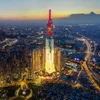
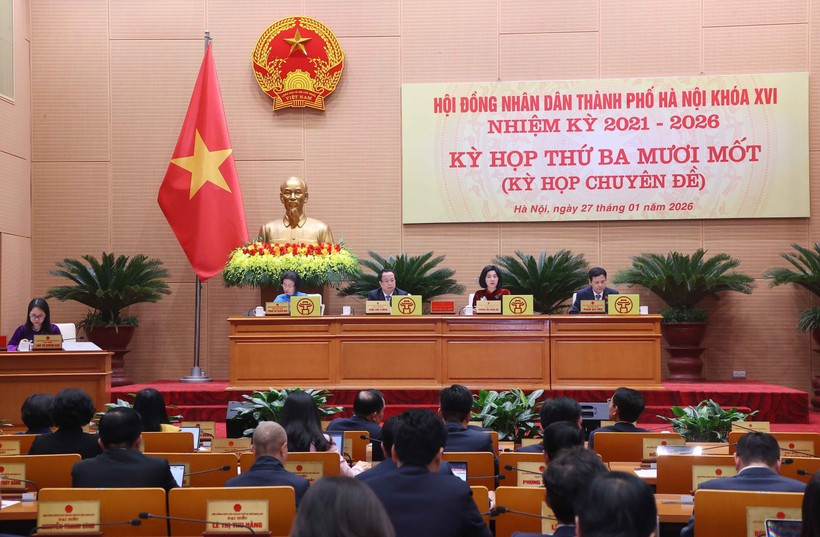
Hanoi's 100-year master plan resolution is adopted at the 31st session of the municipal People's Council on January 27. (Photo: VNA)

Hanoi (VNA) – The People’s Council of Hanoi on January 27 passed a landmark resolution endorsing the core contents of the Capital’s Master Plan with a 100-year vision, laying the groundwork for the city’s long-term transformation into a capital of culture, identity and creativity under a multi-polar, multi-centre and multi-layer urban model, as well as a civilised and modern metropolis of time-honoured culture that is green, clean, beautiful and resilient to climate change.

The resolution reaffirms Hanoi’s dual role as the nation’s political – administrative centre and a leading growth powerhouse. With ambitions that extend well beyond the next century, the capital is expected to unlock new space, potential and opportunities to drive economic breakthroughs, including the pursuit of double-digit growth, commensurate with its status as the capital of a future high-income developed country. Hanoi is also tasked with generating strong spillover effects to catalyse development across the Red River Delta, the Capital Region, the northern key economic region and the country at large.

Under the master plan, nine growth poles are identified to guide spatial and infrastructure development. These include the Central Urban Area on the right bank of the Red River, encompassing the historical core and expanded zones as the capital’s cultural, historical and political heart, alongside an Olympic urban area. The northern pole (Dong Anh – Me Linh – Soc Son) is positioned as an integration-driven hub for international services, trade, finance and logistics linked to Noi Bai International Airport and high-tech industries.

The eastern pole (Gia Lam – Long Bien) is designed as a gateway and service centre with large-scale commercial complexes and modern logistics facilities connected to National Highway 5 and Hanoi – Hai Phong Expressway. The southern pole (Thuong Tin – Phu Xuyen) will serve as the central urban zone planned. Meanwhile, the pole of industrial and logistics powerhouse will combine high-tech industry and agriculture with multimodal transport linked to a proposed second airport south of Hanoi, high-speed rail and river ports.

Additional poles include Van Dinh – Dai Nghia in the south as an ecological and heritage-oriented riverine city; the southwestern pole (Xuan Mai – Chuong My) focused on education, health care and eco-tourism; the western pole (Hoa Lac) as a science, technology, innovation and education hub centred on Hoa Lac Hi-Tech Park and Vietnam National University; the northwestern pole (Son Tay – Ba Vi) as a cultural, historical and resort city associated with national defence and security safeguarding tasks; and the Red River corridor as a special landscape space for finance, services, trade and tourism.

The resolution also delineates nine major urban centres with specialised functions, ranging from political and administrative hubs and international integration to logistics, heritage, education, health care and innovation, distributed across areas south and north of the Red River, the eastern zone, the Olympic urban area, and centres in Phu Xuyen, Van Dinh – Dai Nghia, Xuan Mai, Hoa Lac and Son Tay.

To underpin development, nine strategic spatial axes and economic corridors are established along key transport routes. These include the Nhat Tan – Noi Bai/Bac Thang Long – Noi Bai axis developing an airport city model linked with Noi Bai International Airport; the West Lake – Co Loa – Gia Binh Airport axis linking Hanoi with emerging northeastern economic zones; the National Highway 5/Hanoi – Hai Phong Expressway corridor as a smart logistics, service and trade artery to seaports; and National Highway 1A/Phap Van – Cau Gie as the principal economic corridor connecting the capital with southern regions.

Other corridors cover National Highways 21B/21C as a dual industrial-logistics and green cultural axis; National Highway 6/Ha Dong – Xuan Mai fostering eco-urban chains towards the northwest; Thang Long Boulevard/West Lake – Ba Vi linking the central city with Hoa Lac and Ba Vi National Park; National Highway 32/West Thang Long Road towards Son Tay and the upper Red River region; and the Red River scenic boulevard, envisioned as a central green and creative axis symbolising a modern and civilised Hanoi.

The plan sets clear targets, with urban construction land projected to account for 45–50% of the city’s natural area by 2045 and 55–60% by 2065, with a ceiling of up to 70% by 2100 if conditions allow. Population is expected to reach 15–16 million by 2045 and 17–19 million by 2065, while remaining below 20 million in the long term to ease urban pressure. The urbanisation rate is targeted at over 75% by 2045 and more than 90% by 2065.

Hanoi aims for average GRDP growth of over 11% annually in 2026–2030. Per capita GRDP is hoped to exceed 12,000 USD by 2030, rising to around 45,000 USD by 2045 and approximately 100,000 USD by 2065.

Social goals include basically eradicating household poverty under national multidimensional standards by 2030, raising the Human Development Index to about 0.92 by 2045 and 0.95 by 2065, achieving a happiness index of 9.5 out of 10 by 2045, and increasing average life expectancy to around 80 years. Environmental bottlenecks are to be largely resolved by 2030, with priority given to tackling flooding, traffic congestion, pollution and urban order problems as the capital advances its long-term development agenda./.

VNA
See more

Politburo member and standing member of the Party Central Committee’s Secretariat Tran Cam Tu (R) bids farewell to Lao Party General Secretary and President Thongloun Sisoulith. Photo: VNA

Senior Party official bids farewell to top Lao leader

Lao Party General Secretary and President Thongloun Sisoulith said that the visit was highly successful, affirming that the great friendship, special solidarity, comprehensive cooperation, and strategic cohesion between Vietnam and Laos will continue to grow stronger. He emphasised that this relationship would be preserved as a shared and invaluable asset of the two nations and passed on to future generations.

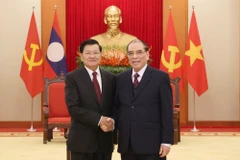
General Secretary of the Lao People’s Revolutionary Party (LPRP) and President of Laos Thongloun Sisoulith and Nong Duc Manh (R), former General Secretary of the Central Committee of the Communist Party of Vietnam. (Photo: baochinhphu.vn)

Top Lao leader visits former General Party Secretary in Hanoi

The special Vietnam-Laos relationship, diligently nurtured by Vietnamese President Ho Chi Minh and Lao Presidents Kaysone Phomvihane and Souphanouvong, is an invaluable common asset and a vital factor for the existence and development of both nations.

The article posted on Pathetlao - the electronic outlet of the Lao News Agency (KPL) (Photo: VNA)

Lao media highlights President Thongloun’s Vietnam visit

Vietnam and Laos committed to improving the quality of cooperation and deepening strategic collaboration, enhancing close coordination in defence and security, creating favourable conditions to accelerate economic connectivity, particularly by expediting the early implementation of the Vientiane–Hanoi expressway project.

National Assembly Chairman Tran Thanh Man offers incense in remembrance of late General Secretary Truong Chinh on January 27. (Photo: VNA)

NA Chairman commemorates late Party, State, NA leaders, visits former leadership

Chairman Man offered incense and expressed profound gratitude to the late great intellectual and outstanding representative of the people. He affirmed that Bui Bang Doan’s life, career and moral integrity stand as a shining example of patriotism, integrity and wholehearted devotion to the Fatherland and the people, laying an important foundation for the fine traditions of Vietnam’s National Assembly.

State President Luong Cuong speaks at the working session with the Presidential Office on January 27, 2026 (Photo: VNA)

State President requests well-organised activities for Lunar New Year

President Luong Cuong underlined the importance of thorough preparations to ensure a safe, healthy, and economical Tet, thereby fostering momentum for the successful implementation of the Resolution of the 14th National Party Congress right from the early months of 2026.

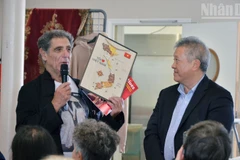
Gilbert Tenèze, head of the France – Vietnam Friendship Association chapter in Eure-et-Loir province (l), shares his thoughts on solidarity and friendship with Vietnam at a celebration honouring the solidarity and friendship between the people of France and Vietnam, held on October 11, 2025 in the village of Voves in Les Villages Vovéens commune, Eure-et-Loir province, in central France. (Photo: nhandan.vn)

French friends praise Vietnam’s aspiration to rise

Gilbert Tenèze, head of the France–Vietnam Friendship Association chapter in Eure-et-Loir province, said the outcomes and orientations affirmed at the 14th National Congress of the CPV reflect the image of a nation deeply attached to its roots yet driven by an inspiring development vision, supported by a leadership team that listens and adopts a pragmatic approach to national issues.

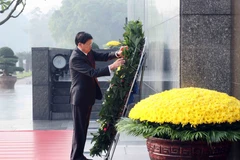
Party General Secretary and President of Laos Thongloun Sisoulith lays a wreath at the Ho Chi Minh Mausoleum in Hanoi on January 27, 2026. (Photo: VNA)

Top Lao leader pays tribute to President Ho Chi Minh

Among the enduring legacies left by President Ho Chi Minh, his vision of pure international solidarity—especially the great friendship, special solidarity, and comprehensive cooperation between Vietnam and Laos—stands out as one of the most remarkable and moving examples.

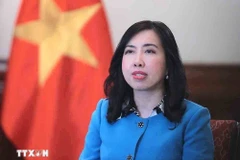
Deputy Minister of Foreign Affairs Le Thi Thu Hang (Photo: VNA)

Vietnam – Europe ties reach new height in 2025: Deputy Foreign Minister

Deputy Minister of Foreign Affairs Le Thi Thu Hang has penned an article titled ‘Vietnam–Europe cooperation in 2025: Rising to a new height”, highlighting a surge in high-level diplomacy, with exchanges nearly doubling from the previous year across all Party, State, Government and National Assembly channels.

Francesco Maringio, head of the external relations department of the Italian Communist Party, Vice President of the Italy – Vietnam Foundation (Photo: VNA)

Italian scholar underscores Vietnam’s strategic resolve, development vision

An official of the Italian Communist Party stressed that the concept of an “era of the nation's rise”, introduced at the congress, is not a political catchphrase, but a reflection of a new stage of qualitative development defined by strategic confidence, technological advancement and a transition towards a new growth model.