Cuban scholar highlights turning point in Vietnam’s development process

The 14th National Party Congress reflects Vietnam's determination to move into a new stage of development amid a complex and unstable international environment. Through this event, the country reaffirmed the importance of continuous transformation and the necessary pragmatism not only in its foreign relations strategy but also in governance, management, and national leadership.

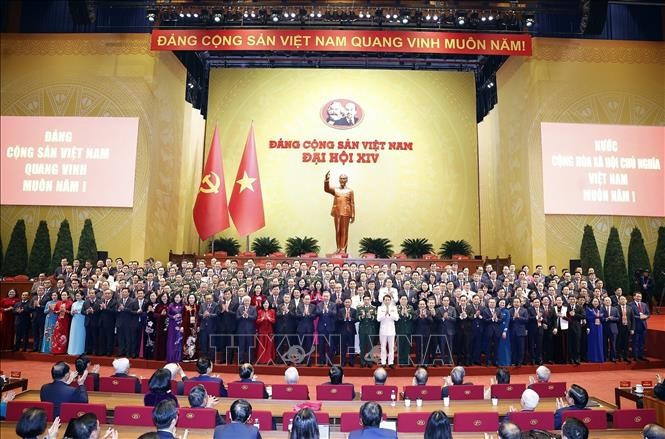
The 14th-tenure Party Central Committee makes its debut at the 14th National Congress of the Communist Party of Vietnam (Photo: VNA)

Havana (VNA) – The 14th National Congress of the Communist Party of Vietnam (CPV) demonstrated the stability and continuity of political leadership in advancing the Party’s set goals, according to Dr Ruvislei González Saez, senior researcher at the Cuban Centre for International Policy Research (CIPI), in a recent article published on reporteasia.com.

In the article, the Cuban scholar stressed that the congress showed Vietnam’s ability to ensure personnel and leadership work alongside a vigorous anti-corruption campaign, thereby maintaining not only political stability but also the Party’s historical legacy. He noted that a key factor distinguishing Vietnam’s political process is its collective leadership and generational succession based on the principles laid down by the late President Ho Chi Minh. According to him, at the 14th Congress, delegates unanimously adopted its Resolution, reaffirming the core contents of the review of the implementation of the 13th National Party Congress Resolution, assessing several theoretical and practical issues related to the socialist-oriented Doi Moi (renewal) process over the past 40 years, and evaluating 15 years of implementation of the Party Statutes (2011–2025).

Marking the 40th anniversary of this important process, Vietnam has demonstrated that reform must be continuous and uninterrupted, advancing through successive new stages. At the same time, the transition from a highly centralised and bureaucratic model to a socialist-oriented market economy has been comprehensive, closely linking key elements of the economy, diplomacy, security, and national defence toward a single goal of promoting national development.

From theory to practice, Vietnam’s transformations have demonstrated the existence and necessity of socio-economic diversity as a vital process, combined with the dynamism of the market economy oriented toward socialism, in which the State plays a pivotal role as a regulatory lever of economic mechanisms. It is therefore no coincidence that in this new phase, all economic sectors, including the private sector, are prioritised as key drivers for achieving the development goals set for 2030 and 2045.
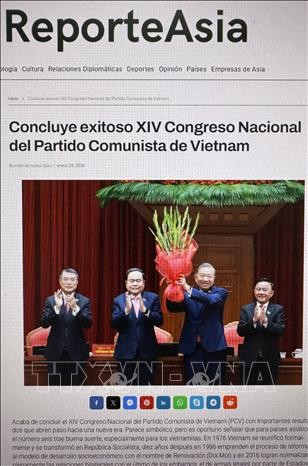
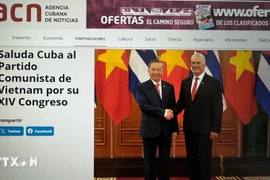
cuba.jpg
A screenshot of the article by Dr Ruvislei González Saez, senior researcher at the Cuban Centre for International Policy Research (CIPI), published on reporteasia.com. (Photo released by VNA)

In reviewing the country’s current development stage, the 14th Congress set the objective of transforming Vietnam into a developing country with modern industry and upper-middle income by 2030, and realising the vision of becoming a developed, high-income country by 2045. In other words, Vietnam aspires to reach its highest level of development by the centenary of its independence.

Ruvislei praised key development indicators established by the 14th Congress for the 2026–2030 period, which include an average annual GDP growth rate of 10%, GDP per capita of around 8,500 USD by 2030, manufacturing and processing industries accounting for about 28% of GDP, and the digital economy contributing approximately 30% of GDP.

According to the scholar, the Congress reflects the country’s determination to move into a new stage of development amid a complex and unstable international environment. Through this event, Vietnam reaffirmed the importance of continuous transformation and the necessary pragmatism not only in its foreign relations strategy but also in governance, management, and national leadership./.
VNA

See more

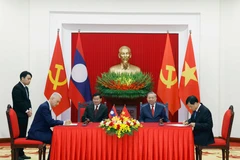
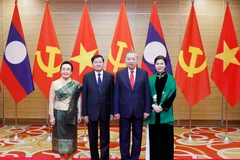
General Secretary of the Communist Party of Vietnam (CPV) Central Committee To Lam (second from right) and General Secretary of the Lao People’s Revolutionary Party (LPRP) Central Committee and President of Laos Thongloun Sisoulith witness the signing of cooperation documents between the two countries (Photo: VNA)

Top Lao leader leaves Hanoi, concluding state visit to Vietnam

The state visit to Vietnam by the top Lao leader was a resounding success, reaffirming that the great friendship, special solidarity, comprehensive cooperation and strategic cohesion between the two countries will continue to grow further. This relationship will be preserved as a priceless shared asset of the two nations and passed on to future generations.

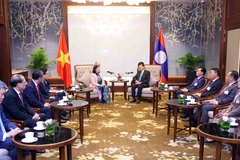
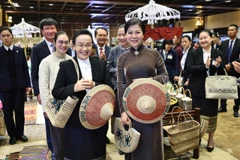
Ngo Phuong Ly (R), spouse of the Vietnamese Party General Secretary, and visiting Naly Sisoulith, spouse of the Lao Party General Secretary and President, take part in an exchange with outstanding artisans from several traditional craft villages of Ninh Binh province on January 27. (Photo: VNA)

Spouses of Vietnamese, Lao Party leaders visit Ninh Binh

The delegation visited and offered incense at the temple of Princess Nhoi Hoa in Thai Son hamlet, Tay Hoa Lu ward, a provincial-level historical and cultural relic associated with the long-standing friendship between Vietnam and Laos.

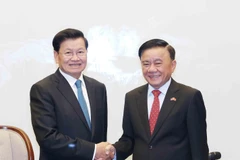
Politburo member and standing member of the Party Central Committee’s Secretariat Tran Cam Tu (R) bids farewell to Lao Party General Secretary and President Thongloun Sisoulith. Photo: VNA

Senior Party official bids farewell to top Lao leader

Lao Party General Secretary and President Thongloun Sisoulith said that the visit was highly successful, affirming that the great friendship, special solidarity, comprehensive cooperation, and strategic cohesion between Vietnam and Laos will continue to grow stronger. He emphasised that this relationship would be preserved as a shared and invaluable asset of the two nations and passed on to future generations.

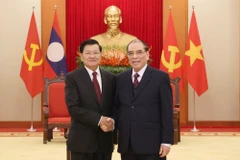
General Secretary of the Lao People’s Revolutionary Party (LPRP) and President of Laos Thongloun Sisoulith and Nong Duc Manh (R), former General Secretary of the Central Committee of the Communist Party of Vietnam. (Photo: baochinhphu.vn)

Top Lao leader visits former General Party Secretary in Hanoi

The special Vietnam-Laos relationship, diligently nurtured by Vietnamese President Ho Chi Minh and Lao Presidents Kaysone Phomvihane and Souphanouvong, is an invaluable common asset and a vital factor for the existence and development of both nations.

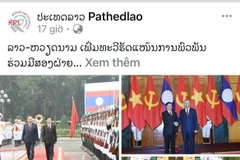
The article posted on Pathetlao - the electronic outlet of the Lao News Agency (KPL) (Photo: VNA)

Lao media highlights President Thongloun’s Vietnam visit

Vietnam and Laos committed to improving the quality of cooperation and deepening strategic collaboration, enhancing close coordination in defence and security, creating favourable conditions to accelerate economic connectivity, particularly by expediting the early implementation of the Vientiane–Hanoi expressway project.

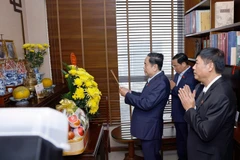
National Assembly Chairman Tran Thanh Man offers incense in remembrance of late General Secretary Truong Chinh on January 27. (Photo: VNA)

NA Chairman commemorates late Party, State, NA leaders, visits former leadership

Chairman Man offered incense and expressed profound gratitude to the late great intellectual and outstanding representative of the people. He affirmed that Bui Bang Doan’s life, career and moral integrity stand as a shining example of patriotism, integrity and wholehearted devotion to the Fatherland and the people, laying an important foundation for the fine traditions of Vietnam’s National Assembly.

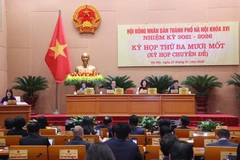
Hanoi's 100-year master plan resolution is adopted at the 31st session of the municipal People's Council on January 27. (Photo: VNA)

Hanoi adopts 100-year master plan resolution

With ambitions that extend well beyond the next century, the capital is expected to unlock new space, potential and opportunities to drive economic breakthroughs, including the pursuit of double-digit growth, commensurate with its status as the capital of a future high-income developed country.

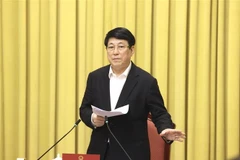
State President Luong Cuong speaks at the working session with the Presidential Office on January 27, 2026 (Photo: VNA)

State President requests well-organised activities for Lunar New Year

President Luong Cuong underlined the importance of thorough preparations to ensure a safe, healthy, and economical Tet, thereby fostering momentum for the successful implementation of the Resolution of the 14th National Party Congress right from the early months of 2026.

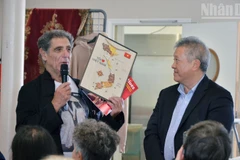
Gilbert Tenèze, head of the France – Vietnam Friendship Association chapter in Eure-et-Loir province (l), shares his thoughts on solidarity and friendship with Vietnam at a celebration honouring the solidarity and friendship between the people of France and Vietnam, held on October 11, 2025 in the village of Voves in Les Villages Vovéens commune, Eure-et-Loir province, in central France. (Photo: nhandan.vn)

French friends praise Vietnam’s aspiration to rise

Gilbert Tenèze, head of the France–Vietnam Friendship Association chapter in Eure-et-Loir province, said the outcomes and orientations affirmed at the 14th National Congress of the CPV reflect the image of a nation deeply attached to its roots yet driven by an inspiring development vision, supported by a leadership team that listens and adopts a pragmatic approach to national issues.

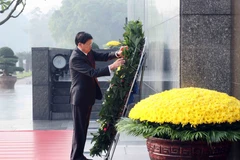
Party General Secretary and President of Laos Thongloun Sisoulith lays a wreath at the Ho Chi Minh Mausoleum in Hanoi on January 27, 2026. (Photo: VNA)

Top Lao leader pays tribute to President Ho Chi Minh

Among the enduring legacies left by President Ho Chi Minh, his vision of pure international solidarity—especially the great friendship, special solidarity, and comprehensive cooperation between Vietnam and Laos—stands out as one of the most remarkable and moving examples.

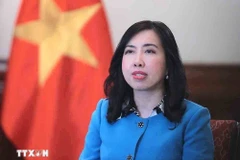
Deputy Minister of Foreign Affairs Le Thi Thu Hang (Photo: VNA)

Vietnam – Europe ties reach new height in 2025: Deputy Foreign Minister

Deputy Minister of Foreign Affairs Le Thi Thu Hang has penned an article titled ‘Vietnam–Europe cooperation in 2025: Rising to a new height”, highlighting a surge in high-level diplomacy, with exchanges nearly doubling from the previous year across all Party, State, Government and National Assembly channels.