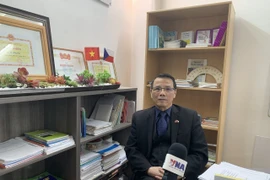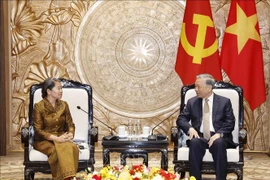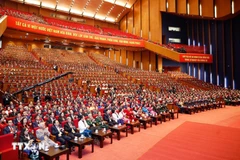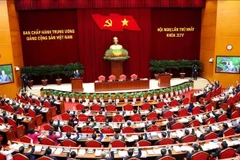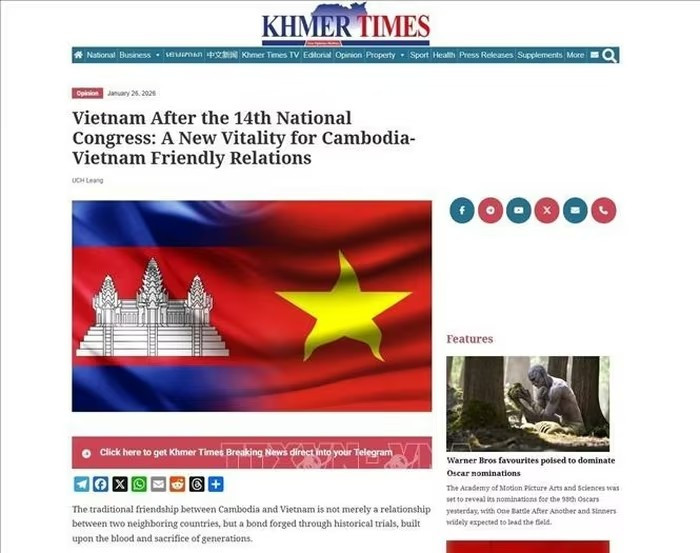
Phnom Penh (VNA) – The 14th National Congress of the Communist Party of Vietnam (CPV) is not only a major milestone in Vietnam’s development process, but also a catalyst for renewed momentum in the traditional friendship between Vietnam and Cambodia, paving the way for more sustainable and substantive ties in the time ahead, according to a Cambodian scholar.
In his article published by the Khmer Times on January 26, Uch Leang, Acting Director of the Department of Asian, African, and Middle-East Studies under the International Relations Institute of Cambodia (IRIC), at the Royal Academy of Cambodia (RAC), emphasised that the Congress clearly reaffirms Vietnam’s long-term strategic vision, while strengthening political stability and confidence in development.
According to the expert, the success of the Congress conveyed a powerful message that Vietnam is entering the “Era of National Development” with confidence in its internal strength and proactive international integration. This achievement is not only good news for the Vietnamese people, but also a stabilising and developmental factor for Southeast Asia as a whole.
Regarding Vietnam’s foreign policy, the article noted that the documents adopted at the Congress demonstrate that Vietnam’s foreign policy has been inherited and elevated to a new level. It said that Vietnam continues to consistently uphold an independent, self-reliant foreign policy of peace, friendship, cooperation, and development.
In relations with Cambodia, this policy has been concretised through intensified high-level exchanges, the maintenance of cooperation mechanisms between the two Parties and Governments to strengthen political trust; treating security and defense cooperation as a pillar for safeguarding peace and preventing any attempts to sow division between the two countries; and building a peaceful, friendly, and sustainably developed border that facilitates cross-border trade and people-to-people exchanges.
The Cambodian scholar stressed that Vietnam’s reaffirmation of “the highest priority” for relations with neighbouring countries in the 14th Congress documents constitutes a strong political and legal commitment, providing a solid foundation for ever-closer Cambodia-Vietnam ties.
He added that the two countries share similar strategic goals for socio-economic development and now enjoy unprecedented favourable conditions to further promote their traditional friendship.
Accordingly, Vietnam aims to become an upper-middle-income country by 2030 and a high-income nation by 2045, while Cambodia is implementing the first phase of its Pentagonal Strategy, with the ambition of attaining upper-middle-income status by 2030 and high-income status by 2050. This alignment creates ample room for stronger economic, investment, and trade cooperation.
The article underscored that the close linkage between the CPV and the Cambodian People’s Party constitutes a firm foundation for bilateral ties. It noted that mutual trust forged over history, together with regular interaction among generations of leaders, especially young leaders, enables the two countries to maintain a long-term cooperative orientation.
The scholar also highlighted the deep-rooted people-to-people friendship between the two countries, saying that nearly five decades later, the assistance provided by Vietnam during Cambodia’s darkest years under the genocidal Pol Pot regime remains deeply appreciated by the Cambodian people. People-to-people exchanges, cooperation among border localities, and the growing presence of Vietnamese enterprises in Cambodia are increasingly becoming strong bonds connecting the two societies.
The article added that the ASEAN regional context provides added momentum for Vietnam – Cambodian relations as both countries share an interest in building a strong and unified ASEAN community, where they can coordinate positions on multilateral platforms, uphold the bloc’s central role, and contribute to peace and stability in the region.
Uch Leang stated that building upon the success of the 14th National Congress, positive signals from Vietnam, and the long-standing historical bonds between the two countries, it can be confidently affirmed that the prospects for Cambodia-Vietnam relations in the coming years are exceptionally bright, especially in economic and trade ties, cooperation in education and human resource development, tourism and cultural exchange.
Looking toward a sustainable future, the article said the CPV’s 14th National Congress have infused new vitality, reaffirming a Vietnam that is innovative, sincere, and deeply cherishing its friendship with Cambodia. It stressed that “With favourable conditions for traditional cooperation and sound leadership from both countries, Cambodia-Vietnam relations will continue to flourish, meeting the expectations of both peoples and contributing positively to peace and stability in the region and the world./.
See more
Singapore launches new national emergency alert system
SG Alert in Singapore uses cell broadcast technology, enabling alerts to be delivered within seconds without requiring mobile data or collecting personal information. Unlike conventional SMS, which may be delayed during network congestion or depend on internet connectivity, the system ensures fast and reliable message delivery. Alerts can be sent islandwide or targeted to specific affected areas.
Fire destroys over 200 homes in Malaysia, hundreds evacuated
Hundreds of people have been evacuated after a serious fire destroyed more than 200 homes in a coastal village in Malaysia’s Sabah state, located in the northern part of Borneo Island, authorities said on April 19.
Myanmar carries out large-scale amnesty
Myanmar authorities have granted amnesty to 4,335 prisoners and also reduced the sentence of former State Counsellor Aung San Suu Kyi.
Thai tourism firms face mounting debt burden amid energy crisis
Tourism operators in Thailand are calling for clearer government policies to ease mounting debt burdens and support SMEs as rising energy costs erode purchasing power and strain business operations.
Malaysia establishes ‘war room’ to ensure water security
The establishment of the war room reflects the Malaysian government’s commitment to shift from a reactive approach to a more proactive, data-driven one in managing national water challenges, particularly amid increasingly unpredictable weather conditions caused by global climate change
Indonesia diversifies supply sources to ensure energy security
Indonesia is facing significant supply pressure as crude oil consumption reaches approximately 1.6 million barrels per day, much lower than the domestic production at only around 600,000 barrels per day, forcing the country to rely heavily on imports.
Vietnam always a priority in China's neighbourhood diplomacy: Chinese media
The People's Daily said the leadership of a communist party is the most essential feature and biggest strength of socialism, adding that safeguarding the socialist system and the Parties' leadership role is the largest shared strategic interest of both sides.
Three Southeast Asian nations pledge to safeguard vital Malacca shipping lane
As global trade becomes increasingly dependent on strategic maritime routes, the commitment by Indonesia, Malaysia and Singapore is expected to play an important role in ensuring supply chain stability and strengthening regional and global maritime security.
Malaysia to tighten social media for children below 16
The Malaysian Government plans to impose restrictions on social media account access for children under the age of 16, as part of efforts to strengthen online protection.
Indonesia aims to master cosmetics industry value chain
Key drivers include its large population, expanding middle class, and rapidly rising demand for beauty products, especially among young consumers. The market has reached billions of US dollars and is projected to maintain strong growth in the medium term.
Singapore warns of cyber risks from Frontier AI models
According to CSA, advanced AI models – among the most cutting-edge systems today – can significantly shorten the time needed to identify system vulnerabilities and develop exploitation tools, reducing the process from months to just hours.
Indonesia plans drones, unmanned submarines for efficient naval patrols
The Indonesian Navy (TNI AL) has announced plans to intensify the use of drones and unmanned submarines in maritime patrol missions to lower fuel consumption as part of a broader energy efficiency agenda.
Helicopter crash in Indonesia leaves all eight on board dead
All eight people aboard a helicopter that had earlier gone missing in Indonesia's West Kalimantan province have died, ending hopes for finding any survivors after hours of intensive search efforts.
Singapore steps up measures to combat school bullying
The measures include up to three days of detention or suspension – or both – for students who commit serious offences for the first time, along with having their conduct grade adjusted.
Indonesia advances legal framework to accelerate blue carbon pricing programme
Furthermore, the ministry is focusing on strengthening data and information management, including mapping blue carbon ecosystems, establishing emission baselines, and ensuring accurate calculations of CO2 sequestration potential.
Indonesia launches online app for police reports
Under the new system, people can submit reports or declare lost property anytime and anywhere via mobile devices without having to visit police stations in person.
Indonesia moves to curb smuggling-linked budget losses
Indonesia sets up anti-smuggling task force to protect state finances and strengthen nationwide enforcement efforts.
Helicopter carrying eight reported missing in Indonesia
Indonesian authorities are urgently conducting a search and rescue operation after receiving reports that a helicopter carrying eight people suddenly lost contact on the morning of April 16 in West Kalimantan on the island of Borneo.
AI Innovation Centre looks to tackle Singapore’s business infrastructure bottlenecks
The Singaporean-based ST Telemedia Global Data Centres (STT GDC) and SuperX AI Technology on April 15 launched an AI Innovation Centre in the island nation.
Malaysia's layoffs rise 47% in first quarter
The report, based on figures from Malaysia’s Social Security Organisation, showed layoffs peaked in January with around 10,700 cases before easing to 7,500 in February and 5,900 in March. Despite the slowdown toward the end of the quarter, the total remained significantly higher than the roughly 16,500 layoffs recorded in the same period of 2025.