IMF raises Indonesia’s economic growth forecast to 5.1% for 2026

According to the IMF Executive Board’s Article IV Consultation, Indonesian's growth is expected to remain steady at 5.0% in 2025 and 5.1% in 2026 despite a challenging external environment, reflecting support from fiscal and monetary policies.

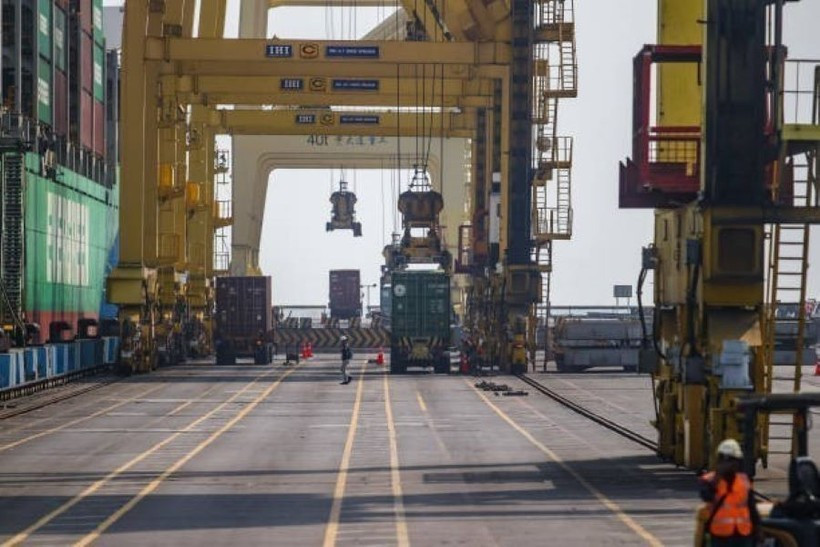
A cargo port in Semarang, Central Java province, Indonesia (Illustrative photo: Getty Images/VNA)

Jakarta (VNA) – The International Monetary Fund (IMF) has raised its outlook for Indonesia’s economic growth, forecasting that Southeast Asia’s largest economy will expand by 5.1% in 2026.

The revised forecast is higher than the 4.9% estimate released by the IMF in October last year.

According to the IMF Executive Board’s Article IV Consultation, the Indonesian economy has shown resilience amid adverse shocks. Growth is expected to remain steady at 5.0% in 2025 and 5.1% in 2026, despite a challenging external environment, reflecting support from fiscal and monetary policies.

Headline inflation is well anchored and projected to converge towards the midpoint of the target range. The current account deficit would remain well contained in 2025-26, with comfortable reserves.

IMF Executive Directors welcomed Indonesia’s economic resilience and track record of prudent policies despite external challenges. Noting downside risks from global uncertainty, they emphasised the importance of preserving longstanding policy credibility, protecting policy space, and accelerating structural reforms to ensure strong, sustainable and inclusive growth.

Indonesia’s central bank BI said the IMF’s assessment is in line with the country’s domestic outlook. BI projects the country’s GDP to grow by around 5.3% in 2026, supported by stronger consumption and rising investment./.

VNA

See more

Malaysia establishes ‘war room’ to ensure water security

Malaysia establishes ‘war room’ to ensure water security

The establishment of the war room reflects the Malaysian government’s commitment to shift from a reactive approach to a more proactive, data-driven one in managing national water challenges, particularly amid increasingly unpredictable weather conditions caused by global climate change

Indonesia diversifies supply sources to ensure energy security

Indonesia diversifies supply sources to ensure energy security

Indonesia is facing significant supply pressure as crude oil consumption reaches approximately 1.6 million barrels per day, much lower than the domestic production at only around 600,000 barrels per day, forcing the country to rely heavily on imports.

Indonesian-branded cosmetic and personal care products are available at supermarkets and shopping malls (Photo: VNA)

Indonesia aims to master cosmetics industry value chain

Key drivers include its large population, expanding middle class, and rapidly rising demand for beauty products, especially among young consumers. The market has reached billions of US dollars and is projected to maintain strong growth in the medium term.

The Anthropic logo is seen in this illustration taken on Mar 1, 2026. (File photo: Reuters)

Singapore warns of cyber risks from Frontier AI models

According to CSA, advanced AI models – among the most cutting-edge systems today – can significantly shorten the time needed to identify system vulnerabilities and develop exploitation tools, reducing the process from months to just hours.

Helicopter carrying eight reported missing in Indonesia

Helicopter carrying eight reported missing in Indonesia

Indonesian authorities are urgently conducting a search and rescue operation after receiving reports that a helicopter carrying eight people suddenly lost contact on the morning of April 16 in West Kalimantan on the island of Borneo.

Malaysia’s job losses surge 47% in the first quarter of 2026 (Photo: AFP)

Malaysia's layoffs rise 47% in first quarter

The report, based on figures from Malaysia’s Social Security Organisation, showed layoffs peaked in January with around 10,700 cases before easing to 7,500 in February and 5,900 in March. Despite the slowdown toward the end of the quarter, the total remained significantly higher than the roughly 16,500 layoffs recorded in the same period of 2025.