Vietnam targets new export growth milestone in 2026

According to MB Securities’ Vietnam Outlook 2026 report, Vietnam's exports may grow by 15–16% in 2026, driven by market expansion and a shift towards higher-value products, led by electronics and high-tech industries amid rising global demand for AI and digital transformation.

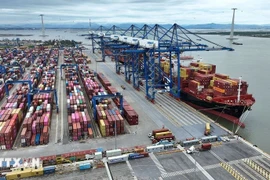
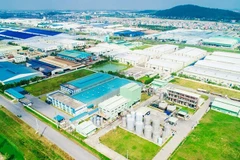
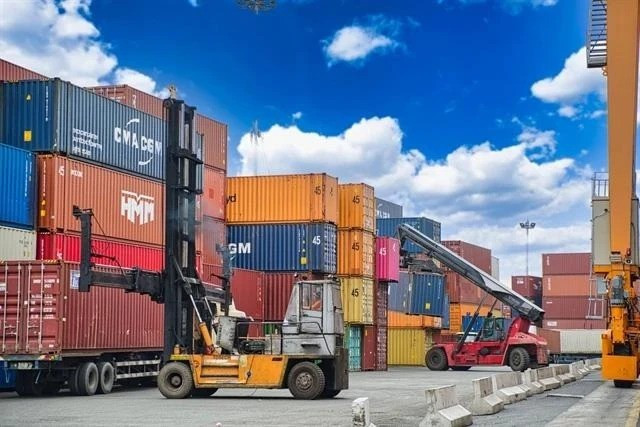
Vietnam has set a target of expanding exports by 8% in 2026 (Illustrative photo: VNA)

Hanoi (VNA) – Vietnam has set a target of expanding exports by 8% in 2026, equivalent to a turnover of around 513 billion USD by broadening market access and increase added values.

Seeking growth space amid headwinds

After achieving a record export value of 475 billion USD in 2025, up 17% year on year, the Ministry of Industry and Trade has set a target of adding nearly 38 billion USD to export turnover in 2026.

However, the goal is widely seen as challenging amid mounting external pressures, including stricter technical barriers, reciprocal tariffs on goods exported to the US, and the European Union’s Carbon Border Adjustment Mechanism (CBAM) for selected industrial products. Against this backdrop, major export industries have proactively begun restructuring and adjusting strategies early in the year to seize market opportunities.

The textile and garment sector, which earned 46 billion USD in 2025, aims for 50 billion USD in 2026. According to industry associations, 2026 will continue to test the resilience of the global economy, with growth prospects and trade policies still affected by geopolitical uncertainties.

Vu Duc Giang, Chairman of the Vietnam Textile and Apparel Association, noted that the 50-billion-USD target is not a short-term ambition but the result of a multi-year restructuring process. The sector is focusing on strengthening domestic supply chains, raising localisation rates, and making more effective use of free trade agreements (FTAs) to improve the position of Vietnamese firms in global value chains.

For agriculture, 2026 is identified as a pivotal year, with export turnover expected to reach 73–74 billion USD, up nearly 4 billion USD from 2025. Key priorities include standardising raw material areas, expanding planting area codes, strictly applying GAP standards, strengthening traceability and food safety, and promoting deep processing and investment in preservation technologies.

According to Associate Professor Dr Nguyen Thuong Lang from the National Economics University, despite difficulties, Vietnam still has room to boost exports, particularly in electronics, machinery and equipment, and agro-aquatic products.

In 2025, electronics remained the largest export, generating nearly 165 billion USD in revenue and playing a crucial role in helping Vietnam maintain a trade surplus.

Nguyen Thu Oanh, head of the Services and Price Statistics Department under the Ministry of Finance’s National Statistics Office, said Vietnam is increasingly becoming an important link in global supply chains. Signs of recovery in consumption and investment in major markets, combined with an extensive FTA network, are creating favourable conditions for market expansion and export diversification.

Expanding market horizons

Under Resolution No. 01/2026/NQ-CP, the Government targets GDP growth of over 10% in 2026, with exports continuing to serve as a key driver. Ministries and sectors are tasked with proactively responding to global economic fluctuations while renewing traditional growth engines.

Nguyen Anh Tuan, Vice Chairman of the Party Central Committee’s Commission for Policies and Strategies, stressed the need to shift from price-based competition to strategies centred on branding, high standards, and products with greater technological content and value added, while further tapping FTA advantages and emerging markets.

With 17 FTAs signed with nearly 70 economies, Vietnam now has access to a market of almost 6 billion consumers. According to MB Securities’ Vietnam Outlook 2026 report, exports may grow by 15–16% in 2026, driven by market expansion and a shift towards higher-value products, led by electronics and high-tech industries amid rising global demand for AI and digital transformation./.

VNA
See more

Auto technology solutions are on display at an exhibition on the 80-year national achievements (Photo: VNA)

Digital economy expected to revamp growth model

Meeting the goals set in Resolution No. 57-NQ/TW, including a digital economy share of at least 30% of GDP by 2030 and 50% by 2045, will demand more substantive, high-value progress fueled by breakthrough innovations.

Mobile Money services are not only a convenient payment tool but also an effective means of extending digital financial services to remote and disadvantaged areas. (Photo: VNA)

New legal framework for Mobile Money to take effect in Vietnam soon

The issuance of a implementation plan for Government Decree No. 368/2025/ND-CP on the provision of Mobile Money services is considered an important step toward promoting financial inclusion. Mobile Money services are not only a convenient payment tool but also an effective means of extending digital financial services to remote and disadvantaged areas.

Many OCOP gift baskets now combine nutritious food items and handcrafted products (Photo: VNA)

OCOP products dominate Tet gift baskets

A visit to major supermarkets such as Go!, Co.opmart and WinMart, as well as spring markets across Quang Ngai province, shows that OCOP product stalls are attracting the most attention.

Electronic device manufacturing at the Rhythm Precision Vietnam Co., Ltd., in Hanoi's Noi Bai Industrial Park. (Photo: hanoimoi.vn)

Hanoi creates new momentum for industrial growth

Manufacturing – processing remained the backbone of industrial growth last year, with value added in this sector increased by 7.18%, contributing 0.85 percentage points to Hanoi’s overall GRDP growth.

At the meeting between Can Tho authorities and the Sumitomo delegation on January 27 (Photo: VNA)

Can Tho woos Sumitomo with industrial park, green energy pledges

Can Tho spans more than 6,360 square kilometres with a population exceeding 4.2 million, and serves as the economic, cultural, and science-and-technology hub of the Mekong Delta, enjoying strategic advantages in transport, logistics and regional connectivity.

Multi-currency cards – a payment card supported by a mobile application that enables users to exchange local currency for foreign currency and make payments in stores or online - and mobile wallets for both daily and overseas spending will be popular in 2026. (Photo: courtesy of baochinhphu.vn)

Visa highlights Vietnamese payment trends for 2026

Vietnamese consumers are increasingly seeking premium experiences, from travel and shopping to wellness and dining, and are showing greater interest in payment cards with travel-related benefits.

In the manufacturing sector, the profitability ratio reached 74.1%, up 3.9 points, while the loss-making ratio dropped sharply to 13%, according to JETRO. (Illustrative photo: VNA)

Japanese firms in Vietnam hit 15-year profit high

JETRO’s 2025 Survey on the Business Conditions of Japanese Companies Investing Overseas shows that 67.5% of Japanese firms in Vietnam expect to be profitable this year, up 3.4 percentage points from 2024 and the highest level since 2009.

At a session of the Vietnam-RoK Joint Committee on Trade, Industry and Energy Cooperation in April, 2025 in Hanoi. (Photo: nhandan.vn)

Vietnam becomes RoK’s key export market in ASEAN

The RoK’s exports to Vietnam rose 7.6% in 2025 from a year earlier to 62.8 billion USD, while imports from Vietnam climbed 11.7% to 31.8 billion USD, according to data released by the RoK’s Ministry of Trade, Industry and Energy and the Korea International Trade Association (KITA).

Cai Mep–Thi Vai deep-water port has helped with FDI attraction to the southeastern region. (Photo: VNA)

Resolution 79: State economic sector to lead, catalyse private sector development

More than a document reaffirming the leading role of the state economic sector in a new era, the Resolution opens up an unprecedented space of “mutual reinforcement”, in which the sector shifts from an administrative management mindset to one of “development facilitation”, and is expected to serve as a solid pillar enabling the private sector and other economic components to make breakthroughs.

Vietnamese Ambassador to the RoK Vu Ho speaks at the event (Photo: VNA)

Vietnamese, Korean firms seek to enhance connectivity in new context

The association has actively contributed to policy discussions on issues important to Vietnam, including support for small- and medium-sized enterprises, artificial intelligence (AI) and sovereignty, as well as AI and semiconductor development policies in the RoK, while proposing recommendations for Vietnam.