Ho Chi Minh City’s cultural tourism opportunity waiting to be unlocked

Cultural tourism holds undeniable potential to rise as one of Ho Chi Minh City’s most coveted signatures, but it still largely exists as a supplementary component.

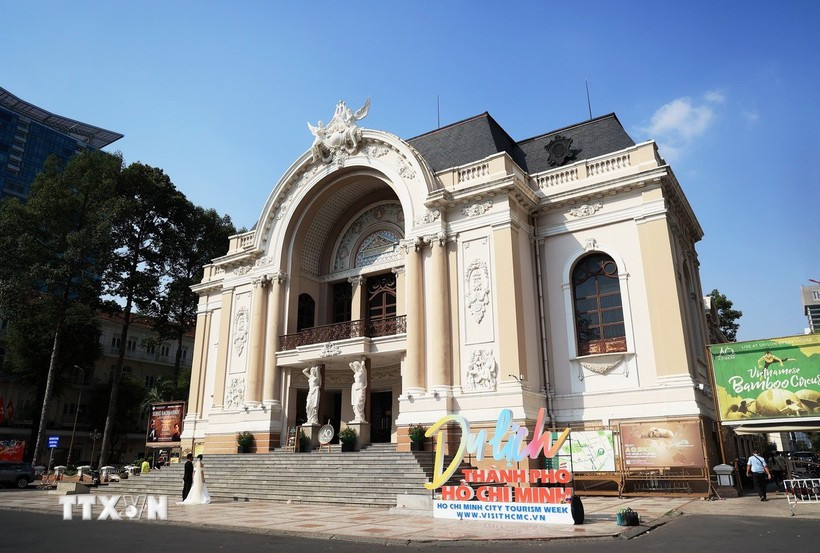
Saigon Opera House, one of the most beautiful in Southeast Asia (Photo: VNA)

HCM City (VNA) – Ho Chi Minh City's rich and varied cultural heritage remains largely untapped, held back by the absence of a unified strategy. As a result, cultural tourism plays a supporting role rather than stepping into the spotlight as the true heartbeat of its urban tourism sector.

Culture still an “add-on” product

Few cities in the region can rival Ho Chi Minh City's cultural – historical panorama. Vestiges of old Saigon endure in iconic French-colonial structures such as the Central Post Office, Independence Palace, and Notre Dame Cathedral; the Cho Lon area with its network of assembly halls, festivals, and signature cuisine of the Chinese-Vietnamese community; an array of museums and revolutionary sites, from the War Remnants Museum, the Ho Chi Minh City History Museum to the Southern Women’s Museum, the Cu Chi Tunnels, and the Rung Sac Military Base.

Complementing these physical assets are intangible treasures like don ca tai tu (southern amateur music), water puppetry and folk festivals, which are valuable “soft assets” capable of narrating the city's unique urban identity. Yet, these assets largely exist in fragmented form, lacking the structured "packaging" needed to transform them into high-value, economically impactful tourism products.

Industry players confirm that local cultural tourism largely exists as a supplementary component. At Vietravel, for example, museums and historical sites typically serve as add-ons to enhance standard city tours or MICE itineraries.

Pham Anh Vu, Director of the Viet Travel Media JSC, noted that key attractions like the Independence Palace, Cu Chi Tunnels, War Remnants Museum, Notre Dame Cathedral, Nha Rong Wharf and Cho Lon Market are most often bundled with shopping sprees, culinary escapades and urban sightseeing rather than curated into story-rich thematic tours with allocated time and depth.

Travel operators pointed out that many visitors, especially domestic ones, perceive Ho Chi Minh City first and foremost as an economic and entertainment hub, opting for short, flexible itineraries.

This preference deters substantial investment in bespoke cultural tours which demand extended time and genuine curiosity. In an industry where margins are famously slender, operators sensibly gravitate toward versatile, easily marketable bundled tours that promise swift returns and effortless sales.

Policies needed to unleash true potential

As 2026 unfolds, several tour operators are reevaluating the position of cultural tourism within their portfolios. Tran Quang Duy, Director of the Chim Canh Cut Travel Service JSC, treats it as a long-game priority, yet proceeds with measured, selective commitments rather than aggressive scaling.

Meanwhile, the Viet Travel Media JSC is pursuing a phased rollout, focusing on two to three signature creations before venturing further afield. Tours such as “300 Years of Saigon – From formative settlement to modern metropolis”, Cho Lon cultural tours spotlighting the Chinese-origin community, and heritage gastronomy and performance tours are designed along curated routes, marrying expert storytelling with the living canvas of the streets. These products target foreigners seeking in-depth experiences and domestic tourists ready to pay for cultural value.

Cultural tourism holds undeniable potential to rise as one of Ho Chi Minh City’s most coveted signatures. However, systemic bottlenecks remain, particularly fragmented coordination with heritage and museum management units, restrictive opening hours, administrative red tape, intellectual property constraints and limited technology integration.

Against this backdrop, the city was urged to issue a comprehensive and long-term cultural tourism development strategy, in which the municipal administration acts as an orchestrator, clearly identifying key cultural and heritage axes, investing in infrastructure, pedestrian spaces and night tours; and forging substantive public – private partnership mechanisms./.
VNA

See more

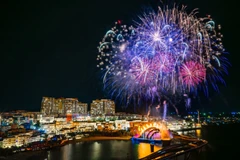
Sun World attracts domestic and international visitors through international-standard live shows. (Photo: Sun Group)

Theme parks emerge as a defining travel trend for 2026

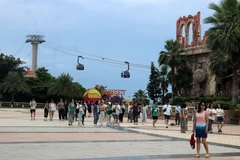
In Vietnam, Sun World, recently named “Vietnam’s Leading Attraction and Entertainment Brand 2025” by Klook, is widely seen as a representative of this trend, with a network of theme parks stretching from mountainous regions to coastal and island destinations.

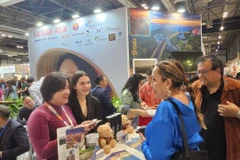
Visitors seek information on Vietnam’s tourist destinations at the 2026 FITUR International Tourism Fair. (Photo published by VNA)

Vietnam shines at FITUR int’l tourism fair in Spain

The main goal of Vietnam’s participation in FITUR is to highlight its growing presence among top global tourism destinations while introducing new offerings and the potential of the country as a travel destination for the Spanish-speaking community.

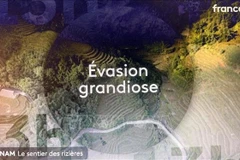
A report on Sa Pa broadcast on France 2 - a channel of France’s national television. (Photo: VNA)

Sa Pa captivates French audiences as a standout Northwest destination

The report portrays Sa Pa as a landscape shaped by generations, highlighting the terraced fields that have been carefully carved and maintained by residents over centuries. A local guide told the programme that some of the oldest terraces in the area are around 250 years old.

French newspapers Le Figaro and Ouest-France publish features introducing SJourney, a luxury rail tourism service offering a trans-Vietnam travel experience. (Photo: Sjourney

Luxury trans-Vietnam rail journey captures French media attention

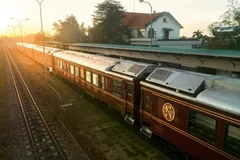
The SJourney itinerary is Vietnam’s first luxury rail cruise, jointly operated by PYS Travel and Vietnam Railways. The product is expected to open up a new direction for high-end tourism, built around slow-paced, immersive and emotionally rich travel experiences.

Tourists visit and experience the Hon Thom cable car in Phu Quoc (Photo: VNA)

Phu Quoc tourism heats up in 2026 with near-full bookings

Savouring Tet on Phu Quoc allows visitors to dive into the island's pristine natural assets, from stunning beaches and untouched primary forests to nearby islets, all wrapped in an effortlessly festive, sun-kissed holiday vibe.

Visitors at the newly launched Pho Museum in Ben Thanh ward, Ho Chi Minh City. (Photo: sggp.org.vn)

Lunar New Year tours boom

Since the beginning of 2026, many travel agencies have reported an increase in Lunar New Year tour bookings compared with the same period last year. Notably, tours focusing on cultural immersion, local lifestyles, and early spring festivals are gaining popularity, rather than purely leisure-oriented trips as seen in previous years.

A visitor climb the 90-metre “Great Wall of Vietnam” during an adventure tour of Son Đoong Cave. (Photo: VNA)

Plans to expand unilateral visa waivers to attract high-quality tourists

The Ministry of Public Security was assigned to further accelerate the application of information technology and digital transformation to improve electronic visa issuance procedures, simplify processes and shorten immigration clearance times at border checkpoints, creating maximum convenience for travellers.

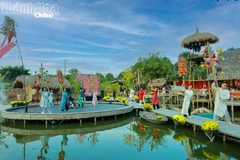
A performance using Tet symbols run as part of the ongoing traditional Tet programme at the old Nha Trang craft village in Khanh Hoa province (Photo: baokhanhhoa.vn)

Nha Trang captivates visitors with traditional Tet atmosphere

Stepping into the old Nha Trang craft village, visitors feel as if they are shipped back to a rural village with areca palm rows, kitchen fires, trays of traditional cakes, and red calligraphy couplets, among many other scenes, all of which stir memories of family reunions.