Hanoi (VNA) - In line with the Party’s resolutions on developing tourism in close association with cultural preservation, many localities across Vietnam have opted for a development pathway rooted in indigenous resources.
In northern mountainous regions, community-based tourism has emerged as a viable livelihood model, placing traditional culture at the centre of local economic transformation. In Lang Son province, particularly in the Huu Lien valley, this approach is generating tangible changes in the lives of ethnic minority communities.
Lang Son is home to a long-established mosaic of ethnic groups, including the Nung, Tay, Kinh, Dao, Hoa, San Chay, Thai and Mong. This cultural diversity has shaped a distinctive identity for the northeastern region. Preserved over generations, these cultural assets have become an important resource for tourism development. In areas where material living standards remain modest, the sustainable utilisation of cultural heritage in harmony with natural landscapes has opened new opportunities for local people to participate in tourism and gradually improve their livelihoods without leaving their homeland.
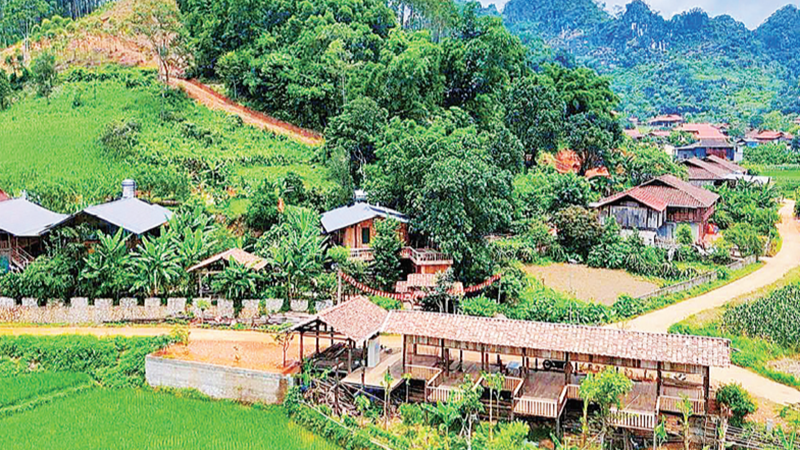
In Huu Lien, community-based tourism has not evolved from large-scale investment projects, but from household-level initiatives. Families have adapted their traditional stilt houses into homestays, offering visitors authentic experiences rooted in daily life, local cuisine and communal interaction.
For many households, tourism has brought additional income, created jobs for younger generations and reinforced the value of maintaining traditional ways of life. Rather than eroding cultural practices, tourism has turned them into key attractions, strengthening community pride and cultural continuity.
Visitors to Huu Lien often highlight the area’s rare sense of authenticity. The valley retains its unspoilt natural environment, while the cultural life of local communities remains deeply embedded in everyday practice. Cultural activities, traditional music and communal meals are not staged performances but organic elements of local life, allowing visitors to engage meaningfully with the host community.
Local authorities have identified community-based tourism as a development pathway that must remain closely aligned with indigenous cultural life. According to local leaders, tourism development in Huu Lien prioritises the preservation of traditional living spaces, environmental protection and community participation, avoiding mass tourism models that risk cultural dilution.
At the provincial level, Lang Son has adopted a clear strategy to promote sustainable community-based tourism. This includes safeguarding natural landscapes, honouring the cultural identities of ethnic groups, and empowering local residents as both custodians of heritage and creators of tourism products. These orientations are consistent with the Politburo’s Resolution No. 08-NQ/TW on developing tourism as a spearhead economic sector, as well as broader Party resolutions on building an advanced Vietnamese culture imbued with national identity.
The recognition of Quynh Son village in Huu Lien as one of the Best Tourism Villages of 2025 by the United Nations Tourism Organisation underscores the effectiveness of a community-centred approach. The experience of Huu Lien demonstrates that when people are placed at the heart of development and cultural identity becomes a driving force, community-based tourism can simultaneously improve livelihoods and ensure the long-term preservation of local heritage./.