Tuyen Quang (VNA) – Lung Cu commune in Tuyen Quang province has chosen tourism as its leading economic sector, not only capitalising on local strengths but also as a natural path to create jobs, support sustainable poverty reduction, and enhance living standards in Vietnam’s northernmost region.
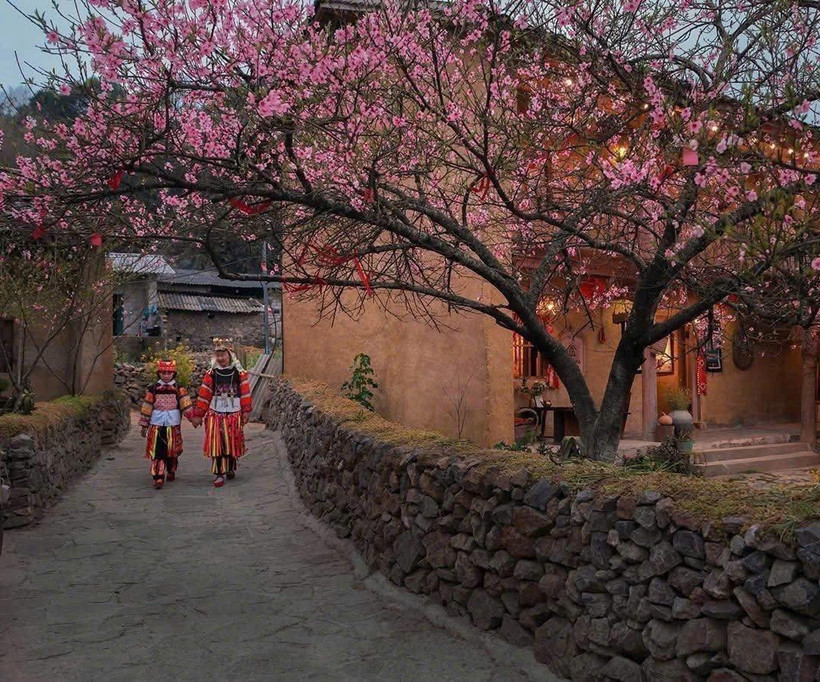
Covering 95.2 square kilometres and comprising 37 villages with a population of over 15,000, Lung Cu is a border commune of strategic importance. It boasts distinctive tourism assets, including the Lung Cu National Flag Tower, the northernmost point of Vietnam, and a rich cultural space shaped by highland ethnic communities.
Despite a low economic starting point, underdeveloped infrastructure and fragmented agricultural production, the commune has identified tourism as a breakthrough pathway to accelerate economic restructuring and achieve sustainable poverty reduction.
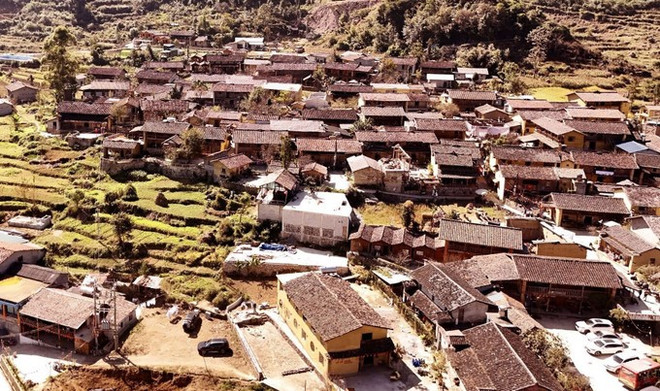
According to Duong Ngoc Duc, Secretary of the Lung Cu commune’s Party Committee, given the economic difficulties and high poverty rate, local authorities have identified tourism as a key driver of the economy.
Based on a comprehensive assessment of its potential and challenges, Lung Cu is orienting tourism development towards a green and sustainable model, with cultural and landscape conservation as its foundation. Agriculture remains a core sector, while tourism is positioned as the spearhead, closely linked with investment attraction, service quality improvement and product diversification.
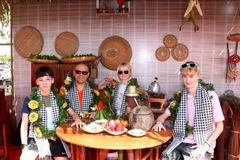
Lung Cu plans to roll out experience-rich green tourism activities, such as horseback riding across the rocky plateau and hands-on participation in traditional embroidery and weaving alongside local residents. Efforts are also underway to improve food and accommodation services in a safe and environmentally friendly manner, ensure transparent price listings, maintain security and order, and foster a civilised, attractive tourism environment.
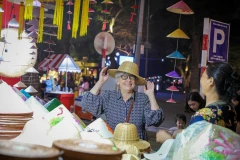
Tourism infrastructure and services have gradually been upgraded. The commune currently has 15 restaurants and over 90 households operating guesthouses, homestays and bungalows. Supporting services, including signage, tour guiding, transport, check-in points and folk art performances, are becoming more professional, better meeting visitors’ demand for experiential travel.
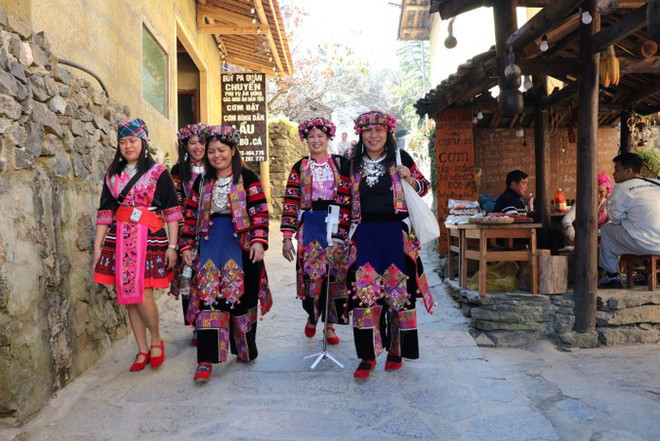
Key destinations such as the Lung Cu National Flag Tower, Lung Cu Temple, Lo Lo Chai community-based culture and tourism village and Ma Le cultural village will continue to receive priority in conservation and effective exploitation. In particular, Lo Lo Chai is identified as a focal point for tourism development linked with preserving cultural identity. Traditional festivals of ethnic groups will be maintained and upgraded to gradually become distinctive tourism products, contributing to green and sustainable tourism growth.
These efforts have yielded positive results. Over the past five years, Lung Cu has welcomed more than 780,000 visitors, earning over 15 billion VND (570,995 USD) in tourism revenue and creating stable jobs for many local workers.
Tourism growth has also facilitated poverty reduction. In 2025 alone, the poverty rate fell by 5.2%. The commune has provided vocational training for 3,346 people and created new jobs for 658 workers, many of them linked directly to community-based tourism.
Nevertheless, Lung Cu’s tourism development still faces challenges, including inadequate transport infrastructure, limited depth of tourism products, uneven human resource quality and pronounced seasonality.
In 2026, the commune aims to attract over 450,000 visitors, further refine planning and issue a new thematic resolution on tourism development under the motto “green – identity – safety – friendliness,” thereby positioning tourism as a key driver of socio-economic development and improved livelihoods at Vietnam’s northernmost frontier./.