Dong Van transforms advantages into smart tourism

Dong Van is opening a new journey, where each scan by visitors is not only a marker on their travel map but also a stream of live data helping the highland region step into the era of smart tourism.

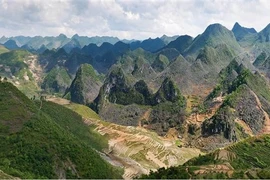
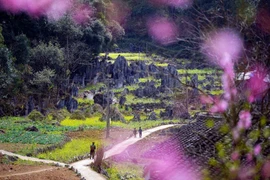
In Dong Van, the beauty of karst formations formed hundreds of millions of years ago remains the soul of the journey. (Photo: VNA)

Tuyen Quang (VNA) - Amid the solemn mountain ranges of the Dong Van Karst Plateau Global Geopark, Dong Van commune (Tuyen Quang province) is undergoing a distinctive transformation by weaving digital technology into the fabric of tourism.

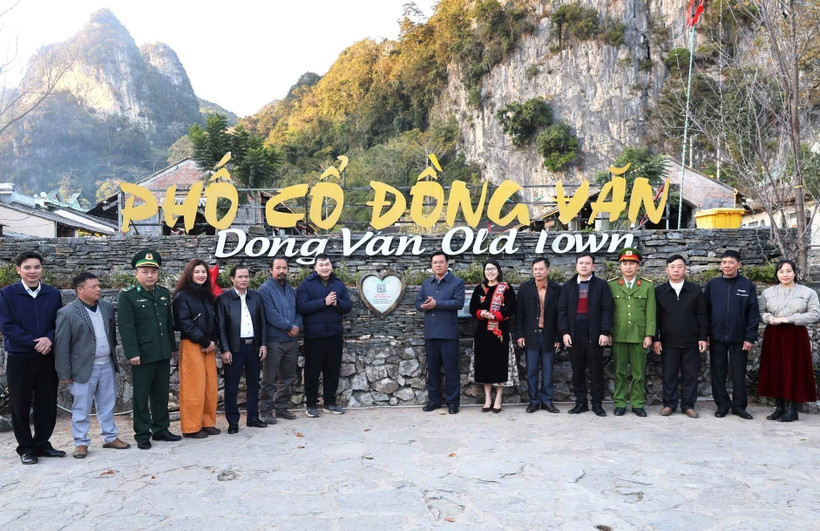
The story does not begin with large-scale infrastructure, but with small QR codes placed at tourist sites, homestays and eateries tucked along the ancient quarter. From these modest starting points, Dong Van is opening a new journey, where each scan by visitors is not only a marker on their travel map but also a stream of live data helping the highland region step into the era of smart tourism.

Smart tourism – a new impetus

Nguyen Kim Ngan, a visitor from Ho Chi Minh City, shared her excitement at experiencing smart check-in services in a mountainous area. With just a quick scan, visitors can access recommendations on dining, accommodation and activities suited to the day’s weather. The convenience, she noted, comes without diluting Dong Van’s unique character.

A single scan allows visitors to record their journey from the Dong Van Old Quarter and the Vuong family mansion to Lo Lo Chai village and the Lung Cu Flag Tower. Beyond convenience, the system encourages deeper and broader exploration, helping travellers avoid missing the hidden beauty of the rocky highlands.

Pham Duc Nam, Chairman of the Dong Van communal People’s Committee, said tourism digitalisation not only refreshes visitor experiences but, more importantly, generates valuable data. From this data, the locality can identify where visitors spend the most time, which services are preferred and which sites require further investment. This provides a solid foundation for building a sustainable tourism strategy aligned with the conservation and development ethos of the Global Geopark.

According to Nam, Dong Van is moving towards a data-driven tourism model, where visitors, service providers and destinations are linked within an “open ecosystem”. Each check-in generates information that helps authorities better coordinate services, ease pressure on crowded sites and protect heritage landscapes.

Community engagement

Ma Hoang Son, Vice Chairman of the Dong Van Tourism Association and one of the designers and operators of the model, said the primary goal is not to create a complex system but to minimise technological barriers for visitors. Anyone coming to Dong Van should be able to begin their journey with a single touch, no app installation, no complicated procedures, just a QR scan that automatically records steps taken, suggests destinations and creates a seamless experience.

He added that the points system is designed as a simple game to encourage deeper exploration. Visitors seeking a relaxed experience can choose five-point sites, while those looking for more challenge can head to 20- or 30-point locations. This “gamification” turns travel into a treasure hunt, with each check-in generating fresh motivation to explore.

At the community level, the model brings tangible benefits. When visitors use dining, accommodation and experience services provided by association members, they earn points faster, creating more opportunities for local households to increase income.

A key feature of the system is real-time data, enabling the tourism association and local authorities to monitor visitor flows by hour and by day, track consumption trends and identify potential overcrowding risks. This forms the basis for sustainable tourism development, preserving the area’s distinctive karst landscape while ensuring visitors enjoy comfortable experiences consistent with the philosophy of the Dong Van Karst Plateau Global Geopark.

Technology paving the way

In Dong Van, the beauty of karst formations formed hundreds of millions of years ago remains the soul of the journey. Yet with technology in place, visitors can engage with the heritage more deeply, following personalised suggestions rather than conventional routes.

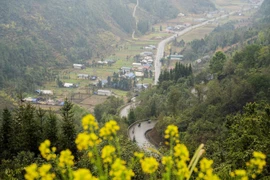
Digital tools help distribute visitor flows, preventing excessive concentration at single sites. Travellers can be guided to areas with suitable capacity, such as Sang Tung valley, Lo Lo Chai village or flower-lined routes around the township. This is particularly significant given UNESCO’s warnings about tourism pressure on the stone heritage.

Pham Duc Nam affirmed that the commune aims to build a new-generation Dong Van, dynamic and modern while preserving its identity. Technology, he stressed, is merely a tool; the most important elements remain the people, culture and heritage of this land./.
VNA

See more

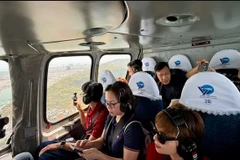
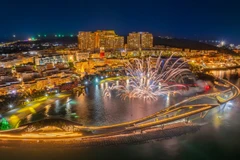
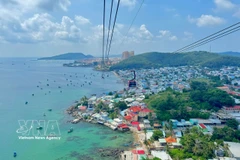
Visitors admire Ho Chi Minh City from above. (Photo: VNA)

Ho Chi Minh City launches helicopter sightseeing tours

Globally, helicopter tourism has become a popular offering in many major destinations. By introducing this experience, Ho Chi Minh City aims to expand its portfolio of high-end tourism products and further enhance its destination image.

The blending of culture, architecture and art on Phu Quoc is shaping a cosmopolitan city. (Photo: Sun Group)

Phu Quoc: Where the world meets through architecture

The presence of diverse international architectural styles across Phu Quoc, rather than a single traditional architectural system, is not accidental but rooted in the island’s unique development context. Unlike cities with centuries of urban heritage such as Hoi An or Hue, Phu Quoc is a tourism destination that has grown rapidly over just the past few decades, without a clearly layered architectural legacy to inherit.

The luxurious resorts ecosystem contribute to elevating Phu Quoc's image in the eyes of international media. (Photo: Sun Group)

Phu Quoc and its luxury resorts "take the leaderboard by storm" in DestinAsian rankings

On March 6, 2026, the prestigious travel magazine DestinAsian officially announced its list of the top 10 islands in Asia for 2026 as part of its Readers' Choice Awards. Not only was it the sole representative from Vietnam, but Phu Quoc also made a remarkable impression by climbing to the runner-up position, continuing an impressive three-year upward trend.

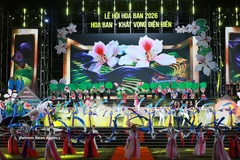
A view of the opening ceremony of the Ban Flower (Bauhinia) Festival 2026 in Dien Bien province on March 8 evening. (Photo: VNA)

Government leader attends Ban Flower Festival 2026 in Dien Bien province

Themed “Hoa Ban – Khat vong Dien Bien,” the festival was a highlight of the Dien Bien Culture and Tourism Week running from March 6 – 12. The annual event celebrated the beauty of the iconic Ban flower and promoted the culture, history and tourism potential of the Northwestern region.

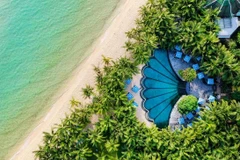
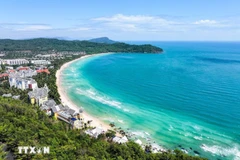
Khem beach in Phu Quoc island of An Giang province. (Photo: VNA)

Phu Quoc strengthens appeal as international arrivals soar in early 2026

Phu Quoc special zone is increasingly affirming its strong appeal to international visitors with impressive growth, positioning the “pearl island” as a standout destination in Southeast Asia and a direct competitor to renowned resort islands such as Bali in Indonesia and Phuket in Thailand.

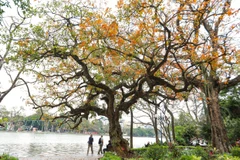
Leaves of loc vung (Barringtonia acutangula tree) change colour beside Hoan Kiem Lake (Photo: VNA)

Hanoi named among world’s 50 most beautiful cities by Condé Nast Traveler

Hanoi’s appearance within the global media ecosystem of Condé Nast Traveler is expected to provide a significant boost to the city’s tourism appeal. Beyond enhancing its credibility as a travel destination, the recognition could also help attract high-end tourism services and encourage higher spending by international visitors.

Overseas Vietnamese in traditional ao dai explore Nguyen Hue flower street. (Photo: qdnd.vn)

Overseas Vietnamese amplify Ho Chi Minh City’s tourism appeal

With their understanding of both local traditions and international contexts, OVs are proving to be an effective “soft bridge” in promoting the city globally, contributing to rising international arrivals and reinforcing Ho Chi Minh City’s position as a creative, globally integrated and culturally rich urban tourism destination

Smoke rises following US and Israeli airstrikes on Tehran, Iran, on March 1. (Photo: XINHUA/VNA)

Hanoi urges suspension of tours to Middle East conflict zones

Vietnamese citizens have been advised not to travel to Iran, Israel, and other countries in the Middle East at present due to ongoing conflicts and complicated security developments, according to an official dispatch sent by the department to the above-mentioned units on March 3.

A representative of a Vietnamese enterprise shows it products at ITB Berlin 2026. (Photo: VNA)

Vietnamese firms promote tourism at ITB Berlin 2026

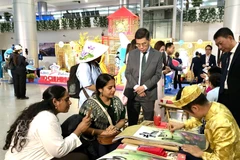
Vietnam’s exhibition area stands out with spacious and visually striking booths featuring businesses' most outstanding products as well as Vietnam's cultural icons such as cyclo models and traditional ao dai attire while a Vietnamese cuisine counter has drawn long queues of visitors.

International tourists are increasingly choosing Phu Quoc over giants like Bali and Phuket, driven by the freshness that Phu Quoc offers (Photo: Sun Group)

US media explains why Phu Quoc is becoming a tourism phenomenon

In 2025, international arrivals to Phu Quoc surged by nearly 60%, marking a new breakthrough cycle. As 2026 begins, during the Lunar New Year alone, the island welcomed nearly 366,000 visitors (a 30% increase year-on-year), with international guests accounting for nearly 93,000 (up 24.3%).

The crystal-clear waters and powdery white sands of Kem Beach are especially appealing to visitors (Photo: Fabl Belek)

Australian magazine hails Phu Quoc as a worthy alternative to Bali

In its list of “the best Bali alternatives worth exploring,” published by Australia’s leading travel site Escape, Phu Quoc is highlighted as a standout Southeast Asian destination, thanks to its appealing blend of reasonable costs, striking scenery, and diverse experiences.

Young locals explore Co Loa Citadel in digital space (Photo: nhandan.vn)

Hanoi festivals embrace digital tools to modernise management

During spring festival season 2026, Hanoi's major celebrations have aggressively adopted digital technologies across management, organisation, communications and promotion, presenting a more orderly and civilised image for traditional events.