Hanoi festivals embrace digital tools to modernise management

During spring festival season 2026, Hanoi's major celebrations have aggressively adopted digital technologies across management, organisation, communications and promotion, presenting a more orderly and civilised image for traditional events.

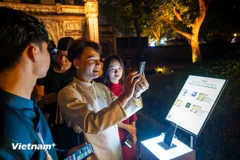
Young locals explore Co Loa Citadel in digital space (Photo: nhandan.vn)

Hanoi (VNA) – During spring festival season 2026, Hanoi's major celebrations have aggressively adopted digital technologies across management, organisation, communications and promotion, presenting a more orderly and civilised image for traditional events.

Civilised festivals through digitalisation

The 4-km Yen Stream waterway leading pilgrims to the Huong Son Complex, home to the famed Huong Pagoda, has historically faced overloaded boats, missing life jackets and fare disputes.

In the Spring Festival 2026, however, the waterway presented a markedly different scene: passengers uniformly wearing orange life jackets in line with rules, boats strictly adhering to capacity limits, and no motorised vessels allowed. Drones periodically patrolled overhead, acting as "electronic eyes" to monitor transport operations and support handling of violations.

To deliver a safe and orderly festival, the Huong Pagoda Festival organising board developed advance infrastructure and operational plans, integrating digital tools comprehensively. AI-powered camera systems now oversee high-traffic spots such as Huong Tich Cave, Thien Tru Pagoda and cable car stations.

All 1,033 traditional boats, 2,636 rowboats and six electric boats have been registered, inspected and equipped with QR codes. Visitors or authorities can scan these codes to report irregularities involving boat operators directly to organisers, enabling rapid and transparent settlement.

At the Co Loa Festival in Dong Anh commune's historic Co Loa Citadel area, numerous artifacts and items have been digitised. For 2026, digital platforms now include added interactive maps, information layers and media content, letting visitors access historical details instantly via mobile devices.

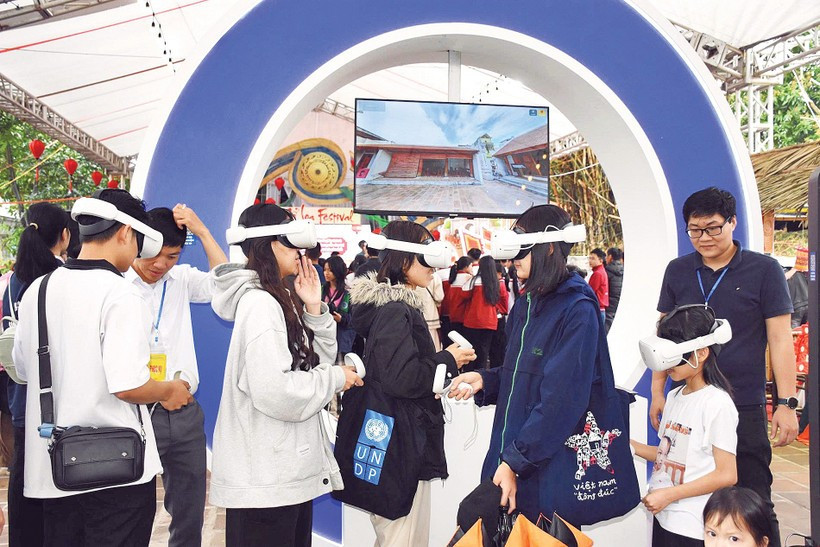
Festival grounds feature a Digital Heritage Space and Digital Traditional Festival zone with activities like 360-degree virtual reality tours, 3D hologram displays and augmented reality recreations of the Co Loa Festival. Attendees use VR headsets to tour the relic site, explore the legend of the magic crossbow, view digitised 3D artifacts and scan QR codes for details on history, architecture and documents.

Similar digital apps have been rolled out at other key Hanoi festivals this season, including the Giong Festival at Soc Temple, the Hai Ba Trung Temple Festival, and the Dong Da Mound Festival. Prominent heritage sites such as the Temple of Literature, Tay Ho Temple and Tran Quoc Pagoda have also deployed digital monitoring, creating a refreshed image for traditional festivities. Incidents of jostling, disputes or traffic congestion have been promptly detected and responded through surveillance systems.

Shaping new-era festivals

Hanoi hosts about 1,500 festivals of various scales. Recently, digital adoption focused mainly on promotion and communications, with management applications limited to select relic sites, such as Tay Ho Temple's earlier use of surveillance cameras to curb social misconducts.

For the Spring Festival 2026, proven models like Tay Ho Temple's have scaled across most major events. Localities introduced broader innovations, applying digital transformation to heritage promotion, civilised behavior encouragement, security, order maintenance and environmental protection.

Assoc. Prof. Dr. Bui Hoai Son, a full-time member of the National Assembly’s Committee for Culture and Social Affairs, stressed that technology should serve as a supportive instrument for better heritage management and preservation, rather than overshadowing essential traditional rituals./.


VNA

See more

International tourists are increasingly choosing Phu Quoc over giants like Bali and Phuket, driven by the freshness that Phu Quoc offers (Photo: Sun Group)

US media explains why Phu Quoc is becoming a tourism phenomenon

In 2025, international arrivals to Phu Quoc surged by nearly 60%, marking a new breakthrough cycle. As 2026 begins, during the Lunar New Year alone, the island welcomed nearly 366,000 visitors (a 30% increase year-on-year), with international guests accounting for nearly 93,000 (up 24.3%).

The crystal-clear waters and powdery white sands of Kem Beach are especially appealing to visitors (Photo: Fabl Belek)

Australian magazine hails Phu Quoc as a worthy alternative to Bali

In its list of “the best Bali alternatives worth exploring,” published by Australia’s leading travel site Escape, Phu Quoc is highlighted as a standout Southeast Asian destination, thanks to its appealing blend of reasonable costs, striking scenery, and diverse experiences.

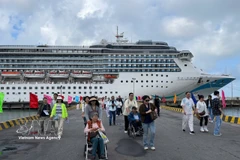
The international cruise ship Adora Mediterranea arrives at Chan May Port, carrying 2,613 passengers and 732 crew members from Guangzhou, China, to Hue city. (Photo: VNA)

Unified promotion strategy sets stage for tourism expansion

Vietnam’s tourism brand is demonstrating strong momentum and robust recovery amid record-breaking international arrivals, driven not only by market demand but also by renewed thinking and innovative approaches to destination promotion and marketing.

Five-coloured sticky rice encapsulates the essence of the land and skies of Muong Lo in Lao Cai province. (Photo: VNA)

Vietnam positions cuisine as core national tourism product

To build a national culinary brand, Vietnam must align heritage, the food and beverage industry, and artisan standardisation—laying the groundwork for greater global presence and the elevation of Vietnamese cuisine as a tourism icon.

Hanoi offers free admission to 17 scenic and historical relic sites and cultural landmarks from February 20 to 22, 2026, triggering a surge in visitor numbers. (Photo: VNA)

Hanoi welcomes over 3.18 million visitors in February

International arrivals to Hanoi in February reached approximately 680,800 in February, marking a 16.2% increase compared to the same month in 2025, while domestic visitors totaled around 2.5 million, up 32.3%. Total tourism revenue was estimated at 12.39 trillion VND (476 million USD), a rise of 24.8%.

International tourists take a cyclo tour around Hoan Kiem Lake in Hanoi. (Photo: VNA)

Hanoi prepares new tourism products

A highlight is the continued preparation of dossiers seeking national tourism site recognition for three areas, namely Ba Vi National Park tourism area, Huong Son landscape complex, and the Hoan Kiem Lake and Old Quarter vicinity.

Spectacular fireworks over Kiss Bridge in Phu Quoc Special Zone of An Giang province. (Photo: VNA)

Tourism development strategy to be shaped for new era

As Vietnam enters a new phase of development, tourism is poised for a breakthrough that can reaffirm its role as a key engine of economic growth. In this context, refining the policy framework and fostering an open, modern development environment have become essential prerequisites for accelerating momentum and unlocking the sector’s full potential.

With just a smartphone, travellers can search for and book a variety of travel services for their journey. (Photo: VNA)

Digital transformation – a lever for building a smart tourism ecosystem

In recent years, digital transformation has become a common feature in socio-economic development strategies. For tourism – a multi-sector, experience-driven industry closely tied to information – digitalisation is no longer a trend but an inevitable requirement to enhance competitiveness and ensure sustainable development.

International tourists at Phu Quoc International Airport in An Giang province. (Photo: VNA)

Advertising technology bolsters tourism

Success in 2026 will depend on how effectively Vietnam continues to remove friction from the traveler’s journey – addressing critical areas like payment gateway interoperability and digital service seamlessness – to ensure that global intent is fully converted into high-value impact on the ground.