Ho Chi Minh City’s travel firms activate emergency response for Middle East tours

Most travel firms in the city have activated 24/7 coordination systems, working closely with airline networks and international partners to implement appropriate response measures.

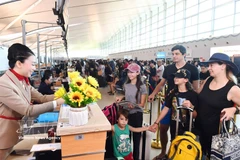
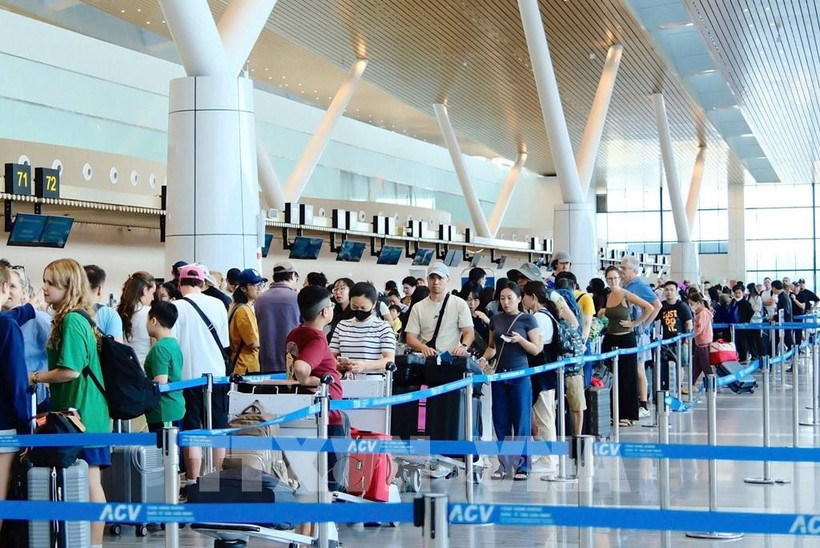
Passengers at Terminal 3 of Ho Chi Minh City's Tan Son Nhat International Airport (Illustrative photo: VNA)

Ho Chi Minh City (VNA) – In response to evolving geopolitical tensions in the Middle East and following official notifications from airlines and transport partners regarding disruptions to international flight operations, travel companies in Ho Chi Minh City have activated emergency response protocols to ensure the safety of tourists and safeguard their interests.

Vietravel General Director Tran Doan The Duy said the company has immediately reviewed all related tours and implemented measures to ensure accommodation and living conditions for travellers while awaiting airline updates. He reaffirmed its commitment to transparency and operating tours only when safety is fully ensured.

At present, the company is serving three tour groups in Dubai with a total of 51 tourists and one group in Egypt comprising 24 travellers. Due to adjustments in flight operations and airspace restrictions in several areas amid escalating conflicts, the groups are staying at hotels under safety arrangements while awaiting further updates from carriers.

Vietravel has proactively arranged standard accommodation and ensured adequate meals and essential services while maintaining regular communication between tour guides, operational teams and customers to provide timely, transparent and continuous updates.

Most travel firms in the city have similarly activated 24/7 coordination systems, working closely with airline networks and international partners to implement appropriate response measures. Companies have pledged transparent information sharing and advised travellers to strictly follow guidance from tour leaders and local authorities throughout their journeys.

The Middle East remains a strategic market, serving not only as a destination but also as a major transit hub connecting Europe, Africa and South Asia. While current developments may cause short-term disruptions to flight schedules and raise operational costs, airlines are expected to deploy flexible rerouting solutions and gradually resume normal operations once safety conditions permit.

Pham Anh Vu, Deputy General Director of Viet Media Travel Corp, said companies are prepared to reschedule departures or redesign itineraries in line with evolving circumstances. They are also negotiating with airlines and overseas partners to minimise additional costs and secure flexible ticket policies, including date changes or fare retention, rather than full forfeiture.

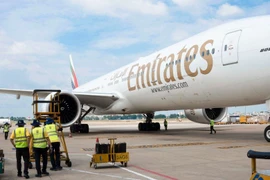
For tours scheduled in March using Emirates and Qatar Airways, companies have proactively contacted customers to offer suitable adjustments, including alternative routes or postponed departures. Clients who choose not to travel during this period may retain the full value of their payments in accordance with current policies.

At the same time, some inbound tour operators have expressed concern that flight disruptions could affect visitor flows to Vietnam. Experts called for close coordination between authorities and businesses to provide timely information and make flexible policy responses. They stressed the importance of diversified routing strategies and contingency planning to ensure traveller safety and maintain market stability in the longer term./.
VNA

See more

The international cruise ship Adora Mediterranea arrives at Chan May Port, carrying 2,613 passengers and 732 crew members from Guangzhou, China, to Hue city. (Photo: VNA)

Unified promotion strategy sets stage for tourism expansion

Vietnam’s tourism brand is demonstrating strong momentum and robust recovery amid record-breaking international arrivals, driven not only by market demand but also by renewed thinking and innovative approaches to destination promotion and marketing.

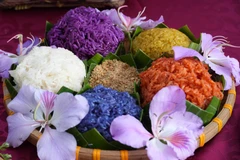
Five-coloured sticky rice encapsulates the essence of the land and skies of Muong Lo in Lao Cai province. (Photo: VNA)

Vietnam positions cuisine as core national tourism product

To build a national culinary brand, Vietnam must align heritage, the food and beverage industry, and artisan standardisation—laying the groundwork for greater global presence and the elevation of Vietnamese cuisine as a tourism icon.

Hanoi offers free admission to 17 scenic and historical relic sites and cultural landmarks from February 20 to 22, 2026, triggering a surge in visitor numbers. (Photo: VNA)

Hanoi welcomes over 3.18 million visitors in February

International arrivals to Hanoi in February reached approximately 680,800 in February, marking a 16.2% increase compared to the same month in 2025, while domestic visitors totaled around 2.5 million, up 32.3%. Total tourism revenue was estimated at 12.39 trillion VND (476 million USD), a rise of 24.8%.

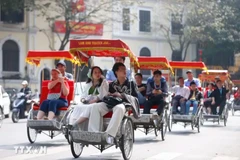
International tourists take a cyclo tour around Hoan Kiem Lake in Hanoi. (Photo: VNA)

Hanoi prepares new tourism products

A highlight is the continued preparation of dossiers seeking national tourism site recognition for three areas, namely Ba Vi National Park tourism area, Huong Son landscape complex, and the Hoan Kiem Lake and Old Quarter vicinity.

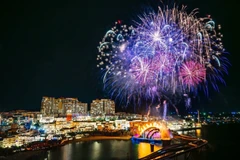
Spectacular fireworks over Kiss Bridge in Phu Quoc Special Zone of An Giang province. (Photo: VNA)

Tourism development strategy to be shaped for new era

As Vietnam enters a new phase of development, tourism is poised for a breakthrough that can reaffirm its role as a key engine of economic growth. In this context, refining the policy framework and fostering an open, modern development environment have become essential prerequisites for accelerating momentum and unlocking the sector’s full potential.

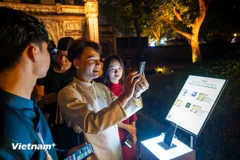
With just a smartphone, travellers can search for and book a variety of travel services for their journey. (Photo: VNA)

Digital transformation – a lever for building a smart tourism ecosystem

In recent years, digital transformation has become a common feature in socio-economic development strategies. For tourism – a multi-sector, experience-driven industry closely tied to information – digitalisation is no longer a trend but an inevitable requirement to enhance competitiveness and ensure sustainable development.

International tourists at Phu Quoc International Airport in An Giang province. (Photo: VNA)

Advertising technology bolsters tourism

Success in 2026 will depend on how effectively Vietnam continues to remove friction from the traveler’s journey – addressing critical areas like payment gateway interoperability and digital service seamlessness – to ensure that global intent is fully converted into high-value impact on the ground.

International visitors experience the traditional new year calligraphy activity (Photo: VNA)

Tet tourism season sees strong nationwide growth

The holiday from February 14–22 saw tourism activities flourish not only in major cities but also across many localities nationwide. Average room occupancy at accommodation facilities reached up to 60%, with several destinations posting notably high rates, including Phu Quoc at around 95%, Sa Pa at 90–95%, and Da Lat and Phan Thiet at 80–90%.

Visitors explore a calligraphy writing space in Thuan Hoa ward, Hue city, during the Lunar New Year 2026. (Photo: VNA)

Tourism flourishes during Tet, welcoming 14 million visitors

During the nine-day Lunar New Year (Tet) holiday, Vietnam's tourism sector served an estimated 14 million visitors, up 12% year-on-year, according to the Vietnam National Authority of Tourism (VNAT) under the Ministry of Culture, Sports and Tourism.