Hanoi prepares new tourism products

A highlight is the continued preparation of dossiers seeking national tourism site recognition for three areas, namely Ba Vi National Park tourism area, Huong Son landscape complex, and the Hoan Kiem Lake and Old Quarter vicinity.

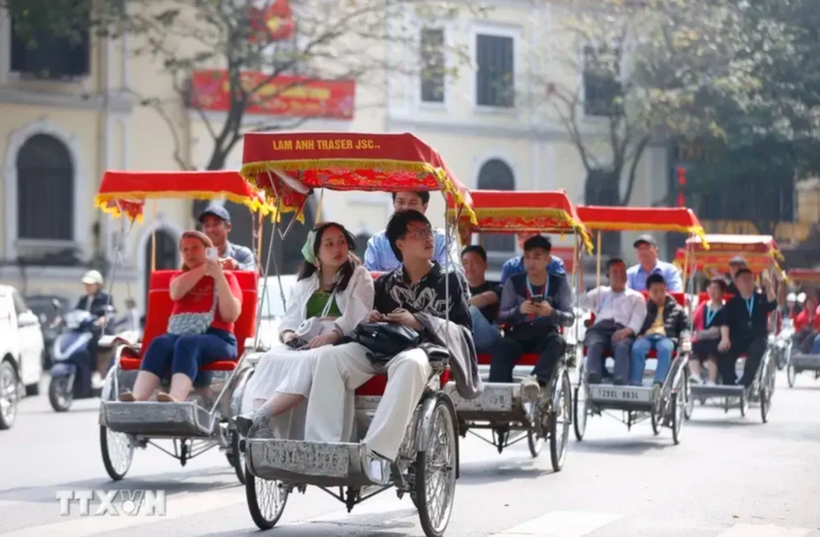
International tourists take a cyclo tour around Hoan Kiem Lake in Hanoi. (Photo: VNA)

Hanoi (VNA) – Hanoi’s tourism sector is stepping up preparations for new tourism products following strong growth in visitor arrivals and revenue in February, according to the municipal Department of Tourism.

The capital welcomed an estimated 3.18 million visitors in February, up 28.5% year-on-year. Of the total, international arrivals rose 16.2% while domestic tourists increased 32.3%. Tourism revenue was estimated at 12.39 trillion VND (473.42 million USD), while the average hotel occupancy rate reached 63.6%, up 1.3 percentage points compared to the same period last year.

Building on this momentum, the sector has identified March as a key month to refine development orientations. The department will finalise a report reviewing 10 years of implementing Resolution 06-NQ/TU on tourism development and submit to the municipal People’s Committee a tourism development plan for 2026–2030.

Attention will also be given to restructuring management and conservation models for the Huong Son special national relic and landscape site complex (Huong Pagoda). Plans are underway for the 2026 tourism festival and for rural tourism development associated with new-style countryside building in a modern and digital direction.

A highlight is the continued preparation of dossiers seeking national tourism site recognition for three areas, namely Ba Vi National Park tourism area, Huong Son landscape complex, and the Hoan Kiem Lake and Old Quarter vicinity.

The city will pilot agricultural tourism experiences in craft villages such as Bat Trang pottery village, while developing a night tourism product at the Soc Temple special national relic site.

Promotion and communication strategies for the 2026 – 2030 period are also being drafted in line with Vietnam’s long-term national branding strategy.

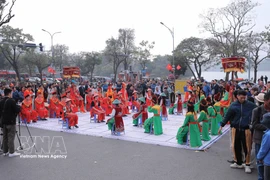
February saw vibrant promotional activities, including the “Get on Hanoi 2026” programme and the “Happy Tet 2026” event at the Thang Long Imperial Citadel which attracted tens of thousands of visitors.

With positive growth from the start of the year and clearer product orientations, Hanoi’s tourism industry is aiming to improve growth quality and move towards more sustainable development, contributing further to the capital’s economy./.

VNA

See more

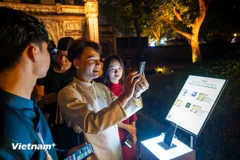
With just a smartphone, travellers can search for and book a variety of travel services for their journey. (Photo: VNA)

Digital transformation – a lever for building a smart tourism ecosystem

In recent years, digital transformation has become a common feature in socio-economic development strategies. For tourism – a multi-sector, experience-driven industry closely tied to information – digitalisation is no longer a trend but an inevitable requirement to enhance competitiveness and ensure sustainable development.

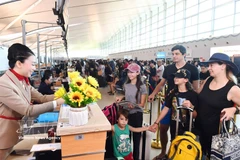
International tourists at Phu Quoc International Airport in An Giang province. (Photo: VNA)

Advertising technology bolsters tourism

Success in 2026 will depend on how effectively Vietnam continues to remove friction from the traveler’s journey – addressing critical areas like payment gateway interoperability and digital service seamlessness – to ensure that global intent is fully converted into high-value impact on the ground.

International visitors experience the traditional new year calligraphy activity (Photo: VNA)

Tet tourism season sees strong nationwide growth

The holiday from February 14–22 saw tourism activities flourish not only in major cities but also across many localities nationwide. Average room occupancy at accommodation facilities reached up to 60%, with several destinations posting notably high rates, including Phu Quoc at around 95%, Sa Pa at 90–95%, and Da Lat and Phan Thiet at 80–90%.

Visitors explore a calligraphy writing space in Thuan Hoa ward, Hue city, during the Lunar New Year 2026. (Photo: VNA)

Tourism flourishes during Tet, welcoming 14 million visitors

During the nine-day Lunar New Year (Tet) holiday, Vietnam's tourism sector served an estimated 14 million visitors, up 12% year-on-year, according to the Vietnam National Authority of Tourism (VNAT) under the Ministry of Culture, Sports and Tourism.

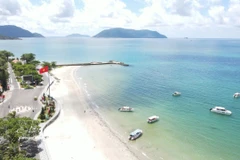
A corner of Con Dao Island (Photo: VNA)

Con Dao emerges as bright spot on global tourism map

Prestigious fashion magazine Vogue has officially listed Con Dao Island, part of the great Ho Chi Minh City metropolitan area, among the world’s most ideal honeymoon destinations for 2026, underscoring the strong potential of the island district in capturing the high-end resort market.

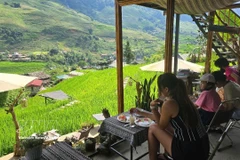
Coffee shops overlooking lush green terraced fields and set close to nature in Ta Van, Lao Cai province, are popular with visitors. (Photo: VNA)

Lao Cai draws tourists on first days of Lunar New Year

Total tourism revenue across the province is estimated at 700 billion VND (26.95 million USD), with overall room occupancy rates reaching 70% – 80%. Sa Pa continued to affirm its appeal, generating an estimated 459 billion VND in revenue and recording occupancy rates of between 90% - 95%.

Visitors explore the Complex of Hue Monuments (Photo: VNA)

Vietnam crowned as world’s most affordable expat destination for fifth straight year

The latest annual survey by InterNations revealed strong satisfaction levels among expats in Vietnam, with 89% expressing contentment with the local cost of living and 87% reporting that their income supports a very comfortable lifestyle. It highlighted Vietnam's particularly competitive pricing across food, housing, transport and leisure activities.

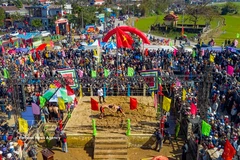
Sinh Village Wrestling Festival draws visitors on the 10th day of the first lunar month (Photo: VNA)

Central region bursts into life in early spring

Vietnam’s central region bursts into life each early spring, as a series of distinctive, centuries-old festivals draw both locals and visitors into celebrations steeped in deep cultural heritage and communal tradition.