Creative tourism seen as catalyst for elevating destination value

With its rich natural and human resources, including a wide range of tangible and intangible cultural heritage across the country, Vietnam possesses outstanding strengths for the development of creative tourism.

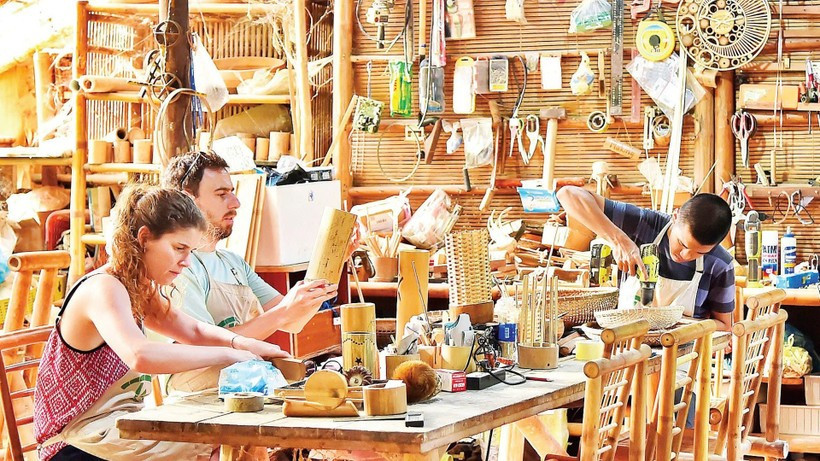
Visitors make their own bamboo souvenir products at a handicraft workshop in Da Nang. (Photo: nhandan.vn)

Hanoi (VNA) - By offering distinctive, place-based experiences that tap into visitors’ creative potential, creative tourism is gaining traction not only as a growing trend but also as a strategic approach to strengthening destination appeal, safeguarding cultural heritage, and advancing the sustainable development of Vietnam’s tourism industry.

From resource exploitation to value creation

Identified as a component of cultural tourism, creative tourism goes beyond conventional sightseeing and cultural exploration to encourage visitors’ active participation in creative activities at destinations through interaction with local communities. This approach aligns with the modern travellers’ desire for personalised experiences and has therefore attracted growing interest from many countries, which seek to turn trips into engaging creative journeys with deep cultural connections.

With its rich natural and human resources, including a wide range of tangible and intangible cultural heritage across the country, Vietnam possesses outstanding strengths for the development of creative tourism. From the sophistication of design and handicrafts to the uniqueness of performing arts, music, painting, and cuisine, all can serve as materials to be “productised” into distinctive creative experiences.

In recent years, efforts to develop creative tourism have helped some destinations significantly improve their competitiveness in attracting visitors. A typical example is Duong Lam, a more-than-thousand-year-old ancient village in Hanoi. Previously, visitors could only tour architectural sites such as communal houses, village gates, and old houses, but now Duong Lam attracts tourists with various hands-on activities such as lacquerware making, creating figures from straw, and experiencing farm work.

Similarly, visitors to Bat Trang Pottery Village or Quang Phu Cau Incense Village (Hanoi) are “kept longer” through experiences of personally carrying out pottery-making and incense-making processes.Over the years, Hoi An (Da Nang) has become known as a prominent creative tourism destination, successfully tapping into experiential models linked to craft villages and folk arts.

In addition, there are many other creative tourism products with strong potential, such as tours exploring the Cu Chi Tunnels that allow visitors to “step into the role” of wartime soldiers; or more recently, “Sac hoa Tuong Phieu”, which invites visitors to stroll through vibrant flower fields, learn about craft village stories, and become gardeners themselves. In these activities, creative experience plays a core role, creating strong appeal for the tourism journey.

Building a creative tourism ecosystem

The Vietnam Tourism Development Strategy to 2030 identifies a key orientation: prioritising cultural tourism development while linking tourism growth with the preservation and promotion of heritage values and national cultural identity.

The Cultural Development Strategy to 2030 emphasises the need to integrate heritage preservation and promotion with tourism development. Notably, the Strategy for the Development of Vietnam’s Cultural Industries to 2030, with a vision to 2045, approved by the Prime Minister on November 14, 2025, affirms the task of building and developing distinctive, specialised, and regionally characteristic cultural tourism products that enhance visitor experience value. These orientations contribute to fostering the development of creative tourism.

According to experts, Vietnam still lacks a dedicated comprehensive strategy for creative tourism development, resulting in difficulties in establishing models, investment projects, and specific support policies. Experts also point out that intellectual property protection has not received sufficient attention, leading to the copying of many creative tourism products, which undermines the appeal of original offerings and reduces the ability to exploit unique cultural values at destinations.

Dr Do Cam Tho, from the Vietnam National Authority of Tourism, commented that the greatest challenge in developing creative tourism destinations lies in the lack of mechanisms, resources, and methods to transform resources into sustainable tourism experiences with high economic value. Therefore, it is necessary to build a national legal framework for creative tourism development, including criteria and procedures for recognising and honouring creative tourism destinations; to introduce preferential mechanisms and financial and tax support for creative tourism start-ups; and to integrate sustainable creativity into tourism system planning to ensure coherence between culture, creative industries, and tourism.

In practice, creative tourism has long been discussed globally but remains relatively new in Vietnam, making it difficult to avoid surface-level exploitation that focuses more on performance and re-enactment rather than deeper interaction and creative participation./.
VNA

See more

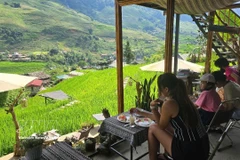
Coffee shops overlooking lush green terraced fields and set close to nature in Ta Van, Lao Cai province, are popular with visitors. (Photo: VNA)

Lao Cai draws tourists on first days of Lunar New Year

Total tourism revenue across the province is estimated at 700 billion VND (26.95 million USD), with overall room occupancy rates reaching 70% – 80%. Sa Pa continued to affirm its appeal, generating an estimated 459 billion VND in revenue and recording occupancy rates of between 90% - 95%.

Visitors explore the Complex of Hue Monuments (Photo: VNA)

Vietnam crowned as world’s most affordable expat destination for fifth straight year

The latest annual survey by InterNations revealed strong satisfaction levels among expats in Vietnam, with 89% expressing contentment with the local cost of living and 87% reporting that their income supports a very comfortable lifestyle. It highlighted Vietnam's particularly competitive pricing across food, housing, transport and leisure activities.

Sinh Village Wrestling Festival draws visitors on the 10th day of the first lunar month (Photo: VNA)

Central region bursts into life in early spring

Vietnam’s central region bursts into life each early spring, as a series of distinctive, centuries-old festivals draw both locals and visitors into celebrations steeped in deep cultural heritage and communal tradition.

International tourists presented with New Year lucky money. (Photo: VNA)

Da Nang bustles with international arrivals at start of Lunar New Year

According to the Da Nang International Airport and related units, during the Tet holiday, the total number of flights to Da Nang is estimated at more than 1,500, up about 36% compared with the Tet holiday in 2025. Average daily operations are expected to reach around 173 flights, an increase of 46 flights per day year on year.

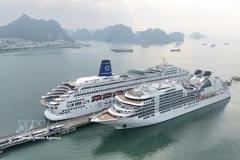
A panoramic view of Ha Long International Cruise Port bustling on the morning of the first day of the Lunar New Year 2026, with the arrival of the luxury super cruise ships Seabourn Encore and Piano Land. (Photo: VNA)

First cruises usher in upbeat Lunar New Year tourism season

On the second day of Tet, Van Don International Airport is also set to receive private charter flights bringing Japanese business delegations to the province, with the simultaneous surge in sea and air arrivals reinforcing Quang Ninh’s status as a dynamic high-end tourism centre in the region.

On the sidelines of the HOLIDAY & SPA EXPO 2026, Vietnamese Ambassador to Bulgaria Nguyen Thi Minh Nguyet met with Bulgarian Minister of Tourism Miroslav Borshosh. (Photo: VNA)

Vietnam's tourism sector makes strong impression at HOLIDAY & SPA EXPO 2026

The Vietnamese Embassy in Bulgaria, in coordination with the Vietnam Cultural & Tourism Association in Europe (VNCT), organised a national booth highlighting the country’s destinations, people and signature products. The event provided Vietnamese firms with opportunities to introduce services, seek partners and tap into not only the Bulgarian market but also neighbouring Balkan countries.

Foreigners visit Da Nang in early 2026 (Photo: VNA)

Vietnamese Tet pulls in foreign travellers

For over a decade, The Cliff Resort & Residences in Mui Ne of Lam Dong province has turned its signature Chung Cake Festival into a staple draw for foreign tourists exploring the Phan Thiet–Mui Ne area and beyond.

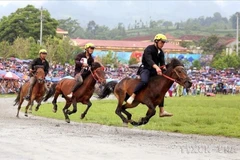
Horse racing at the finals of the Expanded Traditional Bac Ha Horse Racing Festival in Bac Ha, Lao Cai. (Photo: VNA)

Lively Tet tourism season unfolds across Lao Cai

During the 2026 Tet holiday, Sa Pa is expected to remain one of Vietnam’s most sought-after destinations for both domestic and international visitors. With a long holiday break and a growing preference for cultural, nature-based and festive early-spring experiences, visitor numbers are forecast to spike, particularly from the first day of Tet through the full-moon period of the first lunar month.

The ticket policy allows families to enjoy a more flexible and fulfilling spring holiday at Ba Na during Tet 2026 (Photo: Sun Group)

Ba Na Hills welcomes Tet with three-day pass, million tulips in bloom

For the Year of the Horse, Sun World Ba Na Hills continues to attract families with this upgraded cable car policy. Starting January 1, each cable car ticket is valid for three consecutive days. This breakthrough initiative grants guests unlimited cable car rides within 72 hours from first use, offering unprecedented flexibility in planning their holiday.

International tourists visit Ho Chi Minh City's downtown area by double-decker bus. (Photo: VNA)

Golden opportunity for Ho Chi Minh City’s tourism sector to make breakthroughs

Market research reports indicate that Ho Chi Minh City’s tourism sector still has large room for growth if the special mechanisms under Resolution 98, Resolution 260 and Resolution 62/2025/NQ-HDND on incentives for attracting MICE visitors are effectively implemented. These policies are considered practical, helping enhance competitiveness, service quality and the city’s standing as a destination.