Hanoi (VNA) – The global tourism market is entering a phase of unprecedentedly fierce competition as countries continuously roll out large-scale promotional campaigns to capture visitor market share, a reality requiring Vietnam to make breakthrough moves in tourism promotion and marketing.
In recent years, Vietnam’s promotional activities have increased in number, frequency and scale across many potential markets. As a result, in 2025, Vietnam set a new milestone of welcoming more than 20 million international arrivals for the first time in history, and serving over 130 million domestic tourists. The country also received a series of prestigious awards from international tourism organisations and frequently ranked among the destinations with the highest growth in online search interest.
However, many countries are repositioning their tourism brands with new messages and imagery, guided by big data analytics. If Vietnam wants to improve its standing, it must adopt a long-term, in-depth and flexible promotion strategy, especially as those on tourism brand and product development are set to expire by the end of this year.
In addition, the merger and reorganisation of local administrative boundaries nationwide also requires tourism promotion efforts to be adjusted appropriately to maximise overall resources.

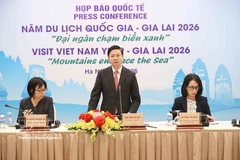
Nguyen Thi Hoa Mai, Deputy Director of the Vietnam National Authority of Tourism, noted that despite recent positive signs, tourism promotion still lacks a comprehensive national-level campaign, as well as a clear coordination mechanism among central agencies, local authorities, businesses and overseas representative offices.
As a result, Vietnam’s tourism image remains fragmented and inconsistent. Moreover, financial resources allocated to promotion are limited, unstable, on a year-by-year basis, and only a small fraction of what some regional countries invest. This has constrained the scale, frequency, coverage and professionalism of such activities, especially in overseas markets, preventing any real breakthrough.
Recently, the Government assigned the Ministry of Culture, Sports and Tourism to research and develop a project on promoting Vietnamese tourism and cuisine abroad for 2026–2030. The aim is to identify promotion priorities and strengthen inter-sectoral, inter-regional and international tourism cooperation, thus enhancing the country's tourism image, stature and competitiveness.
To accomplish this task, Mai stressed the need to build a national tourism promotion strategy with a five-year vision, positioning culinary and cultural experiences as the core of the national tourism brand, combined with market research to sharpen promotional efforts.
Target markets include nearby and large-scale markets such as China, the Republic of Korea and Japan; markets with strong growth potential and emerging segments such as Thailand, Malaysia, Indonesia and the Philippines; long-haul, high-spending markets such as Western and Northern Europe and North America; others with good growth like Australia, Russia, Southern and Eastern Europe; and potential ones such as the Middle East and India.
Mai suggested reforming coordination mechanisms. The ministry should take the lead in developing and implementing the annual national tourism promotion programme, while localities and businesses propose tasks or register to take charge of specific activities within the programme. This should be done on the basis of shared ideas and co-financing, ensuring unified action and stronger promotional impact, she noted.

From a local perspective, Nguyen Cam Tu, Director of the Ho Chi Minh City Tourism Promotion Centre, assessed that international tourists’ behaviour is rapidly shifting toward digital platforms, seeking information online, consulting reviews, and booking services via online travel agencies. This trend makes it imperative for related promotion activities to move from traditional methods to data- and technology-driven models.
She added that last year, the municipal Department of Tourism launched a visitor data monitoring system – the HCMC Global Traveller Barometer, making the city the first in Vietnam to develop its own system to track and forecast target tourist markets./.