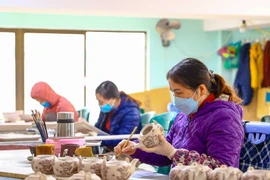
Hanoi (VNA) - For traditional craft villages to become truly attractive tourist destinations, preserving their core values and developing well-planned tourism products that balance conservation and sustainable use is essential, said insiders.
As travelers increasingly seek authentic local experiences, Vietnam’s craft villages stand out as a valuable resource for tourism development.
Developing tours and itineraries highlighted with the unique culture of craft villages requires coordinated efforts from local authorities, communities, craft artisans, and travel agencies, thus transforming Vietnam’s traditional craftsmanship into sustainable tourism products within the modern travel landscape.
Great potential for tourism development
Craft villages not only preserve traditional skills passed down through generations but also serve as cultural spaces reflecting the history, daily life, and aesthetic sensibilities of Vietnamese communities. Each product—be it ceramics, silk, bamboo and rattan items, lacquerware, bronze casting, stone carving, flower cultivation, or traditional dishes—tells a story about the culture, people, and region. It is this cultural depth and unique character that make craft villages and their handmade products particularly appealing to visitors, especially as international tourists increasingly value authentic local experiences and heritage.
In recent years, many traditional craft villages have become familiar stops on Vietnam’s tourism map. Bat Trang pottery village and Van Phuc silk village in Hanoi, and Dong Ho folk painting craft village in Bac Ninh draw visitors by combining the charm of their ancient craft spaces with hands-on experiences in pottery, silk weaving, and traditional painting.
Bao La bamboo and rattan craft village in central Hue city stands out with eco-friendly products and community-based experiential tourism.
In Hoi An ancient town in the central city of Da Nang, Kim Bong carpentry village and Thanh Ha pottery village not only preserve traditional craft techniques but also turn hands-on labour into vivid cultural experiences for visitors. Meanwhile, Tra Que vegetable village in the city offers a distinctive form of agricultural tourism, where tourists can plant, cook, and immerse themselves in the rhythms of Vietnamese village life.
According to statistics from the Vietnam National Authority of Tourism (VNAT), the country is home to more than 5,400 craft villages, including nearly 2,000 recognised traditional craft villages and over 260 traditional craft types. Recognising the growing potential of craft-based tourism, tourism authorities, local governments, and travel enterprises have stepped up investment to diversify offerings and attract visitors for sightseeing, shopping, and hands-on experiences.
Notably, in recent years, many scientists, researchers, managers, as well as craft village members and local communities, have actively engaged promoting the unique traditional products of their respective regions.
VNAT Deputy Director General Ha Van Sieu emphasised that developing craft village tourism not only helps create jobs, increase incomes for residents, and stimulate regional economic development, but also plays a crucial role in preserving and promoting traditional cultural values, contributing to sustainable tourism development.
When craft village residents become active participants in tourism activities, cultural heritage is safeguarded, while Vietnam’s tourism gains an opportunity to assert its unique identity in the international market.

Preserving distinctiveness of craft villages
Integrating tourism with craft villages is a suitable approach to diversify tourism products while providing an incentive to preserve and develop traditional craft values. By focusing on creating tourism products that reflect the unique identity of each locality, tourism not only expands options for visitors but also promotes Vietnam’s image to international friends, fosters cultural exchange, and helps the nation’s craft heritage gain recognition on the global stage.
For craft village tourism to develop sustainably, preserving traditional crafts must be set as a fundamental goal. Conserving craft village spaces, supporting artisans, and encouraging young people to carry forward these traditions are essential to safeguarding the core values of each destination.
Building on this foundation, tourism products must be designed creatively and professionally, transforming the handicraft process into interactive experiences where visitors can hear the stories behind the crafts, participate in production, and create personalised products, said insiders.
According to Pham Hai Quynh, Director of the Asia Tourism Development Institute, sustainable development of craft village tourism requires a community-centred approach, with a focus on preserving the cultural values and distinctive landscapes of each locality.
Craft village tourism should be combined with local cuisine, festivals, community life, and rural scenery, while linking craft villages into cultural and eco-tourism routes, homestays, evening craft demonstrations, and short workshops are key strategies to extend visitor stays and boost spending, particularly among international tourists.
Vu Van Tuyen, General Director of Travelogy, said that developing craft village tourism should go hand in hand with rural development, focusing on raising awareness, training and guiding local residents in tourism, updating promotion methods, digitising destinations, and enhancing craft storytelling skills for tour guides and interpreters./.