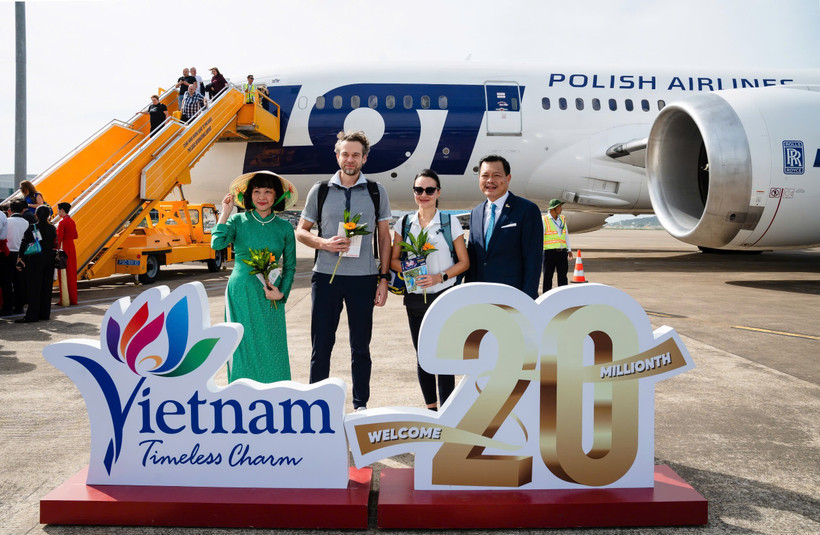
Kien Giang (VNA) - Recent assessments by the United Nations World Tourism Organisation (UN Tourism) and the World Travel and Tourism Council (WTTC) place Vietnam among the fastest recovering and growing tourism markets globally, with growth rates exceeding 21%. This performance stands out at a time when many established destinations are still grappling with post-pandemic restructuring.
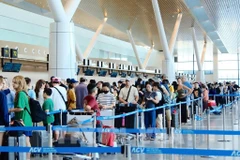
The achievement of 20 million international visitors in 2025 represents far more than a headline figure. It signals that Vietnam’s tourism ecosystem has reached a level of maturity where infrastructure, destination capacity, product diversity, and service quality are capable of supporting large-scale visitor flows, longer stays, and higher spending.
Less than a decade ago, in 2016, Vietnam marked its first 10 million international arrivals, also in Phu Quoc. Nearly ten years later, the 20 million milestone has once again been recorded on the Pearl Island. Doubling the size of the international visitor market within such a short timeframe, particularly after the global disruption caused by COVID-19, underscores the resilience and upward momentum of Vietnam’s tourism sector.
In a regional comparison, this trajectory echoes Thailand’s rapid expansion between 2010 and 2019, when international arrivals surged from around 16 million to nearly 40 million. Vietnam appears to be entering a similar growth curve, though in a far more competitive environment that places greater emphasis on destination quality and depth of experience.

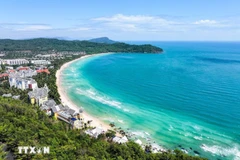
Phu Quoc’s repeated role as the setting for major national tourism milestones is no coincidence. The island has served as a testing ground for a number of progressive policies, most notably a visa exemption allowing international visitors to stay for up to 30 days. This remains a rare competitive advantage within the region.
International experts consistently note that liberal visa regimes, when combined with a comprehensive service ecosystem, are essential to building regional-scale resort and entertainment hubs. Phu Quoc increasingly meets these criteria, supported by expanding aviation links, high-end accommodation, a growing night-time economy, and the ability to host large international events.
Private Enterprise as the Driving Force
If public policy provides the framework, it is private enterprises that supply the momentum. Economist Nguyen Dinh Cung has repeatedly highlighted the importance of strategic investors in establishing foundational assets, stable revenue streams, and modern governance standards for Phu Quoc’s tourism economy.
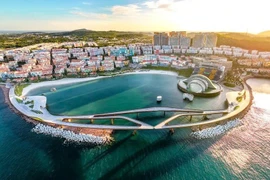
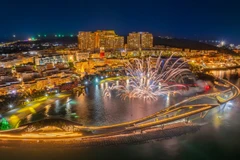
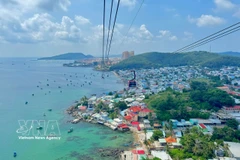
Major developers such as Sun Group, Vingroup, and other leading investors have moved beyond standalone projects to create integrated tourism, resort, and entertainment ecosystems designed for year-round operation. International-standard resorts, large-scale entertainment complexes, signature shows, nightly fireworks, Guinness-recognized cable cars, particularly in the Sunset Town area, have collectively shaped a more dynamic and distinctive image of Phu Quoc on the global stage.
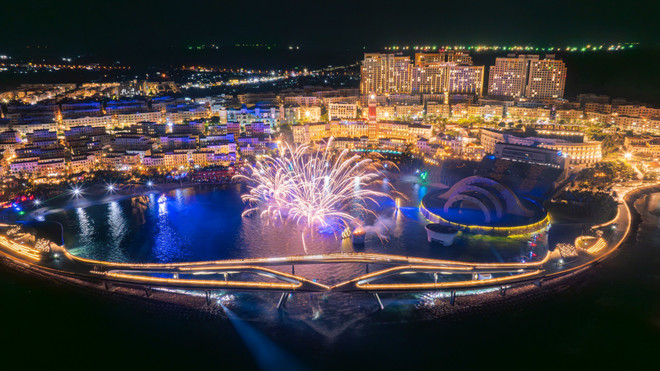
Commenting on the contribution of major investors, Deputy Minister of Culture, Sports and Tourism Ho Anh Phong emphasised that leading enterprises play a decisive role in setting benchmarks and driving breakthroughs for the industry. The achievements seen today, he noted, reflect the outsized impact of pioneering businesses among thousands of active tourism enterprises nationwide.
A notable example is Sun Group’s launch of Sun PhuQuoc Airways. Beyond aviation, the move represents a strategic step in destination branding, a factor widely identified in international studies as critical to elevating national tourism competitiveness.
Within this broader context, APEC 2027 is increasingly viewed as a catalyst for Phu Quoc’s next phase of transformation. According to Dr. Tran Dinh Thien, the challenge is to ensure that infrastructure and facilities developed for the event continue to deliver value well beyond the summit itself, functioning effectively throughout the year and reinforcing Phu Quoc’s long-term positioning.
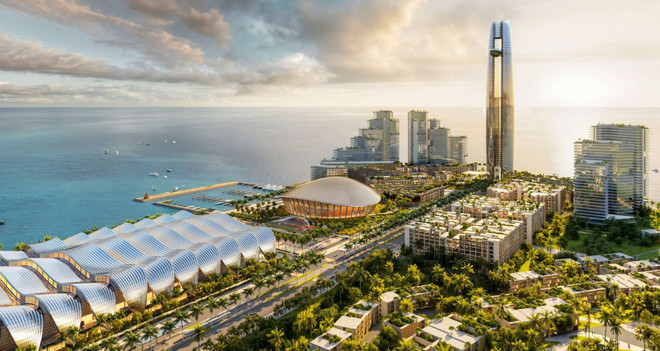
A series of major infrastructure projects are now being rolled out in parallel, including the expansion of Phu Quoc International Airport to ICAO 4E standards with a planned capacity of 20 million passengers annually, alongside urban transport networks, future rail systems, and new connectivity corridors linking tourism, event, and commercial zones. Together, these development steps lay the groundwork for Phu Quoc’s emergence as a regional hub for MICE tourism and international events.
Once a relatively modest name on the global tourism map, Phu Quoc has become a compelling example of a development model increasingly advocated by international organizations. Under this model, the State sets enabling policies, the private sector leads investment, and destinations are built through integrated and sustainable ecosystems.
The milestone of 20 million international visitors therefore marks the threshold of a new chapter. Vietnam’s tourism is steadily moving beyond perceptions of being a low-cost, resource-rich destination toward a more refined identity defined by quality, depth, strong branding, and higher value. Phu Quoc stands out as one of the clearest symbols of this transformation./.