Resolution No. 57: Vietnam eyes comprehensive, unified tourism data system

Information consistency will help improve national tourism brand recognition among travellers, laying a stepping stone for positioning Vietnam as a green, safe and friendly destination, according to an insider.

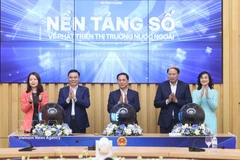
The launch of the national tourism data platform Visit Vietnam on December 20, 2025 (Photo: VNA)

Hanoi (VNA) – Building a comprehensive and consistent tourism data system is emerging as a crucial condition for Vietnam’s tourism sector to strengthen governance capacity, improve competitiveness and enhance visitor experiences.

As digital transformation becomes an inevitable trend, data is no longer merely information but the “lifeblood” of the digital economy. The Politburo’s Resolution No. 57-NQ/TW, dated December 22, 2024, on breakthroughs in science – technology development, innovation and national digital transformation underscores the need to enrich and fully harness data potential, treat data as a main factor of production, and accelerate the development of big databases, the data industry, and the data economy.

Similarly, the Prime Minister’s Decision No. 2629/QD-TTg, dated December 1, 2025, which approves the Digital Government Development Programme, emphasises data as a strategic resource. These strategic orientations identify data as a core “soft infrastructure” of national digital transformation and a foundational element for improving governance efficiency and ensuring the sustainable development of economic sectors, including tourism.

Tourism is a highly interconnected sector in which destinations, services, businesses and travellers are closely linked. As visitor behaviour increasingly shifts toward searching for information on digital platforms, personalising experiences and booking services online, data has become critical for effective management and market development.

In recent years, Vietnam’s tourism sector has recorded strong growth in both scale and quality. In 2025, the country welcomed more than 20 million international arrivals and over 130 million domestic travellers for the first time, with total tourism revenue exceeding 1 quadrillion VND (38 billion USD).

This rapid expansion, however, also places greater demand on the sector to adopt a unified and accurate data system to optimise operations, avoid unbalanced development, improve destination quality and enhance international competitiveness.

Despite notable progress in digitalisation, tourism data in Vietnam has long been fragmented, scattered across multiple systems and lacked standardisation or interconnectivity among central agencies, localities and businesses. This has created difficulties in monitoring, forecasting and policy-making, and has at times resulted in inconsistent statistics and heavy reliance on international digital platforms to analyse market trends and visitor preferences.

To address these shortcomings, the Ministry of Culture, Sports and Tourism approved a project on building a tourism industry database in September 2024. The project, implemented from 2024 to 2030, aims to develop a comprehensive and unified tourism database nationwide, serving state management while supporting tourism promotion and development.

The system will integrate a wide range of data, including international and domestic tour operators, accommodation establishments, tourist areas and sites, tourism resources, tour guides, and qualified service providers in catering, shopping, entertainment and wellness, as well as tourism promotion activities and statistics.

Deputy Director of the Vietnam National Authority of Tourism Pham Van Thuy said the authority has advised the ministry to roll out a programme to accelerate digital transformation toward smart tourism. Central to this effort is the development of a digital data system as the foundation for smart tourism models and for maximising value-added from data, with the goal of forming a national tourism data ecosystem that is accurate, sufficient, clean, dynamic, unified and shared.

du-lich-thong-minh1-3.jpg
Destination digitalisation enables tourists to enjoy diverse experiences using just a smartphone. (Photo: VNA)

A recent milestone in this process is the launch of the national tourism data platform Visit Vietnam, marking a significant step toward building and operating Vietnam’s tourism data ecosystem. The platform is sponsored by the Government, with professional coordination from the Vietnam National Authority of Tourism and the National Data Association. Sun Group is responsible for developing and operating the technological infrastructure, while Visa contributes international payment data, the spending behaviour analysis model and advanced security standards.

The core of Visit Vietnam is a real-time tourism data map, enabling authorities to monitor destination capacity, regulate visitor flows and identify operational risks at an early stage. For businesses, the platform supports product development, service management and market analysis, helping them better reach domestic and international visitors. For travellers, it provides access to official information, personalised itineraries, service booking options and timely alerts on weather conditions, congestion or changes at destinations.

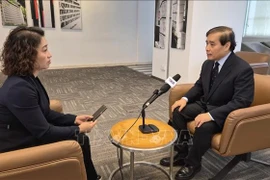
Colonel Ha Nam Trung, Deputy Director of the National Data Centre under the Ministry of Public Security, said Visit Vietnam represents an important shift toward data-driven governance in tourism, laying a prerequisite for long-term competitiveness. It is scheduled for official operation in the second quarter of 2026.

Doan Thi Thanh Tra, Deputy General Director of Saigontourist, noted that information consistency will help improve national tourism brand recognition among travellers, laying a stepping stone for positioning Vietnam as a green, safe and friendly destination./.

VNA

See more

A Vinh Long official introduces signature local products to Korean guests. (Photo: VNA)

Vinh Long courts Korean investment in key sectors

Vice Chairman of the provincial People’s Committee Nguyen Truc Son vowed to accompany investors and provide them with optimal conditions, while building a transparent and stable business environment to secure long-term engagement from foreign enterprises, particularly those from Daejeon.

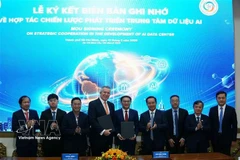
Delegates at the launching ceremony (Photo: VNA)

Digital platform on overseas market development launched

With Vietnam’s network of 64 trade offices overseas, Deputy PM Son noted that connecting them through a modern digital platform could help establish a unified national trade information system that operates efficiently, transparently and with strong forecasting capacity.

The Government’s issuance of Decree No. 72/2026/ND-CP revising preferential import tariffs on several petrol products and raw materials is a timely move to diversify supply sources. (Photo: VNA)

Fuel import tariff cuts strengthen Vietnam’s energy resilience: experts

Economic expert Dinh Trong Thinh said revising fuel import tariffs helps diversify supply sources and reduce reliance on traditional markets, thereby strengthening Vietnam’s ability to cope with potential global supply shocks. Ensuring access to multiple energy sources is also vital for safeguarding national energy security, he added.

Leaders of Dak Lak province inspect IUU fishing prevention and control efforts at Phu Lac fishing port, Hoa Hiep ward. (Photo: daklak.gov.vn)

Dak Lak readies for EC mission on anti-IUU fishing efforts

Dak Lak province is completing preparations for an upcoming European Commission (EC) inspection on efforts to combat illegal, unreported and unregulated (IUU) fishing, with a view to having the fisheries “yellow card” removed.

Vietnamese Ambassador to Argentina Ngo Minh Nguyet speaks at the event. (Photo: VNA)

Vietnam, Argentina promote trade, investment cooperation

On relations with South America, Nguyet noted that in December 2025, Vietnam and the Southern Common Market (MERCOSUR) announced the launch of negotiations for a Preferential Trade Agreement (PTA). She expressed her hope that the agreement will be signed soon, thereby further boosting trade and investment between Vietnam and MERCOSUR member states, including Argentina.

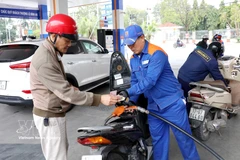
Customers buy petrol at a Petrolimex petrol station in Tran Hung Dao ward, Hung Yen province. (Photo: VNA)

PM orders stronger measures to ensure stable petrol supply

The MoIT was instructed to direct key petrol producers and traders to proactively develop supply plans to guarantee adequate fuel provision for distribution systems, maintain regular sale operations, and sell products at listed prices. It must also closely monitor developments in global and domestic petrol markets and adopt appropriate management measures when necessary.

Farmers in Ca Mau province use combine harvesters to harvest rice. (Photo: VNA)

PM orders coordinated measures to stabilise rice production and markets

The Minister of Agriculture and Environment is tasked with instructing local authorities to closely monitor production developments, improve forecasting capacity, strengthen pest control measures, and proactively respond to adverse weather conditions to protect crops, maintain planned yields and output, and reduce production costs.

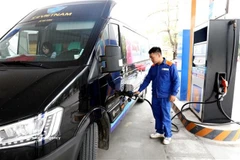
A worker refuels a vehicle at a petrol station in Hung Yen province. (Photo: VNA)

Fuel prices slashed as stabilisation fund used

According to a joint decision by the Ministry of Industry and Trade and the Ministry of Finance, the price of RON95-III petrol – the most widely used grade – fell by 3,880 VND to 25,240 VND (0.95 USD) per litre.

Customers purchase petrol at Station No. 03 (Petrolimex Hung Yen) on Quang Trung Street, Tran Hung Dao ward, Hung Yen province. (Photo: VNA)

Hung Yen takes measures to curb speculation, stabilise fuel market

Petrolimex Hung Yen maintains regular reserves of about 5,500 cubic metres at directly managed outlets and roughly 2,000 cubic metres at franchised stations. The provincial Department of Industry and Trade has ordered closer monitoring of supply and demand and retail prices to detect shortages or unjustified price hikes.

The automobile assembly line of the Honda Phuc Yen factory in Phu Tho province (Photo: VNA)

Honda Vietnam sees decline in motorcycle, car sales

Sales of both motorcycles and automobiles by Honda Vietnam declined in February, dropping 19.6% and 41.8% year-on-year, respectively, according to the company’s latest business results released on March 11.

Team 2 of the Hanoi Market Surveillance Sub-department inspects operations of a Petrolimex petrol station on Tran Quang Khai street (Photo: VNA)

Hanoi maintains stable supply of petrol, LPG

The Hanoi Market Surveillance Sub-department said petrol and LPG trading activities across the city remain stable, with supply largely meeting demand despite volatility in global energy prices.

A Qatar Airways aircraft is seen at Noi Bai International Airport in Hanoi. (Photo: VNA)

Qatar Airways cancels 13 more flights amid Middle East conflicts

Statistics show that airspace across the Middle East has yet to return to normal operations, with multiple FIRs still imposing restrictions or partial closures. As a result, international flight operations through the region continue to face disruptions and route adjustments.