Resolution 57 - catalyst for scientific and technological breakthroughs

The resolution also seeks to create stronger mechanisms to mobilise social and private resources and support an innovation ecosystem; link digital transformation in the public sector with the modernisation of national governance; and prioritise the development of elite human resources and internationally-standard research infrastructure.

Professor Vu Minh Khuong, of the Lee Kuan Yew School of Public Policy (right), talks to a Vietnam News Agency correspondent in Singapore. (Photo: VNA)

Singapore (VNA) – The implementation of the Politburo’s Resolution No 57-NQ/TW on breakthroughs in the development of science, technology, innovation and national digital transformation has delivered noticeable shifts in research investment and cooperation, with the overarching goal of translating knowledge into tangible economic value. However, experts have warned that the road ahead remains challenging and will require strong political determination at all levels.

Speaking to a Vietnam News Agency (VNA) correspondent in Singapore, Professor Vu Minh Khuong, of the Lee Kuan Yew School of Public Policy, said Resolution 57 contains several striking elements that will set momentum for Vietnam’s efforts in 2025. These include establishing a unified policy framework and groundbreaking vision for science and technology, innovation and digital transformation; defining the sector as the nation’s key growth driver; shifting the focus towards endogenous capacity, technological autonomy and knowledge; and positioning data and artificial intelligence as new strategic national infrastructure.

The resolution also seeks to create stronger mechanisms to mobilise social and private resources and support an innovation ecosystem; link digital transformation in the public sector with the modernisation of national governance; and prioritise the development of elite human resources and internationally-standard research infrastructure.

Even so, the professor highlighted several areas requiring closer attention, such as a streamlined “single-window, single-responsibility” mechanism for strategic coordination, more effective financial tools to promote innovation, a more focused list of priority sectors, and stronger mechanisms for impact evaluation and progress monitoring.

Resolution 57 is unequivocal and well-targeted, but to achieve a genuine breakthrough Vietnam needs to move from “expanding lists” to “concentrating resources, coordinating strongly, building core capabilities and assessing outcomes by real-world impact”, he said.

Meanwhile, Assoc. Prof. Dr Duong Minh Hai of the National University of Singapore held that for those directly engaged in scientific research, Resolution 57 is not just a guiding document but something akin to a “key” unlocking longstanding institutional bottlenecks. By moving away from a mindset that all research must succeed – which discouraged high-risk, groundbreaking projects – the resolution recognises risks as an inherent part of innovation and supports the piloting of sandbox mechanisms for emerging technologies such as AI, blockchain and fintech.

Another notable shift in 2025 is the move from fragmented spending across many sectors to highly focused investment in a limited number of top priorities, including semiconductors, AI, digital transformation and green technologies. New technologies are also being rolled out more rapidly in daily life, even at ordinary street junctions.

While optimistic, Hai stressed the need for realism about the challenges ahead. These include delays in issuing implementing guidelines, which may create reluctance to act; a shortage of high-level technical experts and continued brain drain; and weak links between research institutes, universities and businesses due to differing incentives. Legal barriers in valuing publicly funded intellectual property also hinder technology transfer, meaning many domestic firms still prefer to import turnkey solutions while valuable Vietnamese research remains unused.

He said that for Vietnam to realise its ambition of becoming a key global technological player, it must pursue a “dual revolution”: bold internal institutional reform alongside a re-orientation of technology diplomacy towards active contribution to global progress. If achieved, science, technology, innovation and digital transformation will become the “keys” enabling Vietnam – and the wider region – to move towards a prosperous, stable and sustainable future./.

VNA

See more

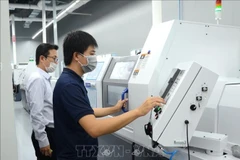
Workers produce electronic components (Photo: VNA)

Science, technology drive Vietnam’s rising global profile: expert

Assoc. Prof. Le Duc Anh from Tokyo University held that for fast and sustainable development, Vietnam should prioritise science – technology and innovation as the main driver of productivity, focusing on sectors with high spillover effects such as semiconductors, AI, data, new energy and materials, biomedical technology, automation – robotics, and cybersecurity.

An overview of the workshop. (Photo: nafosted.gov.vn)

National portal expected to transform innovation into reality

The portal, which can be accessed at sangkien.gov.vn, was built to address the urgent need to mobilise collective intelligence and unlock the creativity of the entire population, in accordance with the directives of the steering committee for the implementation of the Politburo’s Resolution No. 57-NQ/TW on creating breakthroughs in science, technology, innovation and national digital transformation.

Sucker-mouthed minnow (Supradiscus varidiscus). (Photo: researchgate.net)

Vietnamese fish, bee named among 70 species newly identified in 2025

One of the most notable “hidden” finds is a small sucker-mouthed minnow endemic to Vietnam’s highlands, discovered in the Lo River. Scientifically named Supradiscus varidiscus, the specimen was collected and shelved some 25 years ago but has only now been studied and formally described.

Prime Minister Pham Minh Chinh visits a display of science and technology development, innovation and digital transformation. (Photo: VNA)

Gov't leader requests greater efforts to step up development of sci-tech, innovation

Emphasising three strategic digital breakthroughs - digital institutions, digital infrastructure and digital human resources - PM Chinh called for close integration of science and technology development, innovation, administrative reforms, digital transformation and Project 06 with efforts to streamline the organisational apparatus and modernise leadership, management and working styles.

Doctors from Cho Ray Hospital (Ho Chi Minh City) and Vinh Long General Hospital (Vinh Long province) test the operation of a linear accelerator radiotherapy system for cancer treatment (Photo: VNA)

Vietnam sets orientations for applying nuclear energy across sectors

The plan aims to ensure the effective implementation of Decision No. 245/QD-TTg dated February 5, 2025, which approved the national master plan, while concretising objectives, orientations, solutions and resources for applying radiation and radioisotopes across sectors. It also assigns responsibilities to ministries, sectors and localities, and sets roadmaps and priorities for key programmes and projects.

Prime Minister Pham Minh Chinh and delegates visit booths showcasing products at TechFest Vietnam 2025. Photo: VNA

Vietnam to become attractive destination for tech talent, innovative startups: PM

TechFest Vietnam 2025, held from December 12 to 14, is expected to attract more than 60,000 participants both in person and online, with the participation of over 20 corporations, 50 investment funds, more than 100 supporting organisations and incubators, and delegates from Southeast Asia, Northeast Asia, Central Asia, the Middle East, North America, and Europe.