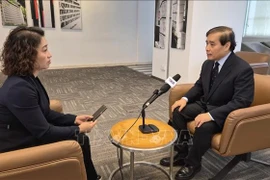
Hanoi (VNA) – Prof. Dr. Tran Dai Lam, Director of the Institute of Materials Science at the Vietnam Academy of Science and Technology (VAST), emphasised that intellectuals should nurture national responsibility and ambition, be ready to take on challenges, evaluate research outcomes by international standards, and engage in collaboration across different sectors.
According to the expert, research should be tied to development requirements to deliver new insights and tangible applications.
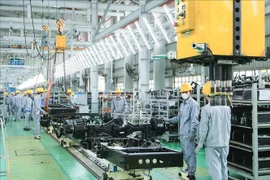
In line with the Politburo's Resolution 57-NQ/TW of December 22, 2024, on breakthroughs in science and technology, national innovation, and digital transformation, research institutes are reviewing strategies, enhancing research and applications, and implementing key directions to turn science and technology into practical solutions for production and daily life, contributing to national development.
The Institute of Materials Science has adjusted its research strategy, focusing on developing new materials as a foundation for core technologies with high applicability in high-tech industries, foundational industries, and defence and security. It aims to become a hub for collaboration, actively participating in key research and application programmes on materials, supporting innovative startups, and contributing directly to socio-economic development, Lam said.
To implement the resolution effectively, the State should adopt a long-term vision for basic science, which forms the foundation for future technological breakthroughs. The strategy should span at least 20 years, focusing on emerging areas such as quantum technology, artificial intelligence, new materials, synthetic biology, and nuclear fusion—sectors that could give Vietnam a competitive edge, Lam said.
He emphasised that, in addition to a long-term vision, talents must be nurtured through a systematic and continuous approach, guided by leading scientists.
Lam also proposed establishing a national advisory council on long-term basic science development, which will help design in-depth basic science programmes, ensuring stability and continuity in long-term development strategies.
Policies paving the way for research and innovation
According to Duong Thi Bich Diep, Director of the Green Economics Institute (GEI) under the Vietnam Union of Science and Technology Associations, Resolution 57 clearly calls for a renewed mindset and improved institutions, mechanisms, and policies on science, technology, innovation, and digital transformation. She noted that these directions provide a crucial foundation for promoting research, technology development, while encouraging science and technology organisations to engage more actively in innovation.
Closely following the spirit of Resolution 57, the GEI has implemented many research programmes that address practical demands, such as knowledge-based economic models, technologies for high-quality agriculture, community technology solutions, and environmental improvement initiatives, Diep said.
She noted that broader international cooperation enables the institute to tap into new technologies and roll out pilot models tailored to Vietnam’s conditions.
The application of advanced technological models helps boost productivity, reduce production costs, improve the environment, and increase incomes, especially in disadvantaged areas. This also serves to realise the goals of Resolution 57, towards making science and technology a direct driver of socio-economic development, Diep added./.