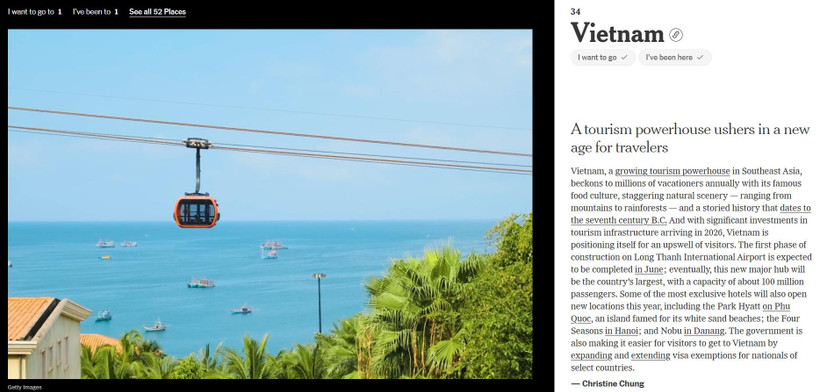
Hanoi (VNA) – Vietnam has been named one of the 52 destinations for 2026 by The New York Times – one of the world’s most widely read newspapers. Notably, to illustrate Vietnam’s tourism, the New York Times editorial team chose the Hon Thom Cable Car in Phu Quoc instead of more traditional imagery.
Amid the atmosphere of the early days of the New Year, The New York Times – one of the world’s largest-circulation newspapers – released its list of “52 Places to Go in 2026.” This annual list, inspired by the 52 weeks of the year, carries the idea that “each week is a journey.” The “52 Places” list is regarded as a “map of global travel trends,” as lesser-known destinations often become new stars of the world tourism industry after being featured.
Selecting Vietnam for this year’s list, the New York Times editorial board described the S-shaped country as a rapidly rising tourism powerhouse in Southeast Asia.
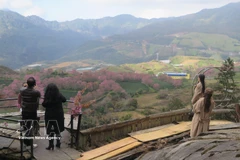
“A growing tourism powerhouse in Southeast Asia, beckons to millions of vacationers annually with its famous food culture, staggering natural scenery — ranging from mountains to rainforests — and a storied history that dates to the seventh century B.C,” The New York Times wrote.
Beyond that, the reason Vietnam was selected for the 2026 list also lies in “significant investments in tourism infrastructure expected to be completed this year, further preparing the country to welcome a new wave of visitors,” the US daily noted.

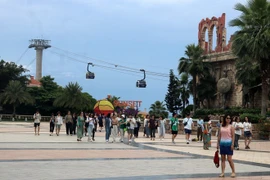
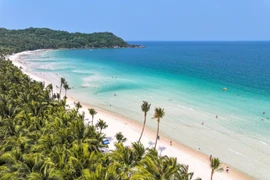
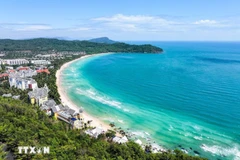
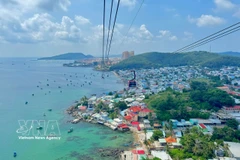
Perhaps it is this assessment that led The New York Times to choose the Hon Thom Cable Car in Phu Quoc as the image illustrating Vietnam’s rapidly developing tourism infrastructure. This is the world’s longest three-wire cable car route, stretching nearly 8 km, offering visitors a sweeping view of the tropical, paradise-like seascape of southern Phu Quoc from a true “bird’s-eye perspective.” CNN Travel and Lonely Planet – two major global travel tastemakers, have both described it as a “must-try experience in Phu Quoc.”
This is not the first time the Hon Thom Cable Car has caught the eye of The New York Times. Previously, in an article published in 2023, New York Times writer Patrick Scott described the Hon Thom cable car station as a “fully realised” version of Rome’s Colosseum, while the entire Sunset Town was likened to an elaborate Mediterranean city in Italy, complete with a clock tower, baroque fountains, and Roman ruins.
Patrick Scott considered the Hon Thom Cable Car and Sunset Town to be among Vietnam’s most astonishing man-made creations. Describing the cable car journey, he also noted that the sea below appeared “crystal clear,” further enlivened by the colours of hundreds of wooden fishing boats, creating a truly vivid panorama.
Beyond the Hon Thom Cable Car, Phu Quoc is also home to comprehensive tourism – entertainment – resort ecosystems featuring distinctive landmarks and one-of-a-kind experiences that attract both domestic and international visitors. A prime example is the Sun Paradise Land ecosystem, with two fireworks shows every night, 365 days a year, at Sunset Town; world-record-holding productions such as Kiss of the Sea and Symphony of the Sea; or Kiss Bridge, the world’s only “non-touching” bridge, alongside a collection of resorts operated by international brands, each offering creative themes found nowhere else.

Speaking of the advantages that helped Vietnam secure a place on the 2026 destinations list, The New York Times also highlighted favourable visa conditions, noting that citizens of many countries enjoy unilateral visa exemptions when travelling to Vietnam. Within this broader picture, Phu Quoc stands out as Vietnam’s most representative destination, as it is the only location applying a particularly preferential visa-free policy, granting stays of up to 30 days for visitors of all nationalities.
Vietnam’s appearance on the New York Times “52 Places to Go in 2026” list, together with the selection of the Hon Thom Cable Car as the illustrative symbol, is not merely a momentary acknowledgment. It marks a milestone signalling that Vietnam’s tourism is entering a new phase of acceleration. From rich local heritage to thoughtfully invested infrastructure, products, and experiences, Vietnam – and Phu Quoc in particular – is emerging as a leading choice on the global travel map.
As the world searches for journeys that are fresh, emotionally resonant, and deeply engaging, Vietnam’s presence in The New York Times serves as a clear affirmation: the S-shaped country is ready for a new era of breakthrough in international tourism./.